TL/DR:
Chronic inflammation stems from cytokine imbalance and persistent cellular stress. GG helps restore balance by supporting cytokine modulation, reducing oxidative stress, and enhancing mitochondrial resilience.
Inflammation is a natural defense mechanism that helps the body heal and recover. However, when daily stressors such as poor sleep, processed foods, toxins, and inactivity persist for an extended period, they can lead to chronic low-grade inflammation, which acts as a key driver of metabolic disorders, joint degeneration, and accelerated aging.
This persistent inflammation is controlled by cytokines, the molecular messengers that regulate immune responses. When cytokine signaling becomes imbalanced, inflammation stops being protective and begins damaging tissues. (1)
Geranylgeraniol (GG) may help support healthier inflammatory control by influencing cytokine balance and cellular resilience.
To understand how we can interrupt this cycle, we must first look closely at the molecular mechanisms of chronic inflammation and how key signaling pathways and cytokines become dysregulated at the cellular level.
What is Inflammation?
- Inflammation is an essential survival mechanism to protect the body during infection or injury, thereby restoring normal function.
- The classic signs of inflammation consist of redness, heat, swelling, pain, and loss of function.
- Inflammation involves a coordinated response between immune cells, signaling molecules (cytokines), and blood vessels to remove harmful triggers and promote healing.
What Is Chronic Inflammation, and Why Does It Matter?
- Chronic inflammation is a long-lasting, low-grade immune response that persists even when there is no immediate threat or infection.
- Unlike acute inflammation (short-term healing response), chronic inflammation is silent and progressive, often developing unnoticed over months or years.
What Causes Chronic Inflammation?
Chronic inflammation can be triggered by repeated exposure to lifestyle and environmental stressors such as
- Poor diet high in processed foods, sugar, and inflammatory fats
- Environmental toxins and pollutants
- Sedentary lifestyle and lack of movement
- Chronic psychological stress
- Poor sleep and circadian disruption
- Metabolic imbalances, including insulin resistance and obesity
How Does Chronic Inflammation Affect the Body?
- Long-standing inflammation gradually:
- Damages tissues and organs
- Increases oxidative and metabolic stress
- Disrupts immune signaling pathways
- Impairs cellular energy production
- Accelerates biological aging
Inflammation: The common Thread in Modern Illness
Research now identifies chronic inflammation as a common root cause in conditions including:
- Type 2 diabetes and metabolic syndrome
- Obesity and cardiovascular disorders
- Joint inflammation and autoimmune diseases
- Neurodegenerative diseases (Alzheimer’s, Parkinson’s)
- Hormonal and gut-related disorders
Why is inflammation management a real game changer?
The goal of inflammation management is not to suppress the immune system.
Instead, the aim is to help the body regain balance, so that inflammation turns on when needed and turns off when healing is complete.(2)
Balanced immune function supports:
- Faster recovery and tissue repair
- Improved cellular energy and resilience
- Reduced long-term disease risk
- Healthy aging and metabolic stability
Chronic inflammation slowly wears down your body from the inside. But your body has built-in systems specifically designed to calm inflammation. Let’s now explore how these anti-inflammatory mechanisms work.
How Anti-Inflammatory Pathways Work
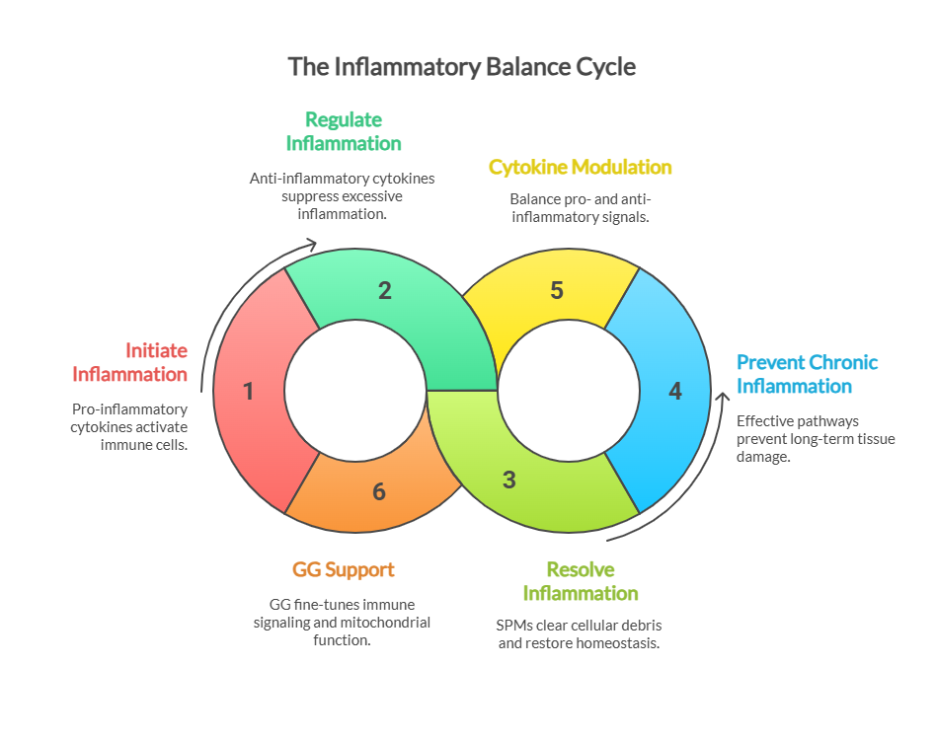
- The body controls inflammation by regulating immune signaling molecules called cytokines, which communicate when inflammation should begin and when it should stop.
- Pro-inflammatory cytokines (such as TNF-α, IL-1β, and IL-6) initiate the inflammatory response and activate immune cells.
- Anti-inflammatory cytokines (like IL-10 and TGF-β) help suppress excessive inflammation and support healing and tissue repair.(1)
- The NF-kB pathway plays a central role in turning on inflammatory genes and cytokine production. Blocking excessive NF-kB activation is a major mechanism for resolving inflammation.(3)
- During resolution, the body generates specialized pro-resolving mediators (SPMs), such as lipoxins, which clear cellular debris and restore homeostasis, not by suppressing inflammation, but by actively completing the inflammatory process.(4)
When these pathways fail or become overwhelmed, inflammation turns chronic, fueling oxidative stress, mitochondrial dysfunction, cytokine imbalance, and long-term tissue damage.(5)
Cytokine Modulation: A Key to Controlling Chronic Inflammation
Cytokine modulation refers to shifting the balance between pro- and anti-inflammatory signaling to restore immune stability. Rather than shutting down the immune system, modulation:
- Lowers excessive pro-inflammatory cytokines (TNF-α, IL-6, IL-1β)
- Supports anti-inflammatory cytokines like IL-10
- Reduces NF-KB activation ( a key controller of inflammatory signals in body)
- Helps inflammation resolve appropriately instead of persisting
Dysregulated cytokine activity is at the center of many inflammation-driven diseases and contributes to accelerated aging and metabolic decline.(1,2)
Even when cytokines are brought under control, ongoing oxidative stress can keep th body stuck in an inflamed state.
Here, geranylgeraniol (GG) steps in to restore harmony between inflammation and antioxidant defense. Let’s explore this in the upcoming section.
How Geranylgeraniol (GG) Supports Anti-Inflammatory Balance
GG is a naturally occurring isoprenoid involved in vitamin K2 metabolism, protein prenylation, mitochondrial function, and CoQ10 biosynthesis. It is seen that GG may help support inflammation resolution by acting on cytokine pathways and mitochondrial signaling(6)
Also Read: A secret to long lasting energy revealed
Mechanisms by which GG influences inflammation
- Reduces pro-inflammatory cytokines (TNF-α, IL-6, IL-1β) and increases IL-10, promoting a healthier inflammatory balance(6,7)
- Suppresses NF-KB activation, preventing excessive inflammatory gene expression
- Improves mitochondrial function and reduces Reactive Oxygen Species (ROS), breaking the cycle between oxidative stress and cytokine amplification
- Supports protein prenylation, which is essential for immune cell signaling and proper cellular communication.
- Enhances endogenous CoQ10 synthesis, improves energy metabolism, and reduces inflammatory stress signals.(8)
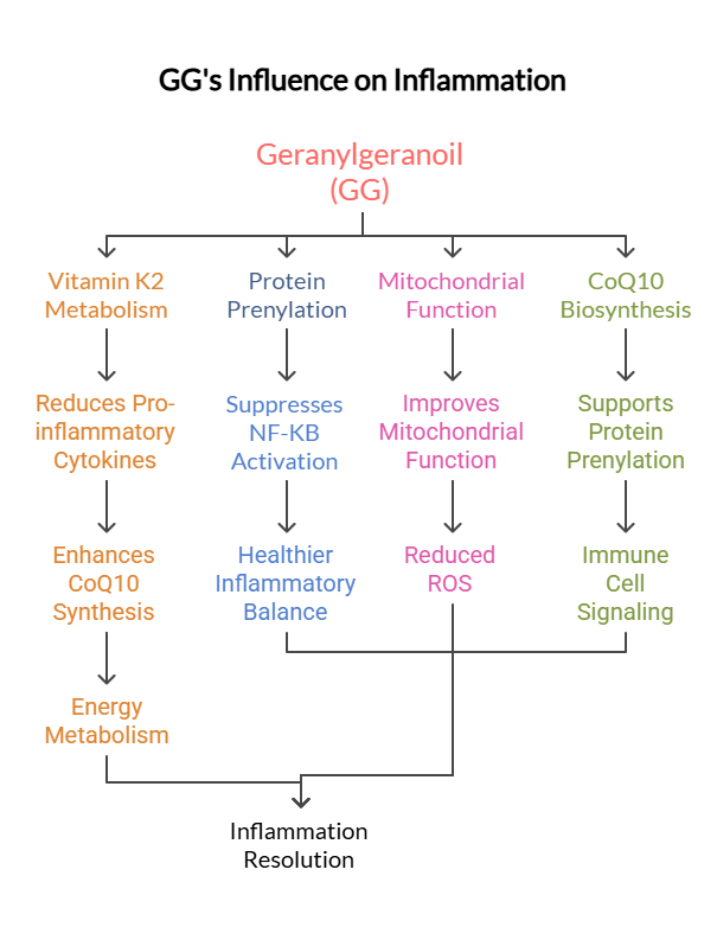
Together, these mechanisms suggest that GG does not block inflammation rather it fine-tunes immune signaling, supporting balance, resolution, and resilience.
Conclusion
Chronic inflammation is a major driver of modern disease and healthy aging. Supporting upstream cellular mechanisms such as cytokine balance, mitochondrial function, antioxidant defense, and resolution pathways may provide a more effective long-term strategy than simply suppressing symptoms.GG represents a promising integrative approach to maintaining inflammatory balance and protecting cellular health alongside lifestyle, nutrition, and targeted antioxidant support.
Key Takeaways
- Chronic inflammation is a persistent immune response that silently damages tissues over time.
- Cytokine imbalance is a major driver of chronic inflammation and disease progression.
- Anti-inflammatory pathways help regulate cytokine activity and restore immune balance.
- Excessive NF-KB activation and ROS amplify inflammation and accelerate cellular aging.
- GG helps lower pro-inflammatory cytokines (TNF-α, IL-6, IL-1β) and increase IL-10.
- GG supports mitochondrial function and reduces oxidative stress.
FAQs
It’s a long-lasting, low-grade immune response that can affect energy, recovery, joint comfort, and overall wellness.
Cytokines are messenger proteins that control inflammation levels in the body.
GG helps reduce excess inflammatory signals, supports anti-inflammatory pathways, and improves cellular energy and antioxidant defenses.
Yes, GG helps the body make its own CoQ10 and supports healthier mitochondria and energy metabolism.
Anyone managing inflammation-related discomfort, fatigue, slow recovery, or those on statins that may lower natural GG levels.
References
- Bhol NK, Bhanjadeo MM, Singh AK, et al. The interplay between cytokines, inflammation, and antioxidants: mechanistic insights and therapeutic potentials of various antioxidants and anti-cytokine compounds. Biomed Pharmacother. 2024;178:117177. doi:10.1016/j.biopha.2024.117177.
- Medzhitov R. Origin and physiological roles of inflammation. Nature. 2008;454(7203):428-435.
- Nathan C. Points of control in inflammation. Nature. 2002;420(6917):846-852.
- Serhan CN, Savill J. Resolution of inflammation. Nat Immunol. 2005;6(12):1191-1197.
- Hussain T, Tan B, Yin Y, et al. Oxidative stress and inflammation link in chronic diseases. Front Physiol. 2016;7:1-14.
- Saputra WD, et al. Geranylgeraniol inhibits LPS-induced inflammation via NF-κB modulation. Front Immunol. 2021;12:850882.
- Shen CL, et al. Dietary geranylgeraniol and statins synergistically reduce oxidative stress and inflammatory markers. Nutrients. 2023;15(13):2888.
- Goldstein JL, Brown MS. Mevalonate pathway & protein prenylation. Nat Rev Mol Cell Biol. 1990;6:232-245