Tl/DR:
Cholesterol is your body’s essential builder. Through the mevalonate pathway, your body creates cholesterol to form cell membranes, hormones, vitamin D, along with bile acids that help digest fats. Cholesterol isn’t meant to be shut down; it’s meant to be regulated for the best outcomes.
Cholesterol is one of the body’s most powerful and essential molecules working every second inside your cells to support hormonal health, digestion, immunity, and energy and it’s importance goes far beyond what blood test numbers reveal.
In fact, when cholesterol pathways flow in harmony, it gives rise to remarkable compounds like Geranylgeranoil (GG), which is an emerging, highly potent molecule catching attention for its role in restoring cellular energy and longevity.
Maybe cholesterol was never fighting against us; we were simply too blind to notice how it was guiding us towards balance and renewal all along. So, let’s look at it with fresh insight and uncover its hidden mysteries.
What is cholesterol?
Cholesterol is an essential lipid made largely in the endoplasmic reticulum (ER) of cells that helps maintain cell-membrane rigidity and permeability. You will be amazed to know that it is essential for each and every cell in your body.1
Cholesterol is a vital molecule for the body, an imbalance of which can lead to health problems.
Let’s have a look at its myriad functions.
Think of cholesterol as your body’s multi-purpose construction material. It helps to:
- Build cell membranes, keeping cells flexible and strong.
- Makes hormones, acts as a precursor for estrogen, testosterone, and cortisol.
- Produce vitamin D, vital for bone and immune health.
- Form bile acids, which help digest fats.2
Where is Cholesterol formed?
While the liver leads in synthesizing cholesterol through the mevalonate pathway (70–80%), other organs such as intestines, adrenal glands and reproductive organs also lend a helping hand.3
This natural process is called cholesterol biosynthesis, and it takes place primarily in the endoplasmic reticulum (ER), a specialized structure inside your cells that works like a biochemical factory. We will discuss biosynthesis in the later section.
DO YOU KNOW?
Your Body Has Two Sources of Cholesterol!
Exogenous Cholesterol comes from your diet (foods like eggs, seafood, and organ meats) Among these, eggs contribute the most to dietary cholesterol intake.
Endogenous cholesterol is produced inside body through mevalonate pathway, mainly in liver
This dual system keeps cholesterol levels balanced.
Cholesterol Balance: LDL vs HDL
When it comes to health, the body is a masterpiece of balance and harmony. Every system, every molecule, works together to keep life in the rhythm, and cholesterol is no exception. To understand this harmony better, let’s borrow a little wisdom from ancient Chinese philosophy.
The idea of Yin and Yang comes from traditional Chinese thought, where two opposing yet complementary forces (one calm and inward, the other active and outward) unite to create balance. In many ways, our cholesterol system mirrors this principle beautifully.
| Name | Type | Role in Body | Nature | Key Insight |
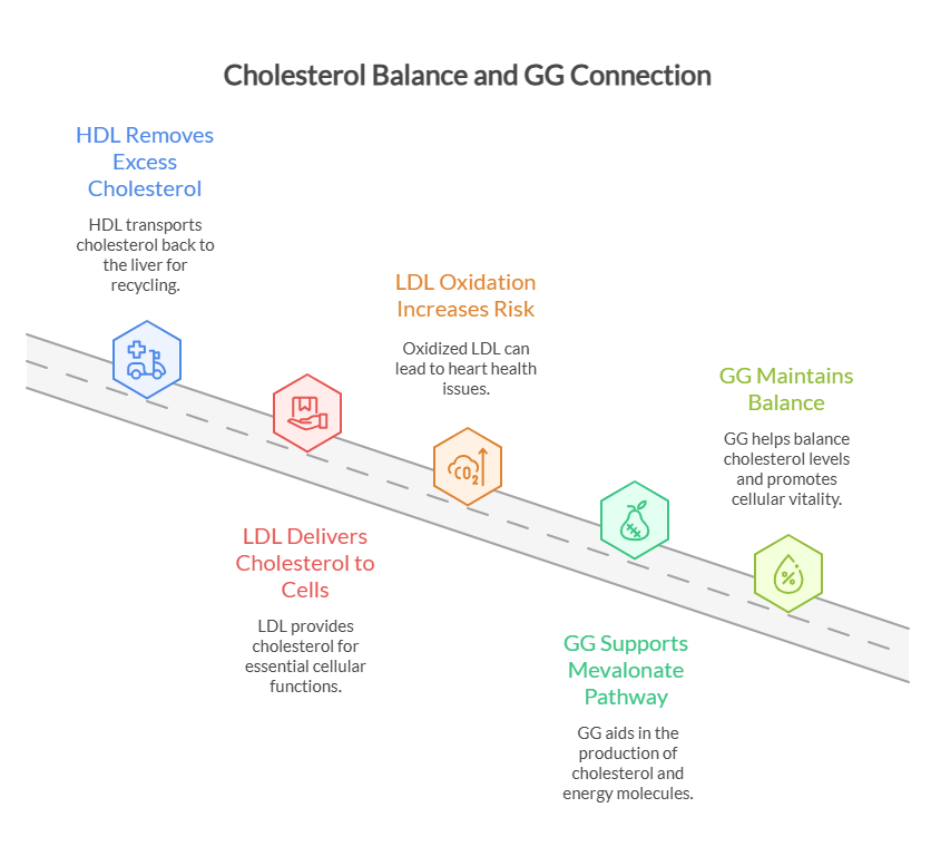
| YIN – HDL | “Good” Cholesterol | Removes excess cholesterol and returns it to the liver for recycling | Protective, cleansing, stabilizing | Higher HDL supports heart health, balances LDL, and promotes cellular energy via the same pathway that produces Geranylgeraniol (GG) and CoQ10 |
| YANG – LDL | “Bad” Cholesterol (only in excess) | Delivers cholesterol to cells for hormone, membrane, and vitamin D production | Constructive but can turn harmful when oxidized | Needed for essential functions, but imbalance or oxidation increases heart risk and reduces pathway efficiency |
| Balance Point – GG Connection | Pathway Support Molecule | Supports the mevalonate pathway that creates both cholesterol and energy molecules | Restorative, harmonizing | GG helps maintain balance — sustaining cholesterol’s good side while fueling cellular vitality and healthy aging |
The story of cholesterol’s balance begins where it’s born (inside our cells). Let’s take a closer look at how this remarkable process unfolds.
Cholesterol Biosynthesis-Hidden pathway that fuels Energy and vitality
Cholesterol synthesis is a complex, multi-step pathway that has many layers of regulation to ensure homeostasis (body’s natural way of maintaining balance) .(4)
Let’s look at how these regulatory steps work in practice in the next section.
How It Happens?
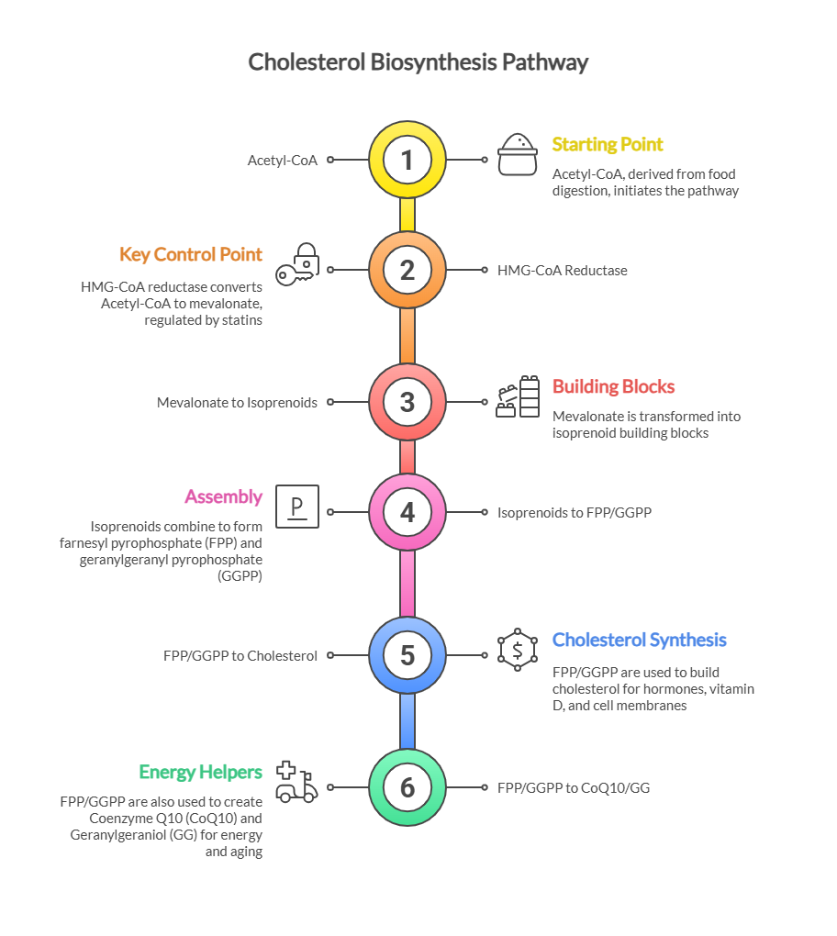
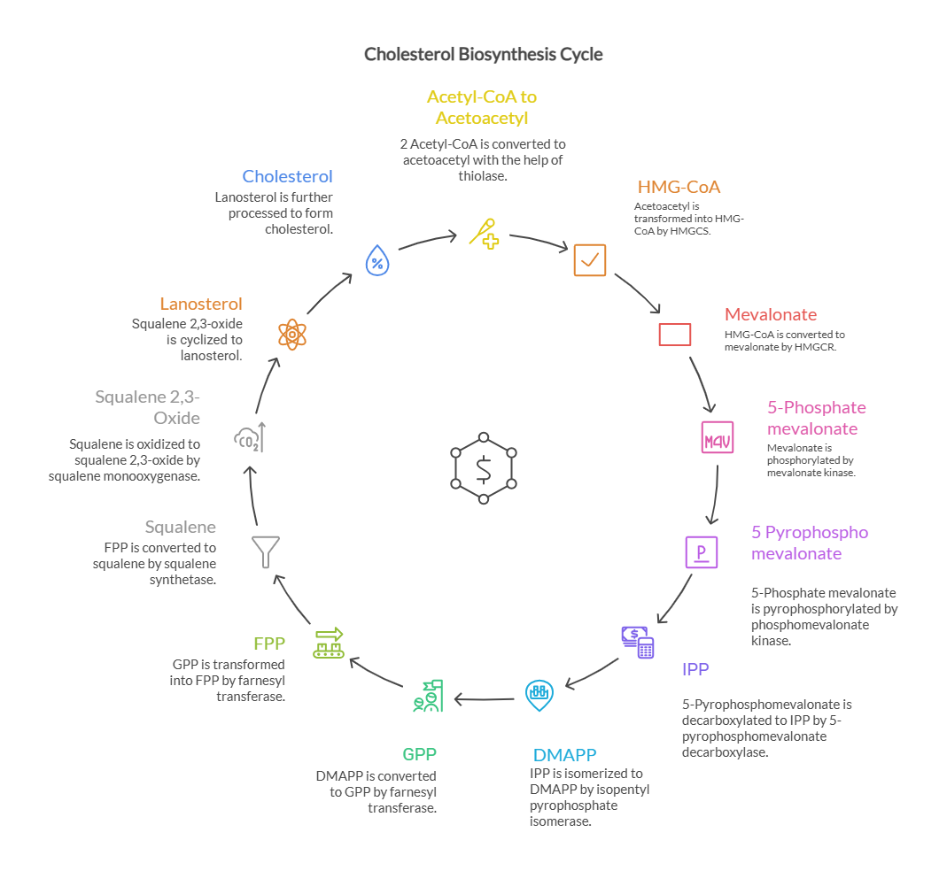
- It starts with Acetyl-CoA, a small molecule your body makes when you digest food.
- Several steps later, an enzyme called HMG-CoA reductase turns it into mevalonate — this is the key control point (and the same step that statins block).(5)
- Mevalonate is then converted into small building blocks called isoprenoids like Lego pieces your body can combine into larger molecules.
- These pieces join to form farnesyl pyrophosphate (FPP) and geranylgeranyl pyrophosphate (GGPP).
- From here, the pathway can go two ways:
- Build cholesterol, which helps make hormones, vitamin D, and cell membranes.
- Or create energy helpers such as Coenzyme Q10 (CoQ10) and Geranylgeraniol (GG), both vital for muscle energy and healthy aging.(6)
Also Read: CoQ10 Benefits: What is Coenzyme Q10 Used For?
Why It Matters
- The mevalonate pathway isn’t just about cholesterol, it’s about balance.
- When it’s disrupted (like aging or statin use), your body makes less cholesterol and less GG, which can leave cells tired and less efficient.
Supporting this pathway naturally helps maintain energy, hormone balance, and overall vitality.
Also Read: Uncovering the Potential of GG in Lowering Cholesterol
Regulation of Cholesterol Biosynthesis
What keeps your body from making too much, or too little cholesterol?
Well, credit goes to your smart internal control system called cholesterol biosynthesis regulation. At its heart is HMG-CoA reductase, the enzyme that decides when to turn cholesterol production on or off.(7)
Guided by sensors like SREBP-2, hormones, diet, and even your body’s energy status, this pathway keeps everything in balance. They ensure your cells get just what they need to build membranes, hormones, and energy molecules.
But when this system is blocked, as with statin therapy, it doesn’t just lower the cholesterol; it also reduces vital compounds like GG and CoQ10, which your cells rely on for energy and repair. Understanding this regulation helps shift the focus from merely lowering cholesterol to restoring balance and cellular vitality.
- Transcriptional Regulation (SREBP Pathway)(8)
Your body has an in-built “smart switch” that decides when to make or stop making cholesterol, a protein called SREBP (Sterol Regulatory Element-Binding Protein)
When cholesterol is low:
SREBP moves from the endoplasmic reticulum (ER) to the Golgi apparatus, where it’s cleaved and activated. The active fragment then travels into the nucleus and switches on genes that boost production of HMG-CoA reductase and other key enzymes. Thus, restarting cholesterol synthesis.
When cholesterol is high:
SREBP stays in the ER, keeping those genes off and preventing excess cholesterol buildup.
This elegant feedback loop acts like a metabolic thermostat, helping the body maintain just the right cholesterol level essential compounds like Coenzyme Q10 and GG, but not so much that it becomes harmful.
In simple terms, SREBP is your body’s “auto-regulator” for cholesterol balance — a molecular system of checks and balances that supports cellular health and longevity.10
DO YOU KNOW?
Nucleus – The cell’s command center, where genetic instructions turn into action and guide what the cell produces.
Endoplasmic Reticulum (ER) – The cell’s factory floor, assembling fats, proteins, and cholesterol that keep your body running.
Golgi Apparatus – The shipping hub of the cell, packaging and delivering vital molecules to where they’re needed most.
- Feedback Inhibition
Your body’s cholesterol has a built-in “off switch.”
When cholesterol levels rise, it binds directly to HMG-CoA reductase (a key enzyme in cholesterol synthesis), lowering its activity and tagging it for breakdown.
- Enzyme Degradation
Too much cholesterol? The cell speeds up HMG-CoA reductase destruction.
Helper proteins like INSIG and gp78 mark it for recycling, preventing harmful buildup. - Energy-Based Control
When energy is low, the enzyme AMPK (AMP-activated protein kinase) steps in to pause cholesterol production by adding a phosphate “lock.” This keeps energy focused on essential survival functions. - Dietary Regulation
High-cholesterol meals tell the liver to ease production as your body’s natural balancing act between dietary intake and internal synthesis. - Hormonal Regulation
Insulin and glucose encourage cholesterol production by activating SREBP and protecting HMG-CoA reductase from breakdown. (9)
Meanwhile, glucagon acts as the brake, slowing down synthesis during fasting or stress.
Your body keeps cholesterol in check through a smart feedback system — using genes, enzymes, hormones, and diet signals. When this balance is disturbed (like during statin use), key molecules such as Geranylgeraniol (GG) and CoQ10 also drop, making GG restoration important for maintaining energy, muscle strength, and cellular health.
Geranylgeraniol (GG) and Cholesterol: A Metabolic Connection
- GG is an isoprenoid alcohol synthesized through the mevalonate pathway, the same biochemical route responsible for cholesterol and Coenzyme Q10 (CoQ10) production.
- GG plays a crucial role as a metabolic bridge between cholesterol biosynthesis and overall cellular health. When GG levels decline (during statin therapy) it blocks the mevalonate pathway, and key cellular functions are disrupted. (10)
- This includes impaired protein prenylation, a process that enables vital proteins to attach to cell membranes, and reduced CoQ10 synthesis, essential for mitochondrial energy generation.
- In article “Potential role of GG managing statin-associated muscle symptoms: a COVID-19 related perspective”(10)it is suggested that restoring GG levels can help mitigate statin-associated muscle weakness, fatigue, and mitochondrial dysfunction, without altering cholesterol-lowering benefits.13
Conclusion
Cholesterol’s story reminds us that our body is an intelligent system designed for balance, repair, and renewal. When we understand how its pathways work, from cholesterol to GG, we realize that true health isn’t about suppression but supporting the body’s natural rhythm.
By nurturing these pathways, you don’t just manage cholesterol levels; you also support cellular vitality, hormone balance, and lasting energy. Because in the end, balance isn’t something you chase, it’s something your body already knows how to create, when you simply learn to listen.
Key Takeaways
- Cholesterol isn’t the enemy; Imbalance is. It’s vital for hormones, vitamin D, and cell health.
- The mevalonate pathway powers more than cholesterol. It also produces CoQ10 and GG, which are keys to energy and longevity.
- GG is a metabolic bridge. It links cholesterol synthesis with mitochondrial strength and cellular repair.
- Statins can lower GG and CoQ10. This may affect muscle energy and overall vitality.
- Support cellular balance, not just cholesterol levels. Wellness starts within your cells where energy and renewal begin.
FAQs
The mevalonate pathway is a key metabolic route inside your cells that produces cholesterol, CoQ10, and GG. This pathway connects energy production, hormone regulation, and cellular repair supporting overall metabolic health.
GG is an isoprenoid alcohol naturally produced through the mevalonate pathway. It acts as a metabolic bridge between cholesterol synthesis and cellular energy.