Tl/DR:
The cell cycle runs your body’s repair and renewal system. Growth factors guide it, checkpoints control it, and Geranylgeraniol (GG) maintains stable signaling and energy flow, so cells divide safely and efficiently.
Have you ever wondered, how your skin heals after a scratch, how your gut lining renews itself, and how your immune system stays ready for action.
Feels nothing short of magic, right? But that magic “the cell cycle” is your body’s most meticulous program where millions of cells are making life or death decisions: to grow, to pause, to divide or to repair. Even though we rarely think about it, this cycle is the master engine behind tissue growth, repair, and overall vitality.(1)
These decisions depend on two things working in perfect sync:
- Cell cycle regulation, which determines when a cell should divide
- Growth factor signaling, which provides the external cues that tell a cell what to do
Uncontrolled or poorly timed cell division can lead to DNA damage, chronic inflammation, or even cancer.(2)
Behind these signals sits the mevalonate pathway, best known for producing cholesterol but just as critical for producing the isoprenoids that anchor key signaling proteins.
One of those isoprenoids is Geranylgeraniol (GG), the precursor to GGPP (Geranylgeranylpyrophosphate), which is required for proper functioning of the small GTPases that keep growth factor signaling precise.GG helps support small GTPases, which act as little molecular “switches” that pass growth factor signals inside the cell. 3)When these switches work smoothly, your cells stay in synchronization.
Let’s explore this in detail in the next sections.
What Is the Cell Cycle?
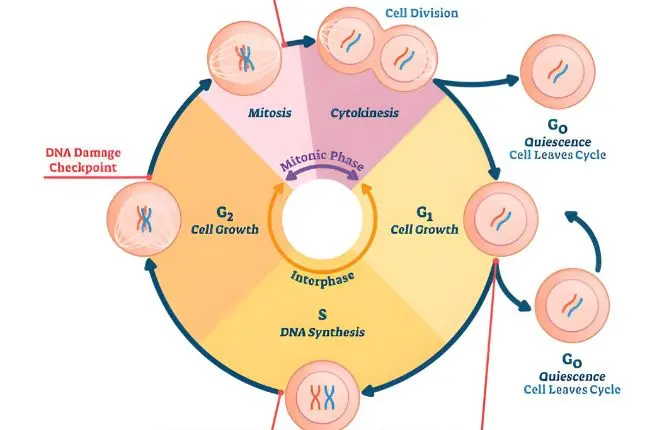
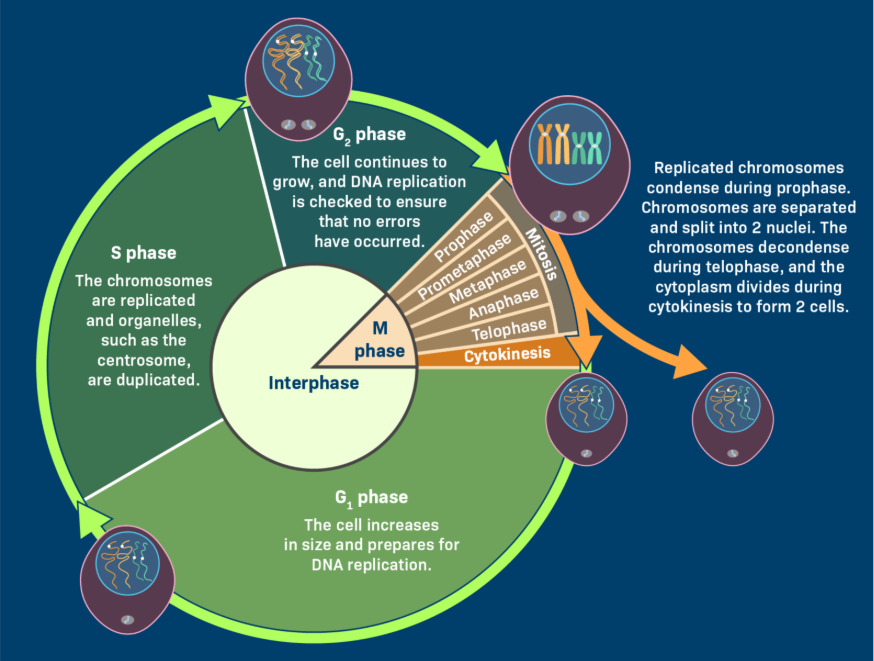
The cell cycle is the sequence of events by which a cell grows, replicates its DNA, and divides into two new daughter cells.
It is divided into two major stages:
- Interphase (G1, S, G2)
This is the cell preparation stage where it grows, checks its environment, and copies its DNA. It further consists, of G1, S, and G2 phases.
G1 phase: Cell grows, builds energy, and produces proteins required for DNA replication.
S phase: DNA synthesis occurs; Cyclin A & Cyclin E activate CDK2 to drive replication.
G2 phase: Cell performs final checks, ensures DNA is error-free, and prepares for mitosis.
Interphase = Growth + DNA replication + quality checks- Mitotic Phase (M phase)
This is where the actual division happens. It includes:
- Mitosis: Division of the nucleus. It can be further subdivided into various types:
- Prophase, Prometaphase, Metaphase, Anaphase, Telophase
- Cytokinesis: Division of the cytoplasm → two identical daughter cells{4)
M phase = Nuclear division + Cytoplasmic divisionEach phase depends on the proper completion of the previous phase, keeping the cycle tightly controlled. They are essential for growth, immunity, tissue maintenance, and reproduction.
| Main Phase | Sub-Phase | Key Events | Checkpoint / Control |
| Interphase | G1 (Gap 1) | • Cell grows and accumulates energy • Produces proteins needed for DNA replication | G1/S checkpoint: Ensures sufficient nutrients, organelles, and no DNA damage |
| Interphase | S (Synthesis) | • DNA is duplicated • Cyclin A & Cyclin E activate CDK2 to drive DNA synthesis | S-phase checkpoint: ATM/ATR → CHK1/CHK2 monitor DNA structure and replication accuracy |
| Interphase | G2 (Gap 2) | • Final preparation for cell division • Confirms DNA integrity and cell size | G2/M checkpoint: Stops division if DNA is damaged or incomplete |
| Mitotic Phase | Prophase | • Chromosomes condense into chromatids • Centrioles move to opposite poles | Start of mitotic spindle formation |
| Mitotic Phase | Metaphase | • Chromatids align on metaphase plate via microtubules | M checkpoint: Ensures proper chromosome alignment |
| Mitotic Phase | Anaphase | • APC activation separates sister chromatids | Chromatids pulled to opposite poles |
| Mitotic Phase | Telophase | • Nuclear envelopes form around chromosomes | Cell begins returning to interphase structure |
| Mitotic Phase | Cytokinesis | • Cytoplasm divides → two identical daughter cells | Completes cell division(4) |
Do you know: What is senescence?
Senescence is Permanent Growth Arrest
- It is characterized by G1 arrest and increased cell cycle inhibitors.
- It increases with aging but protects against malignant transformation.
Senescent cells can re-enter the cycle when exposed to mitogens during tissue repair.
A cell will divide only when the timing is right, and the conditions are safe.
Careful decision-making is the essence of cell-cycle regulation. Let’s unfold this process in the next section.
How Is the Cell Cycle Regulated?
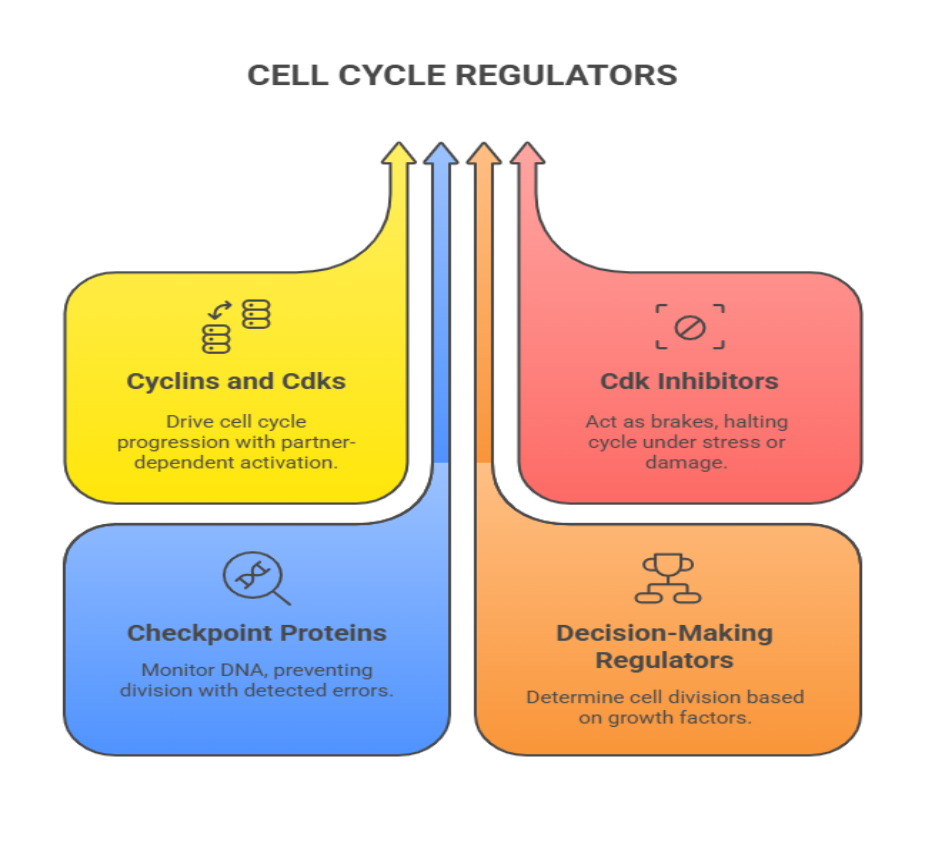
The cell cycle is directed by a group of protein regulators that work together to keep cell division accurate and tightly controlled.
- Cyclins and Cdks are the core drivers that pair up to push the cell from one stage to the next, like engines that only start when the right partner is present.
- Cdk inhibitors such as p21, p27, p15, and p16 act as brakes, stopping the cycle when the cell is stressed, damaged, or not ready.
- Checkpoint proteins like p53, Chk1, and Cdc25 monitor the cell’s DNA and prevent division if errors are detected.
- Finally, decision-making regulators such as Rb, E2F, and growth-factor–controlled cyclin D help determine whether the cell should divide at all. Together, these groups maintain balance, ensuring cells grow and divide safely, accurately, and only when needed.(5)
The table below breaks down these key protein regulators and their specific roles in cell cycle.(5)
Cell Cycle Regulators
| Regulator | What It Is | What It Does | When It Acts | Features |
| MPF (Cdk1 + Cyclin B) | A protein pair that triggers mitosis | Pushes the cell into M phase | G2 → M | Works like a “sta rt button” for cell division |
| Cyclin D | Growth-signal–responsive protein | Helps the cell move through early G1 | Early G1 | Appears only when the cell gets growth signals |
| Cyclin E | Late G1 cyclin | Starts DNA replication | G1 → S | Tells the cell “time to copy DNA” |
| Cyclin A | S-phase cyclin | Keeps DNA replication going | S phase | Makes sure DNA is copied smoothly |
| Cyclin B | Mitotic cyclin | Activates Cdk1 to start mitosis | G2 → M | Builds up before mitosis, then destroyed after |
| Cdk4/6 + Cyclin D | Enzyme + cyclin pair | Pass the G1 restriction point | G1 | Gives the cell permission to divide |
| Cdk2 + Cyclin E | Enzyme + cyclin | Triggers DNA synthesis | G1 → S | Commits the cell to making new DNA |
| Cdk2 + Cyclin A | Enzyme + cyclin | Drives S-phase forward | S | Ensures DNA replication completes properly |
| Cdk1 + Cyclin B | MPF complex | Starts mitosis | G2 → M | Launches all events of mitosis |
| Wee1 | Inhibitory kinase | Puts brakes on Cdk1/2 | Late S → G2 | Stops the cell from entering mitosis too early |
| Cdc25 | Activating phosphatase | Removes brakes from Cdks | G2 → M | Unlocks MPF to allow mitosis |
| Cip/Kip inhibitors (p21, p27) | Cip/Kip inhibitors (p21, p27) | Slow down or stop Cdks | G1 & S | Pause the cell cycle when the cell is stressed |
| INK4 inhibitors (p15, p16) | Specific Cdk4/6 blockers | Prevent G1 progression | Early G1 | Stop cells from dividing when signals are not right |
| Rb | Tumor-suppressor protein | Blocks E2F until cell is ready | G0 → G1 → S | Acts like a gatekeeper for DNA replication |
| E2F | Transcription factor | Turns on S-phase genes | Late G1 | Activates genes for DNA replication |
| p53 | Genome guardian | Activates p21 during DNA damage | G1/S checkpoint | Stops cell cycle to allow DNA repair |
| p21 | Cdk inhibitor | Blocks Cdks + DNA replication | G1 & S | Prevents damaged DNA from being copied |
| Chk1 | Checkpoint kinase | Blocks Cdc25 → stops mitosis | G2/M checkpoint | Makes sure DNA is fully replicated before division |
| TGF-β → p15 | Extracellular inhibitory signal | Stops Cdk4/6 | G1 | A natural “slow down” signal from outside the cell |
Diseases Linked to Cell Cycle Dysfunction
When these regulators function correctly, cells grow and replicate with precision whereas when they malfunction, the risk of uncontrolled growth and disease increases. A single missed signal or unresolved DNA error can push cells into uncontrolled division acting as root cause of many human diseases like:
- Cancer: uncontrolled proliferation (e.g., neuroblastoma driven by N-MYC).
- Kidney disease: impaired MSC regeneration due to senescence. (5)
- Alzheimer’s disease: dysregulation of cell cycle checkpoint proteins and CDK5.
Before a cell commits to divide, it listens to signals from outside,”cues” that say grow, pause or repair.
These instructions come from growth factor signaling, the upstream control system that shapes how the cell-cycle control tem behaves.
Let’s look at how this signaling sets the stage for healthy cell regulation.
What Is Growth Factor Signaling?
Growth factor signaling is the way cells receive external messages that tell them when to grow, survive, or divide. Growth factors are special proteins released by cells or tissues, thus acting like messengers. They travel to nearby cells and tell them how to respond.
When a growth factor reaches a target cell, it binds to a specific receptor on the cell’s surface and triggers a series of internal signaling that eventually change the cell’s behavior or gene activity.
Through this process, growth factor signaling controls important decisions like whether a cell should stay in a resting state, enter the cell cycle, make new DNA, or move toward division. (6)
Now that we know what growth factor signaling is, let’s have a look at what these signals do to your cells.
Why does Growth Factor Signaling matter?
Growth factor signaling influences many important biological processes.
- During embryonic development, these signals guide how tissues and organs form.
- In adults, growth factors help with wound healing, tissue repair, and the ongoing maintenance of healthy tissues.
Most growth factor receptors belong to a family called Receptor Tyrosine Kinases (RTKs). Different families of growth factors play different roles such as EGF, TGF-β, FGF, and VEGF families are all heavily involved in wound repair and regeneration. (6)
To ensure cells do not grow uncontrollably, growth factor signals are tightly regulated as cells activate feedback loops and natural inhibitors to maintain balance. When these controls fail, the consequences can be serious.
Do You Know?
Blocking just one receptor (EGFR) can slow aggressive cancers. That’s why EGFR-targeted therapies have transformed treatment for colorectal, lung, pancreatic, and head & neck cancers.
To connect everything we have discussed so far, we now turn to GG, which is a metabolic link that influences signaling, stability, and cell-cycle flow.
Geranylgeraniol (GG) in Cell Cycle Regulation
Geranylgeraniol (GG) is a vital intermediate in the mevalonate pathway and plays central role in regulating the cell cycle through protein prenylation (a process of attaching a small fatty molecule to proteins so it can stick to the cell membrane and work properly) and downstream signaling. Its influence depends heavily on the cellular environment by supporting healthy cell growth in normal cells while inhibiting proliferation in certain cancer cells.14
Also Read: A comprehensive guide to GG
1. Supports Protein Prenylation and G1–S Progression
GG enables the prenylation of small GTPases such as Rho, Rac, and Cdc42, which are required for proper cell signaling, cytoskeletal organization, and movement through the G1–S checkpoint.
When prenylation is disrupted like during statin or bisphosphonate use, cyclin D1 levels fall, CDK4/6 activity decreases, and cells arrest in G1. GG supplementation restores prenylation and helps re-establish normal cell-cycle progression.(15,16)
2. Maintains Mitochondrial Energy for Division
By supporting CoQ10 production and mitochondrial function, GG helps provide the ATP needed for DNA replication, mitosis, and overall cellular turnover.
Also Read: How GG Supplements Support CoQ10 Production for Better Cellular Health
3. Activates Rho–YAP Pathways for Survival and Mitosis
GG also rescues Rho-dependent YAP activation, a pathway essential for viability and for the activation of genes involved in mitosis, such as kinetochore/centromere regulators. This makes GG important for maintaining healthy cell renewal.
4. Context-Dependent Effects: Protective vs. Anti-Proliferative
- GG behaves differently depending on the cell type: Normal or GG-depleted cells: GG restores growth-factor signaling, prevents G1 arrest, and protects against apoptosis.
- Cancer cells: GG can suppress HMG-CoA reductase, reduce cyclin D1, induce G1 arrest, and lower cell viability.(16,17)
This dual behavior highlights GG’s unique ability to support healthy cell turnover while exhibiting anti-proliferative activity in tumor cells.
Conclusion
Understanding the cell cycle through the lens of growth-factor signaling and growth regulators gives a clearer picture of how diseases develop and how they can be prevented or managed.
As research evolves, metabolic intermediates like GG are emerging as key modulators of immune function, bone health, muscle maintenance, and even treatment responses. They are not drugs, but they influence the same pathways targeted by major therapeutics such as statins, bisphosphonates, and cancer therapies.
This creates a powerful opportunity: by supporting metabolic balance, we may enhance cellular performance, reduce therapy-related side effects, and promote healthier regeneration throughout life. The future of cellular wellness lies in understanding these metabolic, signaling intersections, and GG is right at the center of that conversation.
Key Takeaways
- Cell cycle = decision system: Cells check nutrients, damage, and signals before dividing.
- Checkpoints = safeguards: They stop the cycle if DNA errors or risks are detected.
- Growth factors set the pace: Signals like EGF or TGF-β speed up, slow down, or pause division based on cellular needs.
- GG enables proper cell-cycle progression by supporting prenylation-driven growth signaling.
- Checkpoint or signaling failures can trigger diseases like cancer, neurodegeneration, and impaired wound healing.
The cell cycle manages how cells grow, repair damage, and divide. It keeps tissues like skin, gut, and immune cells constantly renewed.
Growth factors bind to receptors on the cell surface and activate signaling pathways that tell the cell whether to stay at rest, start preparing for division, or move forward into DNA replication.
This pathway produces essential lipids especially GGPP and its precursor GG which allow signaling proteins to attach to cell membranes. Without this step, cells can’t receive proper growth signals and may halt the cycle.
GG restores prenylation of small GTPases like Rho and Rac, supports mitochondrial energy, and helps the cell transition from G1 to S phase. It keeps normal cells functioning smoothly, especially when the pathway is blocked by medications.
Cancer cells heavily depend on the mevalonate pathway. In these cells, GG can lower cyclin D1 and HMG-CoA reductase levels, causing G1 arrest and reduced viability. This makes GG protective in healthy cells but suppressive in tumor environments.
References
- Schafer KA. The cell cycle: a review. Vet Pathol. 1998;35(6):461-478
- Kastan MB, Bartek J. Cell-cycle checkpoints and cancer. Nature. 2004;432(7015):316-323.
- Singhatanadgit W, Hankamolsiri W, Janvikul W. Geranylgeraniol prevents zoledronic acid–mediated reduction of viable mesenchymal stem cells via induction of Rho-dependent YAP activation. R Soc Open Sci. 2021;8(6):202066. doi:10.1098/rsos.202066
- Enzo Biochem Inc. The Cell Cycle Explained, and How to Study It. Published February 6, 2023. Accessed [insert date]. Available at: https://www.enzolifesciences.com/science-center/notes/2023/february/the-cell-cycle-explained-and-how-to-study-it/
- Cooper GM. The Cell: A Molecular Approach. 2nd ed. Sunderland, MA: Sinauer Associates; 2000. Regulators of Cell Cycle Progression. Accessed [today’s date]. https://www.ncbi.nlm.nih.gov/books/NBK9962/
- Wang Z. Regulation of cell cycle progression by growth factor–induced cell signaling. Cells. 2021;10(12):3327. doi:10.3390/cells10123327.
- Zhang H, Li X, Wu Q, et al. CDKL3 is a targetable regulator of cell cycle progression in cancers. Nat Commun. 2024;15:47155. doi:10.1038/s41467-024-47155-3.
- Chen B, Liu H, Wang Z, et al. Development of CDK12 as a cancer therapeutic target. Pharmacol Res. 2024;107321. doi:10.1016/j.phrs.2024.107321.
- Thamjamrassri P, Boonchuen P, Sritana N, et al. Circular RNAs in cell cycle regulation of cancers. Int J Mol Sci. 2024;25(11):6094. doi:10.3390/ijms25116094.
- Li Q, Zhao L, Song W, et al. Signalling pathways involved in colorectal cancer. Signal Transduct Target Ther. 2024;9:193. doi:10.1038/s41392-024-01953-7.
- Patel S, Roy A, Singh P, et al. Targeting ATR/CHK1 in TP53-mutant cancers. J Exp Clin Cancer Res. 2024;43:146. doi:10.1186/s13046-024-03146-2.
- Smith L, Morgan A, Hughes T, et al. WEE1 inhibition in cancer therapy. Br J Cancer. 2024;131:889–901. doi:10.1038/s41416-024-02889-4.
- Fisher JE, Rogers MJ, Halasy JM, et al. Alendronate mechanism of action: geranylgeraniol, an intermediate in the mevalonate pathway, prevents inhibition of osteoclast formation, bone resorption, and kinase activation in vitro. Proc Natl Acad Sci U S A. 1999;96(1):133-138. doi:10.1073/pnas.96.1.133.
- Geranylgeraniol suppresses the viability of human DU145 prostate cancer cells by inducing G1 arrest. Ovid. Accessed November 2025.
- Katuru R, Fernandes NV, Elfakhani M, et al. Mevalonate depletion mediates the suppressive impact of geranylgeraniol on murine B16 melanoma cells. Lipids Health Dis. 2011;10:187. doi:10.1186/1476-511X-10-187.
- Fliefel RM, Entekhabi SA, Ehrenfeld M, Otto S. Geranylgeraniol (GGOH) as a mevalonate pathway activator in the rescue of bone cells treated with zoledronic acid: an in vitro study. BioMed Res Int. 2019;2019:4351327. doi:10.1155/2019/4351327
- Fernandes NV, Yeganehjoo H, Katuru R, et al. Geranylgeraniol suppresses the viability of human DU145 prostate carcinoma cells and the level of HMG CoA reductase. Exp Biol Med (Maywood). 2013;238(11):1265-1274. doi:10.1177/1535370213492693.