TL/DR:
Steroid hormones are made from cholesterol through a tightly regulated cellular pathway called steroidogenesis. This process also depends on efficient transport, enzyme function, and cell signaling. Geranylgeraniol (GG) supports these upstream cellular processes by facilitating hormone production efficiently.
Steroid hormones are your body’s fatty messengers, derived from cholesterol, that keep stress in check, fire up your metabolism, maintain muscle tone, strengthen bones, and power reproductive health through a cell-powered process called steroidogenesis. But do you think that cholesterol alone is enough to drive steroid hormone production?
Well, not exactly. Efficient steroidogenesis also depends on strong cellular communication, healthy mitochondrial activity, and proper cholesterol transport within cellular compartments. That’s where geranylgeraniol (GG) plays a supportive upstream role in the mevalonate pathway.
Let’s take a closer look at steroid hormones and the various pathways that support them.
What are Steroid Hormones?
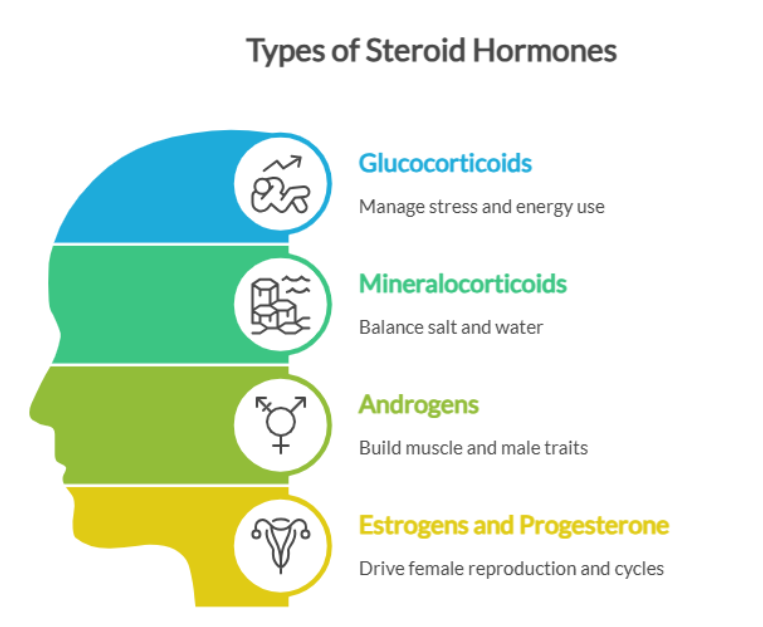
Steroid hormones are fatty chemical messengers made from cholesterol that slip easily into cells to control key body functions. They fall into following main groups:
- Glucocorticoids like cortisol, which manage stress and energy use.
- Mineralocorticoids like aldosterone that balances salt, and water.
- Androgens such as testosterone build muscle and male traits.
- Estrogens and progesterone control female reproduction and cycles.(1)
Guess what! All steroid hormones share the same biochemical precursor, cholesterol, as their core building block. This shared cholesterol backbone helps the body balance hormones throughout the day, from energizing mornings to restorative evenings.
How does Your Body Naturally Make Cholesterol?
Inside the body, cholesterol is produced through an organized process. Let’s break it down into two simple steps:
Cholesterol Formation via the Mevalonate Pathway
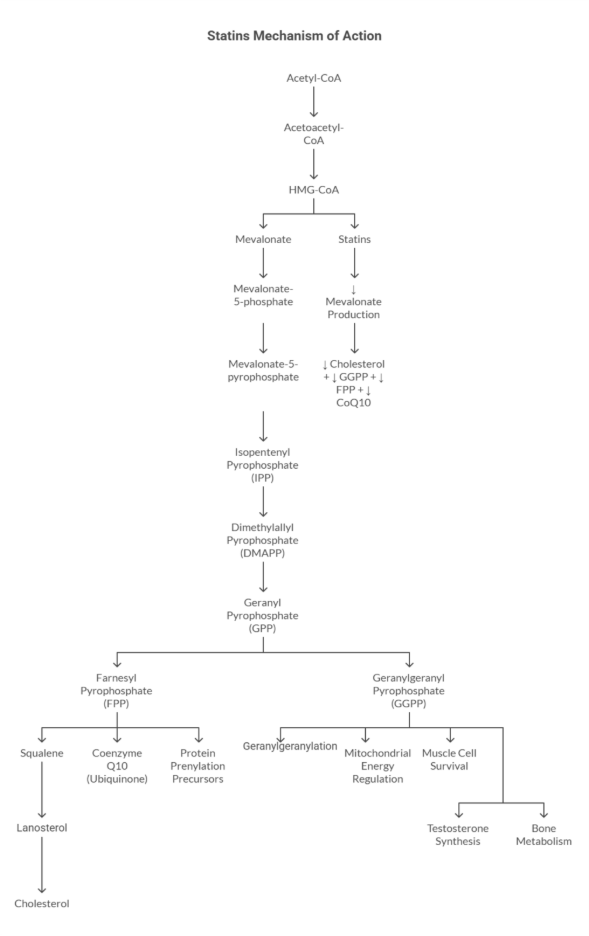
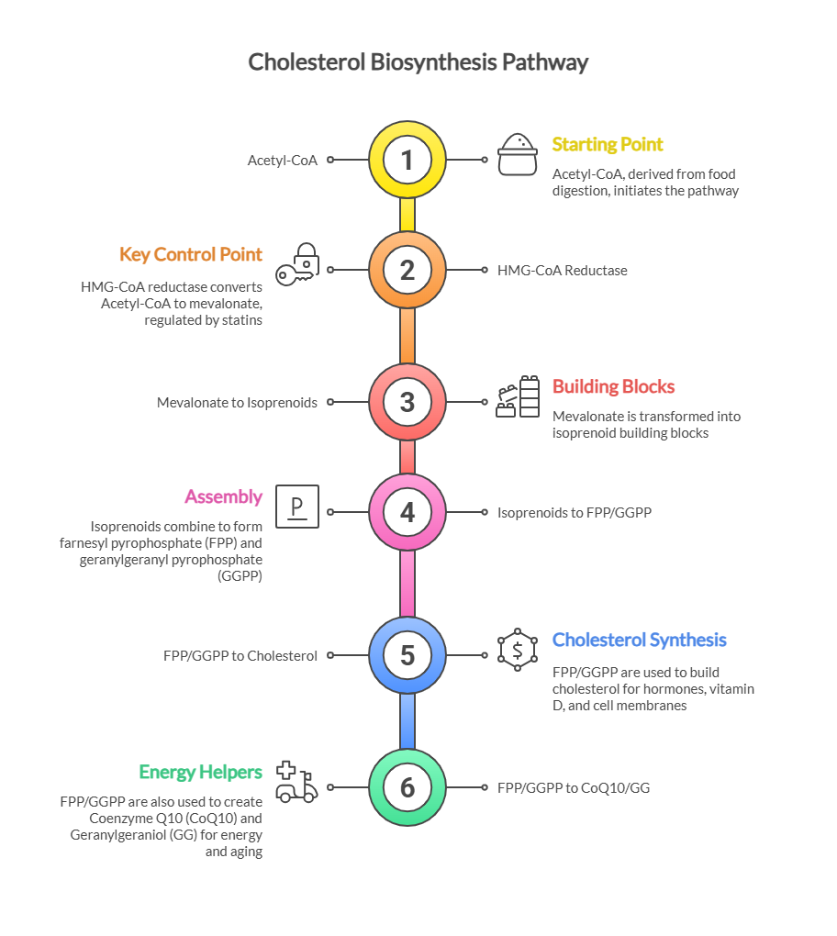
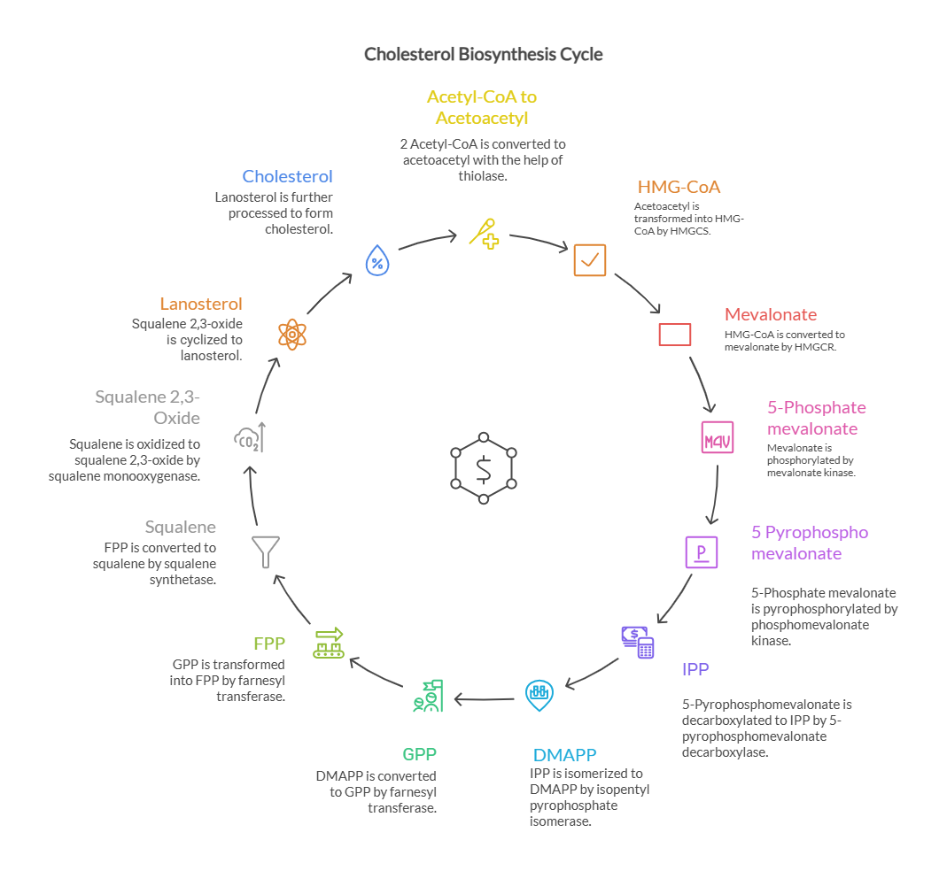
- The mevalonate pathway acts like a cellular assembly line that builds cholesterol and key helpers like Geranylgeraniol (GG) from simple sugars
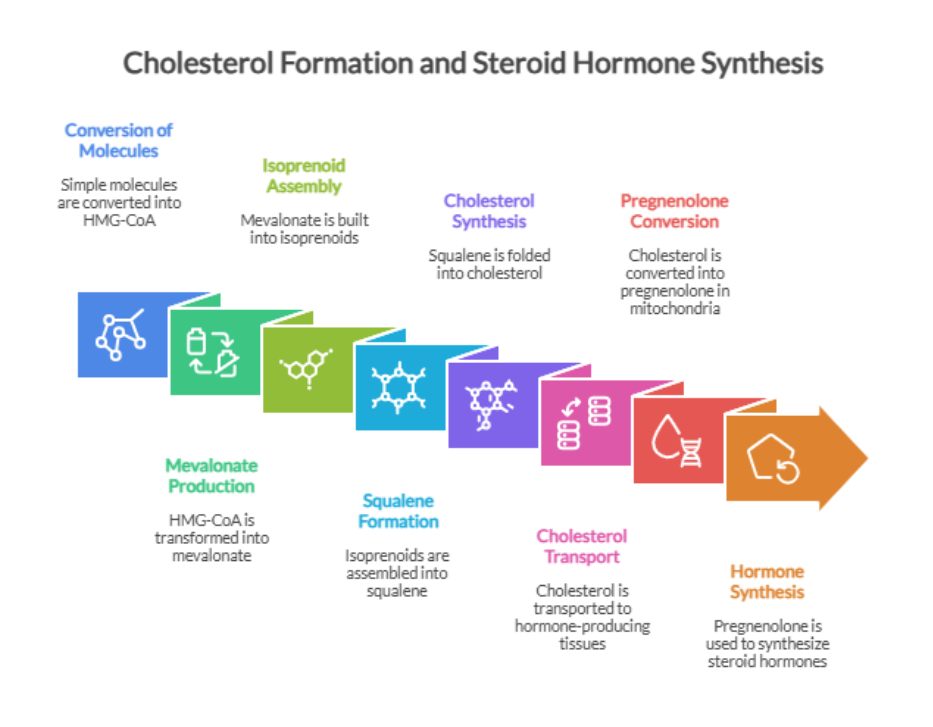
- It begins when simple molecules derived from carbohydrates and fats are converted into HMG-CoA (3-hydroxy-3-methylglutaryl-coenzyme A), which is then converted into mevalonate by the key enzyme, HMG-CoA reductase.
- Mevalonate is gradually assembled into larger units called isoprenoids, which are then converted into squalene and ultimately into cholesterol.(2)
From Cholesterol to Steroid Hormone Production
- This cholesterol is not an end product; rather, it is the starting fuel for steroid hormone production.
- Once formed, it is delivered to hormone-producing tissues such as the adrenal glands, ovaries, and testes.
- Within these cells, cholesterol is transported into the mitochondria, where it is converted to pregnenolone, the first step in the steroid hormone biosynthesis pathway.
- From pregnenolone, the body creates essential hormones like cortisol, testosterone, estrogen, and progesterone.
- In this way, the mevalonate pathway provides the biochemical foundation for the initiation of steroid hormone synthesis.(3)
Steroid pathways reflect the body’s precision in transforming raw materials into functional hormones. Let’s break this down in the next section.
The Steroid Hormone Production Pathways
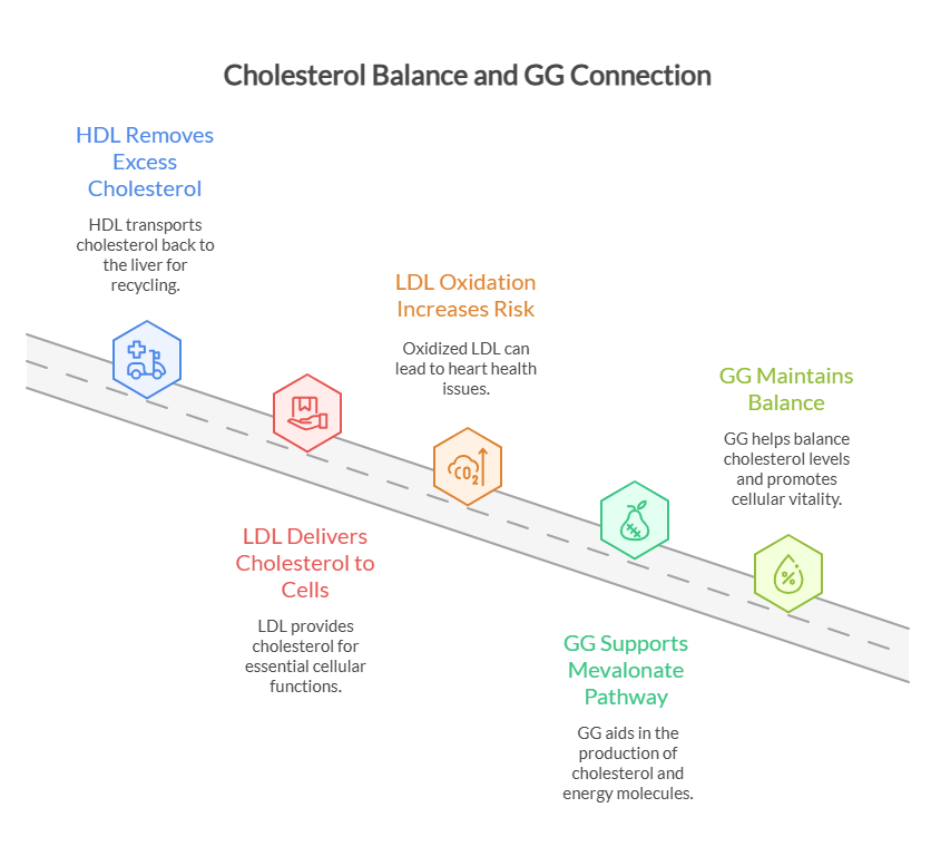
Steroid hormone production starts long before hormones are made. While the body synthesizes most of its cholesterol internally through the mevalonate pathway, additional cholesterol is also supplied by LDL (Low-Density Lipoprotein) and HDL (High-Density Lipoprotein) circulating in the blood.
Preparing Cholesterol for Hormone Production
- Hormone-producing cells, such as those in the adrenal glands, ovaries, and testes, actively take up circulating cholesterol and store it as cholesterol esters (inactive storage form).
- Now, whenever hormone synthesis is required, stored cholesterol is released and directed toward the mitochondria, where hormone production begins.(4)
- As cholesterol cannot cross the mitochondrial membrane on its own, active transport is required, and these steps govern the speed of hormone synthesis.
- As a result, steroid hormone production is often limited by cholesterol transport efficiency, rather than by the total amount of cholesterol available.
Did you know?
Transporting Cholesterol into the Mitochondria is the Rate-Limiting Step and is the most critical control point in steroidogenesis.
Inside the Mitochondria: Where Steroid Hormone Synthesis Begins
When cholesterol reaches the inner mitochondrial membrane, it is irreversibly converted into pregnenolone. This process relies on energy, oxygen, and electron transfer.(5)
This step determines the maximum rate at which steroid hormones can be produced.
Pregnenolone acts like a central hub. From here, the pathway branches into distinct directions, depending on which enzymes are active and which tissue is involved.
1. Stress hormone pathway (Cortisol):
From the central hub, pregnenolone can be converted to progesterone and subsequently to cortisol, primarily in the adrenal glands. Cortisol is essential for regulating the body’s stress response.(6)
2. Sex hormone pathway (Testosterone & Estrogen):
Pregnenolone can also be converted into DHEA (Dehydroepiandrosterone), which serves as the building block for testosterone and estroge n. This pathway operates in the adrenal glands, ovaries, testes, and peripheral tissues, including fat and muscle tissue.
Also Read: Geranylgeraniol(GG)and Testosterone: New insights
3. Mineral hormone pathway (Aldosterone):
In another direction, pregnenolone is converted to progesterone, which is then converted to aldosterone. This pathway supports fluid and electrolyte balance by helping kidneys
Steroid Hormone Pathways
| Characteristic | Pathway | Location | Function |
| Stress Hormones (Cortisol) | Pregnenolone | Adrenal Glands | Supports Stress Response, Inflammation Control, Blood Sugar Regulation and Energy Balance |
| Sex Hormones (Testosterone and Estrogen) | Pregnenolone | Testes, Ovaries, Adrenal Glands, Peripheral Tissues | Supports muscle strength, bone density, metabolism and reproductive Health |
| Fluid & Blood Pressure Control (Aldosterone) | Pregnenolone | Adrenal Glands | Regulates salt balance, water retention, and blood pressure via the kidneys. |
Steroid pathways provide structure, while enzymes and cellular signals provide precision. Let’s understand how enzymes and cellular signals keep hormone production in balance.
The Enzymes and Signal Network Behind Hormonal Balance
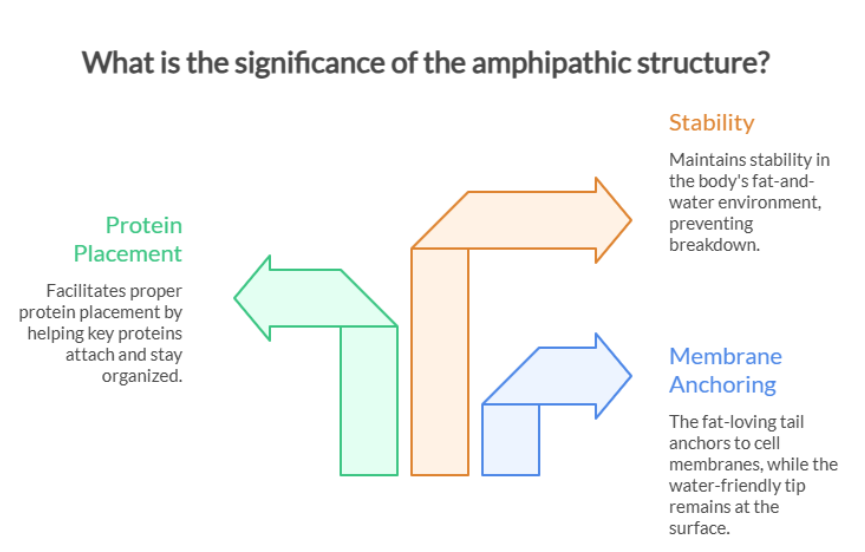
Enzymes involved in steroid hormone biosynthesis must be precisely anchored to cell membranes, particularly within the mitochondria and the smooth endoplasmic reticulum, to convert cholesterol efficiently
While hormones carry the message, their balanced production depends on upstream cellular support. This is where Geranylgeraniol (GG) plays a supportive role. Thinking How? Let’s decode in the next section.
Geranylgeraniol (GG) and Its Role in Steroid Formation
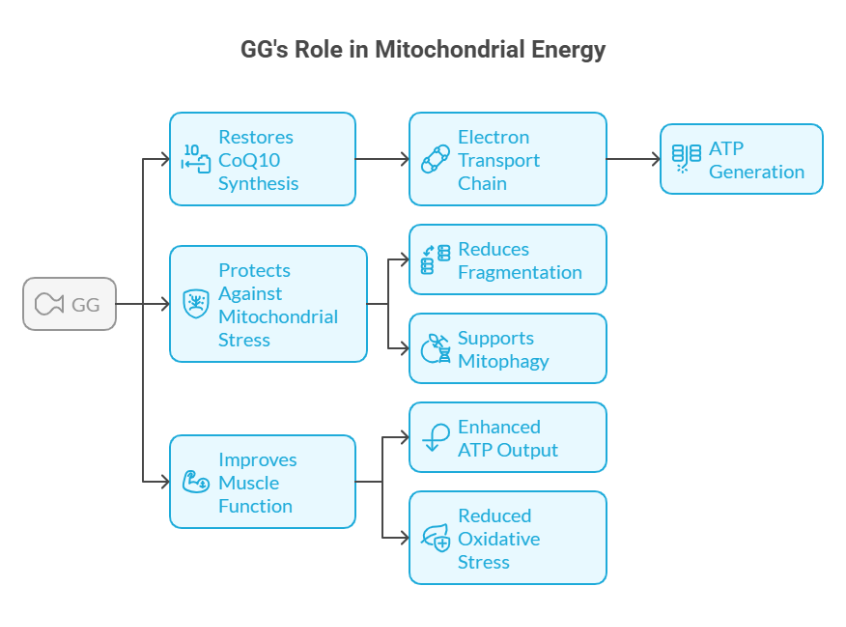
Geranylgeraniol (GG) is a naturally occurring isoprenoid and an important metabolic derivative of the mevalonate pathway, the same pathway as the isoprenoid–cholesterol synthesis pathway.
Although traditionally associated with cholesterol metabolism, growing evidence indicates that GG can directly influence steroid hormone biosynthesis, particularly in steroid-producing cells.
Rather than acting as a hormone itself, GG supports the signaling and transport mechanisms that enable efficient steroidogenesis.
Also read: A comprehensive Guide to Geranylgeraniol(GG) Supplements
Key Roles of GG in Steroid Formation Include:
- GG enhances the production of steroid hormones (e.g., progesterone and testosterone) in steroidogenic cells by activating the cAMP/PKA (Protein Kinase A) signaling pathway, which is a central regulator of steroidogenesis.
- This effect occurs through stimulation of adenylate cyclase, which raises intracellular cAMP (cyclic Adenosine Monophosphate) levels without suppressing phosphodiesterase activity.(8)
- GG increases the expression of steroidogenic acute regulatory protein (StAR), which is responsible for the rate-limiting transport of cholesterol into mitochondria, a critical first step in the synthesis of steroid hormones.
- By improving cholesterol transport and intracellular signaling, GG helps optimize how efficiently steroid hormones are produced at the cellular level. (9)
Clinical Evidence: Geranylgeraniol (GG) and Testosterone
- A clinical study published in the Nutraceuticals journal evaluated 8-week, randomized, placebo-controlled clinical trial of healthy adults that evaluated safety and hormone markers.
- One group of participants was given GG in a dose-escalated range of 150–300 mg per day, another group was given a placebo, and exploratory analysis were done. Overall, GG did not significantly alter blood chemistry, hematology, or general hormone profiles. The following table summarizes key findings:
| Parameter | Details |
| Study Design | Randomized, placebo-controlled Clinical Trial |
| Journal | Nutraceuticals |
| Duration | 8 weeks |
| Participants | Healthy Adults |
| Intervention | Geranylgeraniol (GG), dose-escalated |
| Dose | 150mg to 180mg |
| Key Findings(Exploratory Analysis) | Men with low baseline Testosterone(<700mg/dL)showed significant increase in total,free and bioavailable testosterone. |
| Placebo Comparison | No testosterone increase was seen in placebo group |
| Conclusion | GG supported testosterone levels in men with low baseline values without altering hormone in healthy individuals |
Overall, these findings position GG as an upstream modulator of steroidogenesis, supporting the biological processes that allow hormone production to proceed smoothly rather than forcing hormone output directly.
Based on the insights discussed above, the evidence summary below illustrates how these effects appear in clinical studies.
Evidence Summary: Studies on Steroid Hormone Production and Geranylgeraniol (GG)
| Study / Year | Design | N | Population / Model | Dose / Intervention | Duration | Key Result |
| Sidhu & Mishra, 2024(10) | Narrative review | — | Human steroidogenic tissues | — | — | Demonstrated that steroidogenesis is regulated by cholesterol trafficking, mitochondrial readiness, and not cholesterol levels alone. |
| Ho HJ et al., 2018(8) | In-vitro | — | Mouse Leydig tumor cells (I-10) | Geranylgeraniol (GGOH) | 0–24 h | GG increased progesterone and testosterone by activating the steroidogenesis signaling. |
| London E et al., 2015(6) | Observational / tissue analysis | — | Human cortisol-producing adrenal lesions | — | — | Altered cholesterol biosynthesis and intracellular trafficking directly influence cortisol production capacity. |
| Miller, 2013(5) | Review | — | Human steroidogenic tissues | — | — | Highlighted the essential role of signaling pathways in initiating steroid hormone synthesis. |
| Rone MB et al., 2009(3) | Review | — | Human & animal steroidogenic cells | — | — | Identified cholesterol transport into mitochondria as the rate-limiting step in steroid hormone production. |
- Reviews and human tissue studies identify mitochondrial cholesterol trafficking as the key rate-limiting step in steroidogenesis.
- Importantly, in-vitro data demonstrate geranylgeraniol (GG) helps hormone-producing cells work more efficiently by supporting key internal signals (cAMP/PKA) and proteins (StAR) needed to start hormone production, rather than directly forcing hormone levels to rise.
Conclusion
Steroid hormone production is a carefully coordinated cellular process that begins long before hormones enter the bloodstream. From cholesterol synthesis in the mevalonate pathway to precise transport into mitochondria and enzyme-driven conversions, every step must work in harmony.
Geranylgeraniol (GG) fits into this system as an upstream supporter by helping maintain cellular signaling, protein positioning, and cholesterol movement that make steroidogenesis efficient and balanced.
Rather than forcing hormone secretion, GG supports the biological infrastructure that enables the body to produce hormones appropriately, an approach that becomes especially relevant in aging, metabolic stress, or pathway disruption.
Key Takeaways
- Steroid hormones are all synthesized from cholesterol via a shared common pathway called steroidogenesis.
- Cholesterol availability alone does not determine hormone levels.
- Pregnenolone acts as the central hub from which stress, sex, and mineral hormones are formed.
- Enzymes must be correctly anchored to mitochondrial and cellular membranes to function properly.
- The mevalonate pathway supplies both cholesterol and supporting molecules suchb as geranylgeraniol (GG).
FAQs
Steroidogenesis is the biological process by which the body converts cholesterol into steroid hormones, including cortisol, testosterone, estrogen, progesterone, and aldosterone.
Cholesterol is essential because it is the precursor of all steroid hormones.
Pregnenolone is the first hormone made from cholesterol and acts as the central branching point for all steroid hormone pathways.
The mevalonate pathway produces cholesterol and other molecules that support cellular signaling and energy processes needed for steroid hormone production.
Yes, active individuals may use Geranylgeraniol to support muscle recovery, mitochondrial function, and exercise tolerance, especially during periods of intense training or recovery.
References
What are steroid hormones? A complete guide. Creative Proteomics. Published November 30, 2025. Accessed January 5, 2026.
Buhaescu I, Izzedine H. Mevalonate pathway: A review of clinical and therapeutic implications. Clin Biochem. 2007;40(9-10):575-584. doi:10.1016/j.clinbiochem.2007.03.016
Rone MB, Fan J, Papadopoulos V. Cholesterol transport in steroid biosynthesis: role of protein–protein interactions and implications in disease states. Biochim Biophys Acta. 2009;1791(7):646-658. doi:10.1016/j.bbalip.2009.02.002
Miller WL, Auchus RJ. The molecular biology, biochemistry, and physiology of human steroidogenesis and its disorders. Endocr Rev. 2011;32(1):81-151. doi:10.1210/er.2010-0013
Miller WL. Steroid hormone synthesis in mitochondria. Mol Cell Endocrinol. 2013;379(1-2):62-73. doi:10.1016/j.mce.2013.04.014
London E, Wassif CA, Horvath A, Tatsi C, Angelousi A, Karageorgiadis AS, Porter FD, Stratakis CA. Cholesterol biosynthesis and trafficking in cortisol-producing lesions of the adrenal cortex. J Clin Endocrinol Metab. 2015;100(10):3660-3667. doi:10.1210/jc.2015-2212.
Zhang FL, Casey PJ. Protein prenylation: molecular mechanisms and functional consequences. Annu Rev Biochem. 1996;65:241-269. doi:10.1146/annurev.bi.65.070196.001325
Ho HJ, Shirakawa H, Giriwono PE, Ito A, Komai M. A novel function of geranylgeraniol in regulating testosterone production. J Biochem Mol Toxicol. 2018;32(3):e22038. doi:10.1002/jbt.22038
Gheith R, Sharp M, Stefan M, Ottinger C, Lowery R, Wilson JM. The effects of geranylgeraniol on blood safety and sex hormone profiles in healthy adults: a dose-escalation, randomized, placebo-controlled trial. Nutraceuticals. 2023;3(4):605-618. doi:10.3390/nutraceuticals3040043
Sidhu SK, Mishra S. A cholesterol-centric outlook on steroidogenesis. In: Litwack G, ed. Vitamins and Hormones. Vol 124. Academic Press; 2024:405-428. doi:10.1016/bs.vh.2023.05.006