Author: admin

  • Steroid Hormone Production Pathways

    TL/DR:

    Steroid hormones are made from cholesterol through a tightly regulated cellular pathway called steroidogenesis. This process also depends on efficient transport, enzyme function, and cell signaling. Geranylgeraniol (GG) supports these upstream cellular processes by facilitating hormone production efficiently.

    Steroid hormones are your body’s fatty messengers, derived from cholesterol, that keep stress in check, fire up your metabolism, maintain muscle tone, strengthen bones, and power reproductive health through a cell-powered process called steroidogenesis. But do you think that cholesterol alone is enough to drive steroid hormone production?

    Well, not exactly. Efficient steroidogenesis also depends on strong cellular communication, healthy mitochondrial activity, and proper cholesterol transport within cellular compartments. That’s where geranylgeraniol (GG) plays a supportive upstream role in the mevalonate pathway.

    Let’s take a closer look at steroid hormones and the various pathways that support them.

    What are Steroid Hormones?

    Steroid hormones are fatty chemical messengers made from cholesterol that slip easily into cells to control key body functions. They fall into following main groups:

    • Glucocorticoids like cortisol, which manage stress and energy use.
    • Mineralocorticoids like aldosterone that balances salt, and water.
    • Androgens such as testosterone build muscle and male traits.
    • Estrogens and progesterone control female reproduction and cycles.(1)

    Guess what! All steroid hormones share the same biochemical precursor, cholesterol, as their core building block. This shared cholesterol backbone helps the body balance hormones throughout the day, from energizing mornings to restorative evenings.
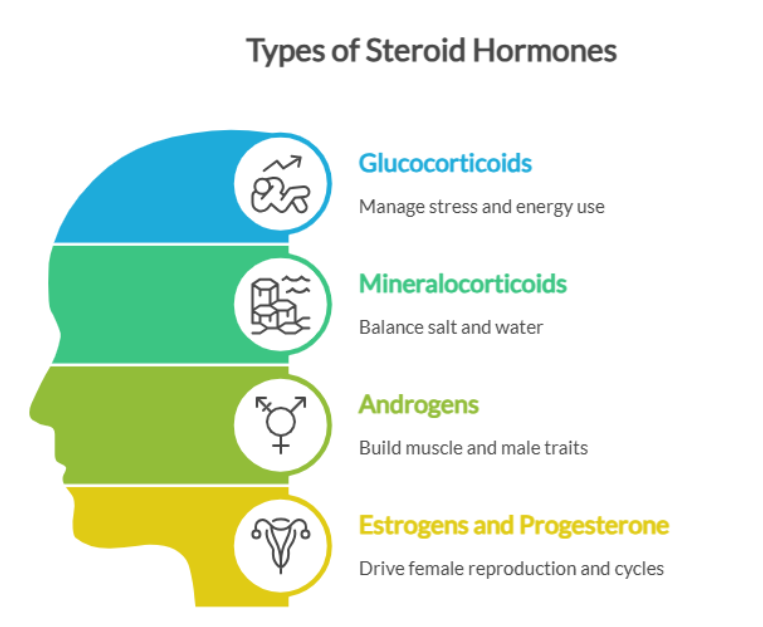
    Types of Steroid Hormones 

    How does Your Body Naturally Make Cholesterol?

    Inside the body, cholesterol is produced through an organized process. Let’s break it down into two simple steps:

    Cholesterol Formation via the Mevalonate Pathway

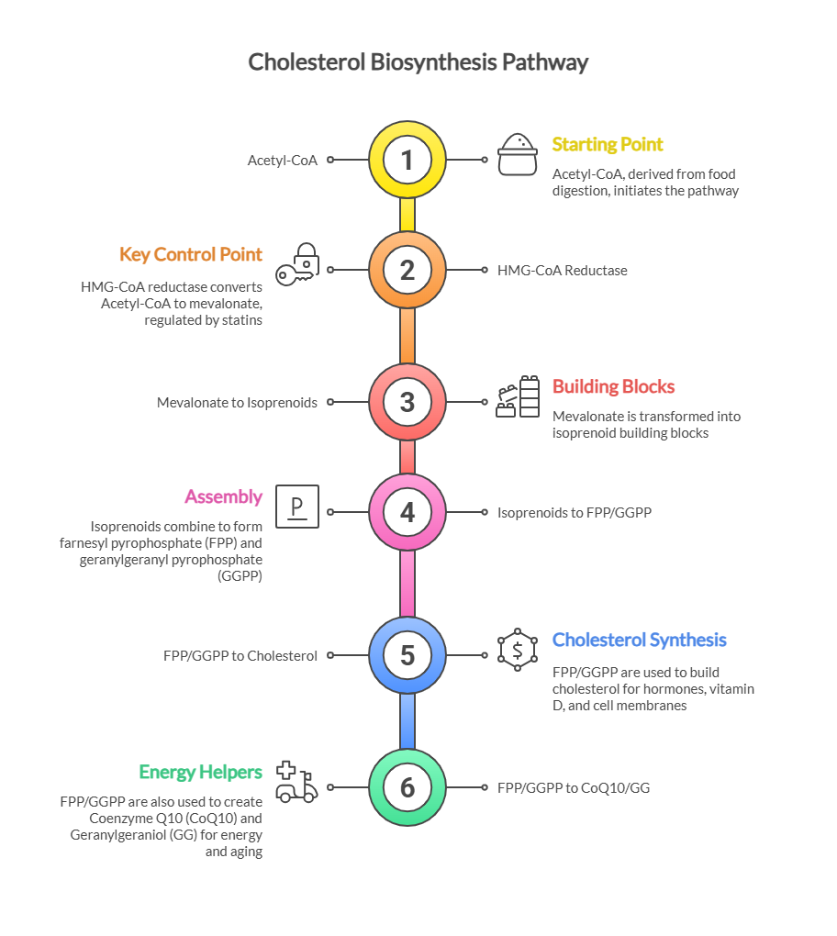
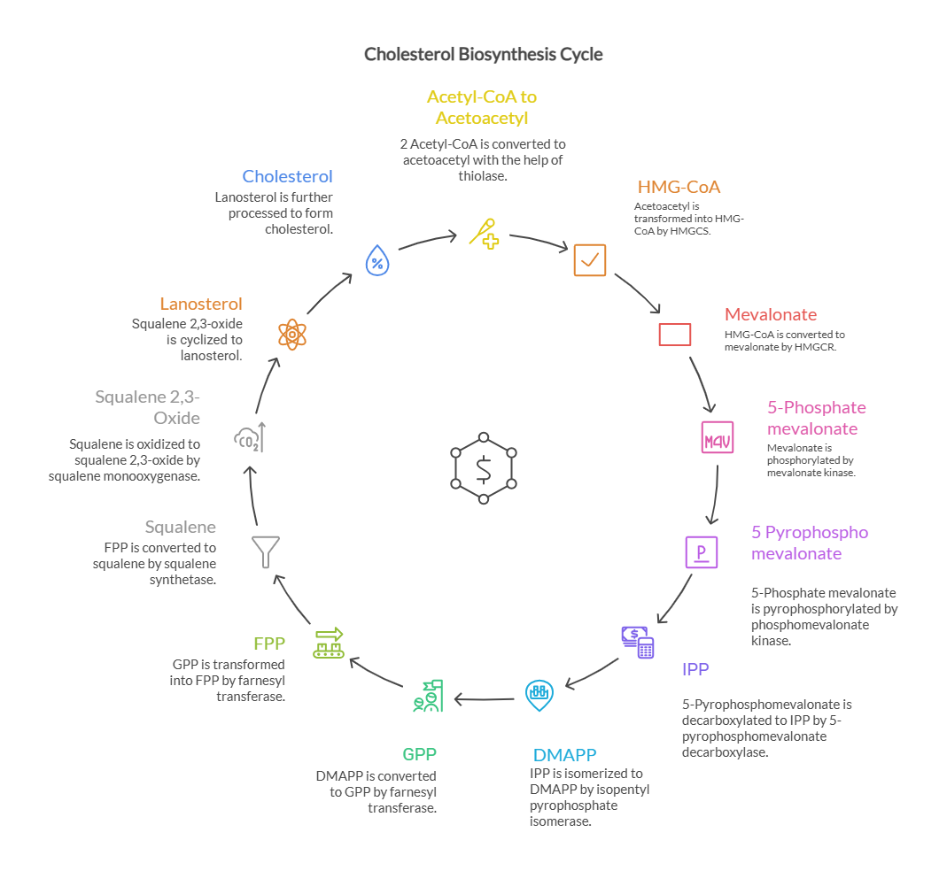
    • The mevalonate pathway acts like a cellular assembly line that builds cholesterol and key helpers like Geranylgeraniol (GG) from simple sugars
    • It begins when simple molecules derived from carbohydrates and fats are converted into HMG-CoA (3-hydroxy-3-methylglutaryl-coenzyme A), which is then converted into mevalonate by the key enzyme, HMG-CoA reductase.
    • Mevalonate is gradually assembled into larger units called isoprenoids, which are then converted into squalene and ultimately into cholesterol.(2)

    From Cholesterol to Steroid Hormone Production

    • This cholesterol is not an end product; rather, it is the starting fuel for steroid hormone production.
    • Once formed, it is delivered to hormone-producing tissues such as the adrenal glands, ovaries, and testes.
    • Within these cells, cholesterol is transported into the mitochondria, where it is converted to pregnenolone, the first step in the steroid hormone biosynthesis pathway.
    • From pregnenolone, the body creates essential hormones like cortisol, testosterone, estrogen, and progesterone.
    • In this way, the mevalonate pathway provides the biochemical foundation for the initiation of steroid hormone synthesis.(3)
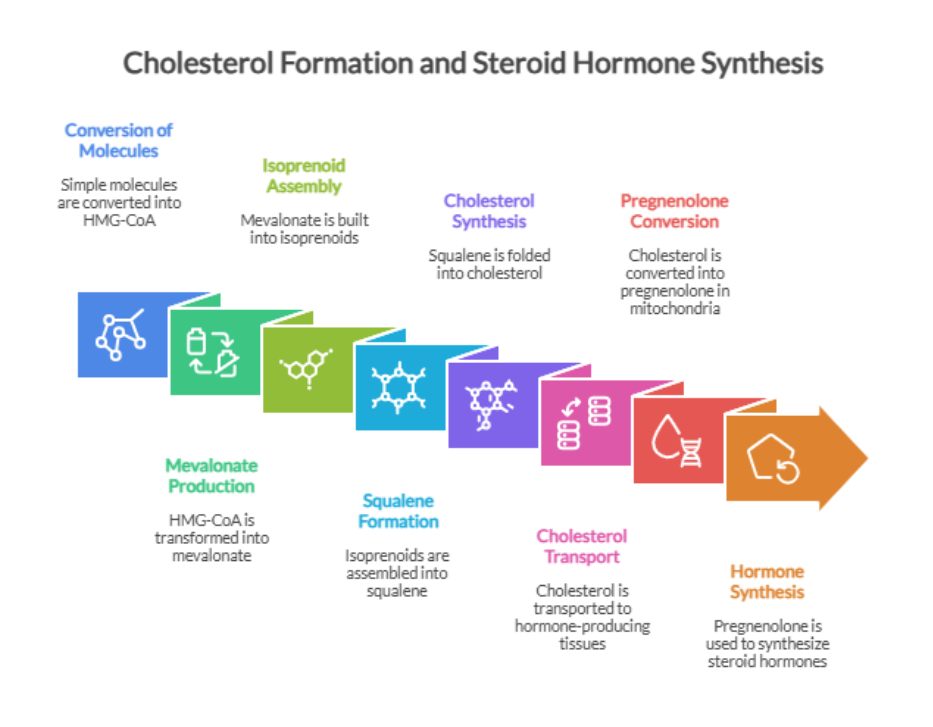
     Cholesterol Formation and Steroid Hormone Synthesis 

    Steroid pathways reflect the body’s precision in transforming raw materials into functional hormones. Let’s break this down in the next section.

    The Steroid Hormone Production Pathways

    Steroid hormone production starts long before hormones are made. While the body synthesizes most of its cholesterol internally through the mevalonate pathway, additional cholesterol is also supplied by LDL (Low-Density Lipoprotein) and HDL (High-Density Lipoprotein) circulating in the blood.

    Preparing Cholesterol for Hormone Production

    • Hormone-producing cells, such as those in the adrenal glands, ovaries, and testes, actively take up circulating cholesterol and store it as cholesterol esters (inactive storage form).
    • Now, whenever hormone synthesis is required, stored cholesterol is released and directed toward the mitochondria, where hormone production begins.(4)
    • As cholesterol cannot cross the mitochondrial membrane on its own, active transport is required, and these steps govern the speed of hormone synthesis.
    • As a result, steroid hormone production is often limited by cholesterol transport efficiency, rather than by the total amount of cholesterol available.

    Did you know?

    Transporting Cholesterol into the Mitochondria is the Rate-Limiting Step and is the most critical control point in steroidogenesis.

    Inside the Mitochondria: Where Steroid Hormone Synthesis Begins

    When cholesterol reaches the inner mitochondrial membrane, it is irreversibly converted into pregnenolone. This process relies on energy, oxygen, and electron transfer.(5)

    This step determines the maximum rate at which steroid hormones can be produced.

    Pregnenolone acts like a central hub. From here, the pathway branches into distinct directions, depending on which enzymes are active and which tissue is involved.

    1. Stress hormone pathway (Cortisol):

    From the central hub, pregnenolone can be converted to progesterone and subsequently to cortisol, primarily in the adrenal glands. Cortisol is essential for regulating the body’s stress response.(6)

    2. Sex hormone pathway (Testosterone & Estrogen):

    Pregnenolone can also be converted into DHEA (Dehydroepiandrosterone), which serves as the building block for testosterone and estroge n. This pathway operates in the adrenal glands, ovaries, testes, and peripheral tissues, including fat and muscle tissue.

    Also Read: Geranylgeraniol(GG)and Testosterone: New insights

    3. Mineral hormone pathway (Aldosterone):

    In another direction, pregnenolone is converted to progesterone, which is then converted to aldosterone. This pathway supports fluid and electrolyte balance by helping kidneys

    Steroid Hormone Pathways

    Characteristic Pathway Location Function 
     Stress Hormones (Cortisol)  PregnenoloneProgesterone Cortisol Adrenal Glands Supports Stress Response, Inflammation Control, Blood Sugar Regulation and Energy Balance 
    Sex Hormones (Testosterone and Estrogen) PregnenoloneDHEATestosteroneEstrogen Testes, Ovaries, Adrenal Glands, Peripheral Tissues Supports muscle strength, bone density, metabolism and reproductive Health 
    Fluid & Blood Pressure Control (Aldosterone) PregnenoloneProgesteroneAldosterone Adrenal Glands Regulates salt balance, water retention, and blood pressure via the kidneys. 

    Steroid pathways provide structure, while enzymes and cellular signals provide precision. Let’s understand how enzymes and cellular signals keep hormone production in balance.

    The Enzymes and Signal Network Behind Hormonal Balance

    Enzymes involved in steroid hormone biosynthesis must be precisely anchored to cell membranes, particularly within the mitochondria and the smooth endoplasmic reticulum, to convert cholesterol efficiently

    While hormones carry the message, their balanced production depends on upstream cellular support. This is where Geranylgeraniol (GG) plays a supportive role. Thinking How? Let’s decode in the next section.

    Geranylgeraniol (GG) and Its Role in Steroid Formation

    Geranylgeraniol (GG) is a naturally occurring isoprenoid and an important metabolic derivative of the mevalonate pathway, the same pathway as the isoprenoid–cholesterol synthesis pathway.

    Although traditionally associated with cholesterol metabolism, growing evidence indicates that GG can directly influence steroid hormone biosynthesis, particularly in steroid-producing cells.

    Rather than acting as a hormone itself, GG supports the signaling and transport mechanisms that enable efficient steroidogenesis.

    Also read: A comprehensive Guide to Geranylgeraniol(GG) Supplements

    Key Roles of GG in Steroid Formation Include:

    • GG enhances the production of steroid hormones (e.g., progesterone and testosterone) in steroidogenic cells by activating the cAMP/PKA (Protein Kinase A) signaling pathway, which is a central regulator of steroidogenesis.
    • This effect occurs through stimulation of adenylate cyclase, which raises intracellular cAMP (cyclic Adenosine Monophosphate) levels without suppressing phosphodiesterase activity.(8)
    • GG increases the expression of steroidogenic acute regulatory protein (StAR), which is responsible for the rate-limiting transport of cholesterol into mitochondria, a critical first step in the synthesis of steroid hormones.
    • By improving cholesterol transport and intracellular signaling, GG helps optimize how efficiently steroid hormones are produced at the cellular level. (9)

    Clinical Evidence: Geranylgeraniol (GG) and Testosterone

    • A clinical study published in the Nutraceuticals journal evaluated 8-week, randomized, placebo-controlled clinical trial of healthy adults that evaluated safety and hormone markers.
    • One group of participants was given GG in a dose-escalated range of 150–300 mg per day, another group was given a placebo, and exploratory analysis were done. Overall, GG did not significantly alter blood chemistry, hematology, or general hormone profiles. The following table summarizes key findings:
    Parameter Details 
    Study Design Randomized, placebo-controlled Clinical Trial 
    Journal Nutraceuticals 
    Duration 8 weeks 
    Participants Healthy Adults 
    Intervention Geranylgeraniol (GG), dose-escalated 
    Dose 150mg to 180mg 
    Key Findings(Exploratory Analysis) Men with low baseline Testosterone(<700mg/dL)showed significant increase in total,free and bioavailable testosterone.  
    Placebo Comparison No testosterone increase was seen in placebo group 
    Conclusion GG supported testosterone levels in men with low baseline values without altering hormone in healthy individuals 

    Overall, these findings position GG as an upstream modulator of steroidogenesis, supporting the biological processes that allow hormone production to proceed smoothly rather than forcing hormone output directly.

    Based on the insights discussed above, the evidence summary below illustrates how these effects appear in clinical studies.

    Evidence Summary: Studies on Steroid Hormone Production and Geranylgeraniol (GG)

    Study / Year Design N Population / Model Dose / Intervention Duration Key Result 
    Sidhu & Mishra, 2024(10) Narrative review  — Human steroidogenic tissues — — Demonstrated that steroidogenesis is regulated by cholesterol trafficking, mitochondrial readiness, and not cholesterol levels alone. 
    Ho HJ et al., 2018(8) In-vitro — Mouse Leydig tumor cells (I-10) Geranylgeraniol (GGOH) 0–24 h GG increased progesterone and testosterone by activating the steroidogenesis signaling. 
    London E et al., 2015(6) Observational / tissue analysis — Human cortisol-producing adrenal lesions — — Altered cholesterol biosynthesis and intracellular trafficking directly influence cortisol production capacity. 
    Miller, 2013(5) Review — Human steroidogenic tissues — — Highlighted the essential role of signaling pathways in initiating steroid hormone synthesis. 
    Rone MB et al., 2009(3) Review — Human & animal steroidogenic cells — — Identified cholesterol transport into mitochondria as the rate-limiting step in steroid hormone production. 
    • Reviews and human tissue studies identify mitochondrial cholesterol trafficking as the key rate-limiting step in steroidogenesis.
    • Importantly, in-vitro data demonstrate geranylgeraniol (GG) helps hormone-producing cells work more efficiently by supporting key internal signals (cAMP/PKA) and proteins (StAR) needed to start hormone production, rather than directly forcing hormone levels to rise.

    Conclusion

    Steroid hormone production is a carefully coordinated cellular process that begins long before hormones enter the bloodstream. From cholesterol synthesis in the mevalonate pathway to precise transport into mitochondria and enzyme-driven conversions, every step must work in harmony.

    Geranylgeraniol (GG) fits into this system as an upstream supporter by helping maintain cellular signaling, protein positioning, and cholesterol movement that make steroidogenesis efficient and balanced.

    Rather than forcing hormone secretion, GG supports the biological infrastructure that enables the body to produce hormones appropriately, an approach that becomes especially relevant in aging, metabolic stress, or pathway disruption.

    Key Takeaways

    • Steroid hormones are all synthesized from cholesterol via a shared common pathway called steroidogenesis.
    • Cholesterol availability alone does not determine hormone levels.
    • Pregnenolone acts as the central hub from which stress, sex, and mineral hormones are formed.
    • Enzymes must be correctly anchored to mitochondrial and cellular membranes to function properly.
    • The mevalonate pathway supplies both cholesterol and supporting molecules suchb as geranylgeraniol (GG).

    FAQs  

    Q1. What is steroidogenesis?

    Steroidogenesis is the biological process by which the body converts cholesterol into steroid hormones, including cortisol, testosterone, estrogen, progesterone, and aldosterone.

    Q2. Why is cholesterol important for hormone production?

    Cholesterol is essential because it is the precursor of all steroid hormones.

    Q3. What is pregnenolone and why is it important?

    Pregnenolone is the first hormone made from cholesterol and acts as the central branching point for all steroid hormone pathways.

    Q4. What role does the mevalonate pathway play in hormone health?

    The mevalonate pathway produces cholesterol and other molecules that support cellular signaling and energy processes needed for steroid hormone production.

    Q5. Can physically active individuals or athletes take GG?

    Yes, active individuals may use Geranylgeraniol to support muscle recovery, mitochondrial function, and exercise tolerance, especially during periods of intense training or recovery.

    References

    What are steroid hormones? A complete guide. Creative Proteomics. Published November 30, 2025. Accessed January 5, 2026.

    Buhaescu I, Izzedine H. Mevalonate pathway: A review of clinical and therapeutic implications. Clin Biochem. 2007;40(9-10):575-584. doi:10.1016/j.clinbiochem.2007.03.016

    Rone MB, Fan J, Papadopoulos V. Cholesterol transport in steroid biosynthesis: role of protein–protein interactions and implications in disease states. Biochim Biophys Acta. 2009;1791(7):646-658. doi:10.1016/j.bbalip.2009.02.002

    Miller WL, Auchus RJ. The molecular biology, biochemistry, and physiology of human steroidogenesis and its disorders. Endocr Rev. 2011;32(1):81-151. doi:10.1210/er.2010-0013

    Miller WL. Steroid hormone synthesis in mitochondria. Mol Cell Endocrinol. 2013;379(1-2):62-73. doi:10.1016/j.mce.2013.04.014

    London E, Wassif CA, Horvath A, Tatsi C, Angelousi A, Karageorgiadis AS, Porter FD, Stratakis CA. Cholesterol biosynthesis and trafficking in cortisol-producing lesions of the adrenal cortex. J Clin Endocrinol Metab. 2015;100(10):3660-3667. doi:10.1210/jc.2015-2212.

    Zhang FL, Casey PJ. Protein prenylation: molecular mechanisms and functional consequences. Annu Rev Biochem. 1996;65:241-269. doi:10.1146/annurev.bi.65.070196.001325

    Ho HJ, Shirakawa H, Giriwono PE, Ito A, Komai M. A novel function of geranylgeraniol in regulating testosterone production. J Biochem Mol Toxicol. 2018;32(3):e22038. doi:10.1002/jbt.22038

    Gheith R, Sharp M, Stefan M, Ottinger C, Lowery R, Wilson JM. The effects of geranylgeraniol on blood safety and sex hormone profiles in healthy adults: a dose-escalation, randomized, placebo-controlled trial. Nutraceuticals. 2023;3(4):605-618. doi:10.3390/nutraceuticals3040043

    Sidhu SK, Mishra S. A cholesterol-centric outlook on steroidogenesis. In: Litwack G, ed. Vitamins and Hormones. Vol 124. Academic Press; 2024:405-428. doi:10.1016/bs.vh.2023.05.006
  • GG-Gold™ Technology and Multi-Patented Processes

    TL/DR:

    GG-Gold™ by Wellness Extract sets a new standard for geranylgeraniol through multi-patented, solvent-free technology, traceable annatto sourcing, and GRAS-affirmed safety. It’s a precision-engineered ingredient designed for consistency, compliance, and confident wellness

    Today’s wellness choices are more intentional than ever. You’re no longer just buying claims; you’re looking at ingredients, processes, and quality proof!

    Knowing what’s inside, how it’s crafted, and how quality shines through builds real trust.

    This positive shift celebrates ingredient innovation such as Geranylgeraniol (GG), where smart processes unlock incredible potential. Its manufacturing excellence ensures purity and potency, turning supplements into joyful daily allies.

    This blog explores why GG-Gold™ stands apart from conventional geranylgeraniol by focusing on the technology behind the ingredient, i.e., how it is sourced, refined, protected, and standardized through multi-patented processes.
    The goal is not to promote claims, but to help readers understand how manufacturing quality, process innovation, and regulatory readiness shape trust in modern wellness ingredients.

    This is where GG Gold excels, supported by logical formulation, premium annatto sourcing, rigorous quality, and supporting evidence.

    GG-Gold™ Technology: Pure Innovation, Pure Joy

    Wellness Extract unlocks the hidden potential of annatto through solvent-free and patented distillation, producing a remarkably pure (>75%) and stable geranylgeraniol oil.

    With a molecular weight of just 290 Da, this tiny powerhouse supercharges mevalonate pathways, outperforming others for glowing energy and repair. (1)

    Let’s begin by understanding Geranylgeraniol (GG).

    Understanding Geranylgeraniol Beyond the Ingredient Label!

    GG goes beyond a supplement listing as it is a vital C-20 building block in your body’s mevalonate pathway, helping produce CoQ10 for energy, Vitamin K2 for bones and signals that keep cells communicating and repairing normally.

    Also Read: Mitochondrial Powerhouse: How GG supplements supports CoQ10 Production

    In simple terms, GG helps cells communicate, adapt, and function efficiently, especially as demands increase with age or medication use.(2)

    You may be surprised to learn that, chemically, GG’s uniqueness makes it challenging. How? Let’s find out!

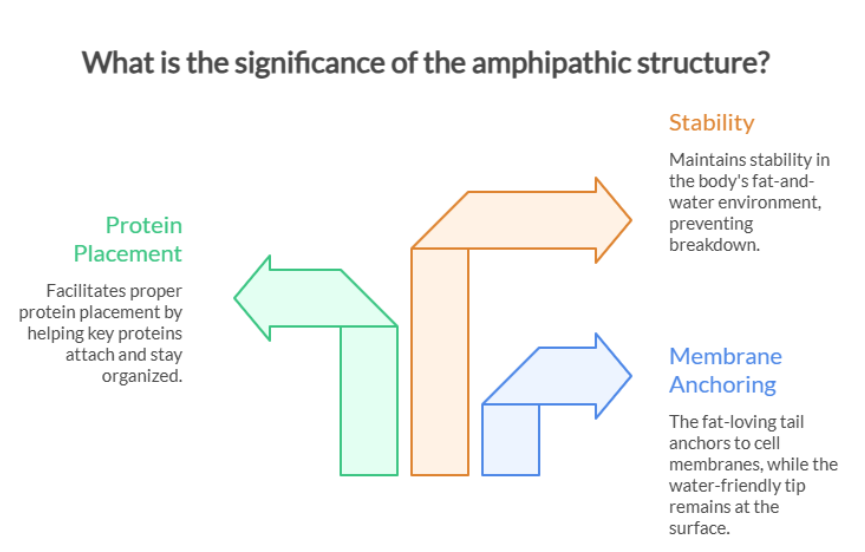
    • GG has an amphipathic nature (two-sided design) i.e. one hydrophobic end (water- hating) which blends easily with fats, and other hydrophilic end (water-loving) that lightly connects with water.(3)
      • Hydrophobic Part: GG has a long carbon chain that naturally avoids water and prefers fats. This gives it a lipid-like nature, allowing it to blend easily into cell membranes and other fatty environments in the body.
      • Hydrophilic Part: At one end, GG has a small hydroxyl (–OH) group that can lightly interact with water. This helps the molecule stay balanced and positioned where watery fluids and fatty tissues meet.
    Significance of Amphipathic Natureof GG 
    • It is prone to oxidation (breaks down when exposed to air/heat)
    • It exists in multiple structural forms (isomer-dependent) and not all of them are biologically relevant forms.
    • It must be stored properly; otherwise, its potency gets compromised. Studies show that unprotected GG drops in stability can fall to 34%. However, if maintained, protected forms hold 85% of efficiency. (1,2)

    These characteristics indicate that GG’s effectiveness is closely linked to the care with which it is extracted, stabilized, and handled throughout manufacturing.

    This is where many commodity-grade GG ingredients can fall short. Generic processing often prioritizes yield over molecular integrity, leading to inconsistent isomer profiles, oxidative degradation, and batch-to-batch variability.

    Understanding GG beyond its label is therefore essential, as its biology and chemistry require precision. For a compound so central to cellular function, quality isn’t an upgrade, but it’s a requirement.

    GG-Gold™ Technology: A Purpose-Built, Annatto-Derived Solution

    GG-Gold™ Technology delivers annatto-derived geranylgeraniol (GG) through a purpose-built manufacturing approach designed to meet modern quality and consistency expectations.

    As GG is sourced from annatto seeds (Bixa orellana), GG-Gold™ repurposes a food-grade byproduct generated after natural color extraction and then transforms it into a highly refined wellness ingredient.(5)

    Using a proprietary, solvent-free distillation process, the nutrient-rich oil fraction is isolated while preserving the bioidentical trans-form of GG —the form preferred by the body for downstream use in the mevalonate pathway. (6)

    1. This tightly controlled process is designed to deliver three core quality attributes:
    2. High purity (>75% GG) – It is achieved by removing residual tocopherols, inactive cis isomers, and non-functional lipids commonly found in crude extracts.
    3. Exceptional stability-It is maintained through a heat-stable oil format that helps resist oxidative degradation, a known limitation of commodity-grade GG.

    Reproducibility at scale- It is supported through patented manufacturing methods, enabling consistent dosing and batch-to-batch reliability under GMP (Good Manufacturing Practices) conditions.(7)

    Manufactured in alignment with North American quality benchmarks, including FDA (Food and Drug Administration), DSHEA (Dietary Supplement Health and Education Act of 1994) and Health Canada GMP standards, GG-Gold™ reflects a process-driven approach where sustainable sourcing meets precision engineering, thereby, supporting GG’s consistent, everyday use with confidence.

    Also Read: A Comprehensive Guide to Geranylgeraniol GG Supplements

    Multi-Patented Processes: What Makes GG-Gold™ Different

    GG-Gold™ by Wellness Extract is not just another geranylgeraniol ingredient, rather it is the result of multiple patented processes through which GG is sourced, purified, and protected from degradation.(5)

    The foundational annatto patents developed by Barrie Tan were utilized within Wellness Extract’s GG-Gold™ platform, thereby, ensuring solvent-free extraction from annatto byproducts.

    The process focuses on enriching the GG-rich fraction while removing unwanted components, such as excess tocopherols, that could dilute or interfere with GG’s activity.

    Beyond extraction, Wellness Extract’s GG-Gold™ technology incorporates additional patented and patent-pending claims focused on preserving the biologically relevant trans-isomer configuration and applying stabilization techniques that reduce oxidative stress.(5,6)

    These protections help ensure GG-Gold™ remains chemically stable, bioavailable, and consistent throughout its shelf life and in finished formulations.

    Wondering, what makes these multi-patented processes worth caring about?

    Well, these multi-patented processes matter in three keyways:

    • First, they create and ensure a meaningful barrier against low-grade products in market that rely on unstable or impure GG.
    • Second, they support batch-to-batch consistency in purity, isomer balance, and potency, an often-overlooked determinant of supplement quality.
    • Third, they provide intellectual “proof of work,” demonstrating real process innovation rather than simple bulk ingredient reselling.

    While patents alone do not guarantee clinical outcomes, in the case of Wellness Extract’s GG-Gold™, they function as quality-assurance tools, signaling that every step, from annatto sourcing to encapsulated oil follows a protected, repeatable, and rigorously engineered pathway rather than a generic extraction shortcut.

    Together, these patents create a protected, end-to-end manufacturing framework for GG-Gold™ from annatto sourcing to finished oil.

    They enable tocopherol-free, high-purity geranylgeraniol with controlled composition, reduced oxidative risk, and consistent performance. Rather than relying on a single innovation

    GG-Gold™ is supported by multiple layers of process protection, ensuring that every softgel delivers the same engineered quality used in research and safety evaluations.

    “Multi-patented” means GG-Gold™ is protected by multiple patents covering its extraction, purification, stabilization, and standardization—ensuring consistent quality, stability, and performance from source to finished product.

    GG- Gold TM Compliance – Designed for Safety, Verified by Standards

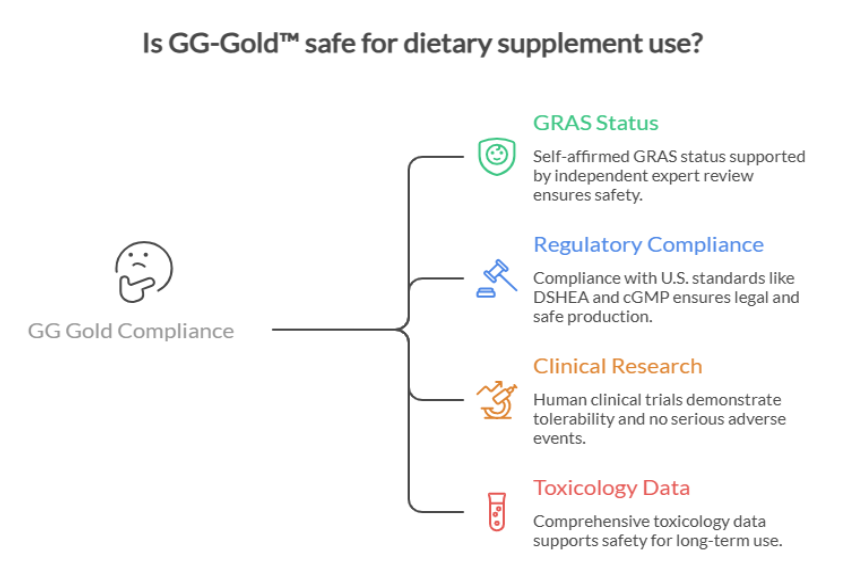
    • GG-Gold™ by Wellness Extract holds self-affirmed GRAS (Generally Recognized as Safe) status, and align with U.S. standards
    • It follows the Dietary Supplement Health and Education Act (DSHEA) and 21 CFR Part 111, Current Good Manufacturing Practices (cGMP).(7)
    • Randomized, placebo-controlled dose-escalation studies show GG is well tolerated at 150–300 mg/day with no serious adverse events reported. (2)
    • Clinical trials have evaluated GG in statin-associated muscle symptoms. (8)
    • Toxicology studies support safety across acute and repeated-dose exposure .(9)
    • Data support the suitability of GG-Gold™ for long-term supplementation.
    GG Gold Compliance- Is GG Gold Safe for Dietary Supplement? 

    Together, GRAS (Generally Recommended as Safe) status, GMP manufacturing, and human safety data position GG-Gold™ as a regulatory-ready ingredient, enabling Wellness Extract to deliver transparent labeling, compliant formulations, and sustained consumer trust across Globe.

    Conclusion

    Ingredients matter, but the process is the plot twist that defines true wellness. It’s a triad where science, care, and intent unite. GG-Gold™ by Wellness Extract embodies this shift, uniting traceable annatto sourcing, multi-patented extraction, GRAS-affirmed safety, and GMP-aligned manufacturing into a standard of nutrition built on trust

    By making the science behind geranylgeraniol visible and verifiable, Wellness Extract moves supplementation beyond guesswork and marketing claims. The result is an ingredient designed for consistency, credibility, and confidence ensuring that when a process meets purpose, wellness becomes reproducible, not accidental.

    Choose informed formulation over blind supplementation, and ingredients engineered with intention over shortcuts. That’s where modern wellness begins.

    Key Takeaways

    • GG-Gold™ is a technology, not just an ingredient built on multi-patented, solvent-free processes that protect purity, stability, and consistency.
    • Traceable annatto sourcing and patented extraction ensure a high-purity, biologically relevant form of geranylgeraniol.
    • GRAS-affirmed safety and GMP-aligned manufacturing position GG-Gold™ for compliant use in North American dietary supplements.
    • Human clinical research and toxicology data support tolerability at commonly used supplemental doses.
    • Wellness Extract’s GG-Gold™ reflects a shift toward transparency through process—where how it’s made defines trust and quality.

    FAQs

    Q1. What makes GG-Gold™ different from regular geranylgeraniol?

    GG-Gold™ is produced using multiple patented processes that control extraction, purification, isomer stability, and oxidation ensuring consistent quality and performance rather than commodity-grade GG.

    Q2. What does “multi-patented” mean in GG-Gold™?

    It means several patents protect different steps of the manufacturing process, including solvent-free extraction from annatto, enrichment of GG, stabilization, and quality control—not just ownership of the molecule.

    Q3. Is GG-Gold™ safe?

    Yes. GG-Gold™ holds self-affirmed GRAS status, supported by independent expert review, toxicology data, and human clinical research demonstrating tolerability at 150–300 mg/day.

    Q4. Is GG-Gold™ compliant with U.S. supplement regulations?

    GG-Gold™ is aligned with FDA dietary supplement regulations, including DSHEA and 21 CFR Part 111 cGMP standards, and is positioned to meet NDI requirements when applicable.

    Q5. Who should consider GG-Gold™?

    GG-Gold™ is designed for wellness-focused adults, including those interested in healthy aging, metabolic resilience, or precision nutrition especially consumers who value transparency and ingredient integrity.

    References 

    1. Roberto M, Schibsted D. GG-Gold (geranylgeraniol): the most important essential nutrient you’ve never heard of. Published May 7, 2024. 
    1. Gheith R, Sharp M, Stefan M, Ottinger C, Lowery R, Wilson J. The effects of geranylgeraniol on blood safety and sex hormone profiles in healthy adults: a dose-escalation, randomized, placebo-controlled trial. Nutraceuticals. 2023;3(4):605-618. doi:10.3390/nutraceuticals3040043 
    1. Closa D, Torres M, Hotter G, Roselló-Catafau J, Gelpí E. Geranylgeraniol: An endogenous isoprenoid with amphiphilic properties. Biochim Biophys Acta. 1992;1125(2):189-193. doi:10.1016/0005-2760(92)90150-D 
    1. Alves SF, Marreto RN, Bara MTF. Enhanced geranylgeraniol stability and dissolution from self-emulsifying pellets containing the sucupira (Pterodon emarginatus Vogel) standardized extract. Res Soc Dev. 2023;12(4):e26012441314. doi:10.33448/rsd-v12i4.41314 
    1. Tan B, Ruscetta A. Process for isolating geranylgeraniol from annatto seeds. US patent US6350453B1. Issued February 26, 2002
    1. Tan B, Ruscetta A. Methods and compositions for geranylgeraniol supplementation and metabolic support. US patent US7989006B2. Issued August 2, 2011. 
    1. U.S. Food and Drug Administration. Current Good Manufacturing Practice in Manufacturing, Packaging, Labeling, or Holding Operations for Dietary Supplements. 21 CFR Part 111. 
    1. U.S. National Library of Medicine. Geranylgeraniol for Statin-Associated Muscle Symptoms. ClinicalTrials.gov. 
    1. Preece K, Glávits R, Foster JR, et al. A toxicological evaluation of geranylgeraniol. Food Chem Toxicol. 2021;149:112007. doi:10.1016/j.fct.2021.11200
  • Neuroprotective Effects and Brain Barrier Penetration

    Tl/DR:

    Chronic inflammation weakens the Blood Brain Barrier (BBB) and damages neurons. Geranylgeraniol helps restore balance by supporting mitochondrial energy and neuroprotective pathways for healthy brain aging.

    The brain is one of the body’s most energy-demanding and sensitive organs which requires balanced signaling, strong mitochondrial function, and controlled immune activity to stay healthy. However, stressors such as chronic inflammation, oxidative stress, metabolic imbalance, toxins, and aging can trigger neuroinflammation (a chronic inflammatory response) damaging neurons (nerve cells of brain) and accelerating memory loss and neurodegenerative diseases.

    A key protector is the blood–brain barrier (BBB) which acts as a shield, preventing harmful substances from entering the brain. When weakened by inflammation and oxidative stress, the BBB becomes leaky, creating a cycle of neuronal injury and cognitive decline.(1)

    Supporting neuronal energy, reducing inflammation, and preserving BBB integrity are essential for long-term brain health and healthy aging. Geranylgeraniol (GG), a natural isoprenoid, has emerged as a promising neuroprotective compound that might help to regulate and strengthen brain health. (2)

    To understand how the brain shields itself from inflammation and injury, it’s important to grasp one of its most remarkable protectors, the blood brain barrier (BBB).

    What Is the Blood–Brain Barrier (BBB)?

    • BBB is a protective wall made of tightly connected cells lining the brain’s blood vessels. Its job is to keep the brain separated from the bloodstream and shield it from anything harmful.
    • It works together with support cells (astrocytes, pericytes, microglia, and neurons) forming a team called the neurovascular unit (NVU) that helps manage nutrient flow and maintain a safe environment for brain function.(1)

    Cells that form the BBB

    • Endothelial cells — They form the inner lining of blood vessels and are tightly packed together by tight junctions, which prevent unwanted substances from leaking into the brain.
    • Pericytes — They support and stabilize the endothelial layer and help maintain the strength and structure of the barrier.
    • Astrocytes — They are star-shaped support cells with end-feet that wrap around blood vessels and help regulate how the barrier functions.

    How the BBB Protects the Brain from Penetration?

    In most blood vessels throughout the body, small gaps between endothelial cells allow substances to pass into surrounding tissue. But in the brain, these cells are tightly sealed together, using tight junction proteins that greatly limit what can enter. This is what makes the BBB such a powerful protective shield.(3)

    Because it is so protective, about 98% of small-molecule drugs and almost all large-molecule drugs cannot pass through, which makes treating brain conditions difficult

    Blood Brain Barrier Dysfunction

    BBB dysfunctions occur if the protective barrier becomes weak or damaged, making it less effective at controlling what enters the brain.(4) Let’s now look at the common factors that damage the BBB and the serious consequences that follow its breakdown.

    What Damages BBB?

    • Aging
    • Chronic inflammation
    • Oxidative stress and free-radical damage
    • Metabolic disorders (e.g., diabetes, obesity)
    • Traumatic brain injury or stroke
    • Neurodegenerative diseases (Alzheimer’s, Parkinson’s, MS, epilepsy)
    • Infections, toxins, and pollutants
    • Poor mitochondrial function and energy failure
    • High levels of inflammatory cytokines and immune activation

    Consequences of BBB Breakdown

    • Leakage of harmful molecules and toxins into brain tissue
    • Excess immune cell entry (T-lymphocytes, white blood cells)
    • Increased neuroinflammation and oxidative stress
    • Damage to neurons and supporting cells
    • Disrupted signaling and impaired communication between neurons
    • Swelling (edema) and ionic imbalance
    • Accelerated memory loss and cognitive decline(4)

    Do you know?

    When the brain is inflamed, BBB produces extra sticky proteins (like VCAM-1 and ICAM-1). These help immune cells stick to blood vessels and enter the brain, which can make inflammation and damage even worse.

    This growing vulnerability is exactly why strengthening the brain’s defence system is essential. Once you understand what is truly at stake, the focus naturally shifts from damage to defence.

    The question is no longer only about what has gone wrong, but also about how we can protect the brain from further harm. This is where GG comes into play as a targeted neuroprotective compound that helps defend brain cells at cellular and molecular levels.

    GG and the Mevalonate Pathway: Why It Matters for Brain Health 

    Geranylgeraniol (GG) is an essential byproduct of the mevalonate pathway, the same pathway responsible for producing key molecules needed for cell survival, mitochondrial function, energy production (ATP), and inflammation regulation. 

     Along with cholesterol and CoQ10, GG enables protein prenylation (process by which essential proteins stick to cell membranes) supporting normal cellular signaling and neuron protection.(2) 

    Also Read: GG explained -Benefits, side-effects and science behind it 

    However, when the mevalonate pathway is blocked or disrupted (aging, metabolic dysfunction, chronic inflammation, oxidative stress, or statin use), the body produces less GG. This shortage triggers a chain reaction inside the brain: 

    • Mitochondria become dysfunctional, reducing ATP energy needed by neurons. 
    • Inflammation increases, activating microglia, and releasing excess cytokines (IL-6, IL-1β, TNF-α). 
    • Neurons become vulnerable to apoptosis (programmed cell death). 
    • Blood–brain barrier stability declines, increasing permeability. 
    • Neurodegeneration accelerates, contributing to cognitive decline and diseases such as Alzheimer’s and Parkinson’s.(2) 

    Let’s discover the neuroprotective effects of GG in the next section. 

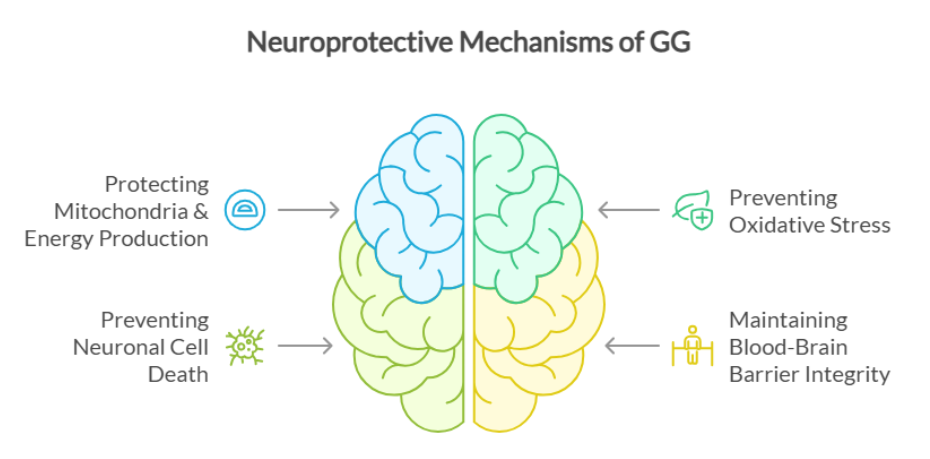
    Neuroprotective Effects of GG 

    Neuroprotective pathways are the brain’s built-in defense and repair systems that work to reverse the damage caused by chronic neuroinflammation. They restore balance, protect neurons, and support long-term brain health. 

    1. Modulation of Neuroinflammation
    • Neuroinflammation leads to the formation of excess inflammatory cytokines (IL-1β, IL-6, TNF-α), thereby causing damage to neurons (brain cells).
    • GG reduces IL-6 and Inflammatory cytokine release, thus, prevents chronic inflammation that can trigger neuronal death and accelerate cognitive decline. (2)
    • GG suppresses NF-KB activation in microglia-
    • Microglial cells are the immune defenders of the brain, but when they stay activated for too long, they release inflammatory cytokines that damage neurons.
    • This persistent inflammation is strongly linked to neurodegenerative diseases such as Alzheimer’s and Parkinson’s.
    • In a study published in the International Journal of Molecular Sciences, it is seen that GG can reduce inflammatory responses and protect brain cells in several experimental models. (5)
    • Interestingly, its structure is like menaquinone-4 (MK-4), a form of vitamin K2, which has also been shown to suppress inflammation in microglial cells.(5)
    1. Protecting Mitochondria & Energy Production (ATP)
    • Mitochondria are the power generators of neurons.
    • Mitochondrial dysfunction may lead to low energy (ATP) and in severe cases may cause neuron death.
    • GG restores mitochondrial membrane potential and protects mitochondrial structure. (2)

    Also Read: Mitochondrial Powerhouse-How GG supplements supports CoQ10 production

    1. Preventing Oxidative Stress
    • It is seen that oxidative stress accelerates neuronal injury.
    • GG reduces oxidative cytotoxicity and improves cellular resilience under stress.(6)
    1. Preventing Neuronal Cell Death (Apoptosis)
    • Neurons undergo apoptosis due to inflammation and energy failure.
    • GG prevents apoptosis (programmed cell death) and improve cell viability.(2)
    1. Maintaining Blood–Brain Barrier (BBB) Integrity
    • BBB vulnerability increases permeability and immune infiltration
    • GG supports endothelial cell function and prenylation pathways to ensure better stability.(7)

    Conclusion

    For years, the approach to brain disorders has focused on managing symptoms after neurons are already lost.

    But breakthroughs in neuroinflammation research show that real change happens when you strengthen the brain’s internal defense systems long before breakdown begins.

    By supporting mitochondrial energy, calming inflammatory triggers, and protecting the blood–brain barrier, GG represents a forward-thinking strategy, one that focuses on protecting the brain rather than repairing what’s already gone.

    When seen from a wider lens, you need to trust that healthy aging is not luck, it’s cellular strategy.

    Plan your brain health before it’s too late.

    Key Takeaways

    • BBB protects the brain from toxins and inflammation, but chronic stress factors can weaken it and accelerate neurodegeneration.
    • Reducing inflammation early slows brain aging, protects memory, and preserves long-term mental clarity.
    • Neuroinflammation plays a major role in diseases like Alzheimer’s, Parkinson’s, stroke, and age-associated memory loss
    • GG supports mitochondrial energy production, reduces inflammatory cytokines, prevents neuronal cell death, and helps maintain BBB integrity.
    • Supporting neuroprotective pathways is critical for long-term brain function, cognitive performance, and healthy aging.

    FAQ’s

    Q1. What is neuroinflammation?

    Chronic inflammation in the brain damages neurons and contributes to memory loss and neurodegenerative diseases.

    Q2. What is the Blood–Brain Barrier (BBB)?

    A protective shield that regulates what enters the brain from the bloodstream, keeping harmful substances out.

    Q3. How does GG support brain health?

    Geranylgeranoil (GG)helps reduce inflammation, protect mitochondria, prevent neuronal cell death, and support BBB stability.

    Q4. How does GG reduce neuroinflammation?

    GG lowers inflammatory cytokines and suppresses NF-KB signaling in microglial cells to restore balance.

    Q5. Is GG the same as CoQ10?

    No,CoQ10 is a mitochondrial antioxidant whereas GG supports CoQ10 production and cellular signaling. They work synergistically.

    References 

    1. Brandl S, Reindl M. Blood–Brain Barrier Breakdown in Neuroinflammation: Current In Vitro Models. Int J Mol Sci. 2023;24(16):12699. doi:10.3390/ijms241612699. 
    1. Marcuzzi A, Piscianz E, Zweyer M, et al. Geranylgeraniol and neurological impairment: involvement of apoptosis and mitochondrial morphology. Int J Mol Sci. 2016;17(3):365. doi:10.3390/ijms17030365. 
    1. Altoida. The Function of Blood-Brain Barrier and Neurological Diseases: How They Work Together. Altoida Blog. July 12, 2022. https://altoida.com/blog/the-function-of-blood-brain-barrier-and-neurological-diseases-how-they-work-together/ 
    1. Daneman R, Prat A. The blood–brain barrier. Cold Spring Harb Perspect Biol. 2015;7(1):a020412. doi:10.1101/cshperspect.a020412. PMCID: PMC4292164. PMID: 25561720. 
    1. Saputra WD, Shono H, Ohsaki Y, Sultana H, Komai M, Shirakawa H. Geranylgeraniol Inhibits Lipopolysaccharide-Induced Inflammation in Mouse-Derived MG6 Microglial Cells via NF-κB Signaling Modulation. Int J Mol Sci. 2021;22(4):1937. doi:10.3390/ijms22041937. 
    1. Campia I, Lussiana C, Pescarmona G, et al. Geranylgeraniol prevents the cytotoxic effects of mevastatin in THP-1 cells without decreasing beneficial effects on cholesterol synthesis. Br J Pharmacol. 2009;158(7):1777-1786. 
    1. Pabst AM, Krüger M, Ziebart T, et al. Isoprenoid geranylgeraniol: influence on endothelial progenitor cells after bisphosphonate therapy in vitro. Clin Oral Investig. 2015;19(7):1625-1633. doi:10.1007/s00784-014-1374-3 
  • Dosage Guidelines:150-300mg Daily Recommendations

    TL/DR:

    Geranylgeraniol (GG) shows its best balance of safety and effectiveness in 150–300 mg/day range, supporting muscle, bone, and cellular health while avoiding excessive dosing. Early studies are promising, making the range the most practical, evidence-guided starting point.

    Geranylgeraniol (GG) is a naturally occurring molecule that supports cellular function, muscle health and bone strength. But natural levels of GG decline as we age. Multiple clinical and experimental studies suggest that a daily intake of 150-300 mg offers the most effective range for restoring biochemical balance and supporting a steady nutrient supply to the body.

    What is geranylgeraniol?

    • Geranylgeraniol (GG or GGOH) is a natural compound produced by the body, endogenously via the mevalonate pathway, the same metabolic route that generates cholesterol, coenzyme Q10 (CoQ10), vitamin K2, and other isoprenoid-derived compounds.(1)
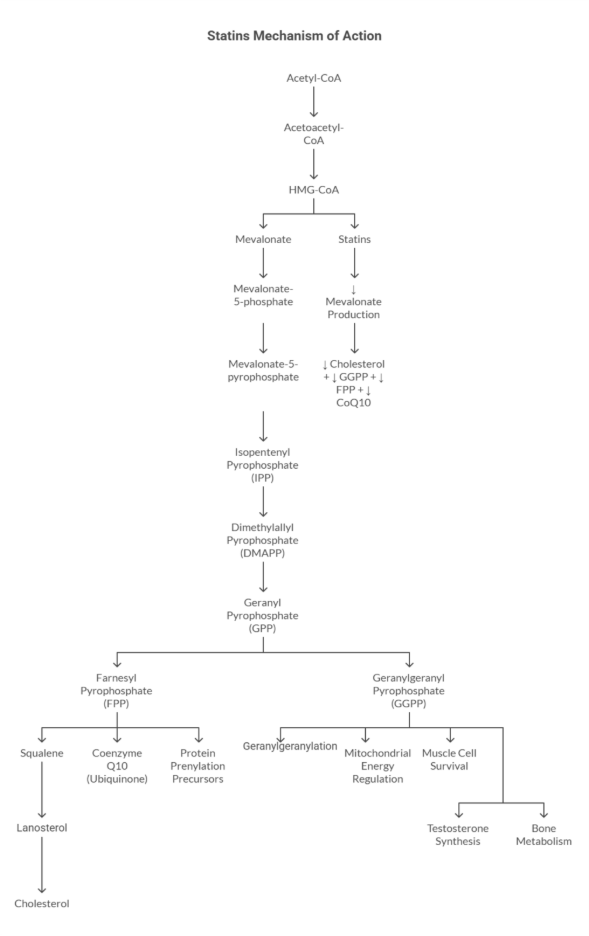
    • In this pathway, GG is converted into Geranylgeranyl pyrophosphate (GGPP) which acts as a key player to help certain proteins work properly through a process called prenylation (the addition of a lipid group that allows proteins to attach to cell membranes).
    • Some medications, especially statins and nitrogen-bisphosphonates, can interfere with prenylation. This is why researchers are now looking at GG as a potential means of restoring this depleted pathway.
    • GG supports important signaling proteins like Rho, Rac, and Rap1, which are involved in muscle strength and support, healthy bone turnover, and overall cell survival and communication.(2)

    Read More: The Science Behind Geranylgeraniol-Muscle and Bone Health Explained

    As GG anchors several fundamental processes, it’s now being explored for its potential roles in muscle health, bone metabolism, and hormonal pathways.(3)

    An insufficient dose may fall short of supporting these processes effectively. Therefore, identifying the most effective dose of GG for your body becomes an important next step.

    Why Geranylgeraniol (GG) Dose matters

    • It is important to consume the right amount of Geranylgeraniol (GG) because its benefits depend on its ability to support protein prenylation, a process that helps cellular proteins remain active and functional. (1)
    • When prenylation declines because of aging, stress, statin use, or bisphosphonate therapy), cells struggle to produce energy, maintain muscle strength, or regulate bone turnover.
    • Early laboratory work on bisphosphonates showed that adding GG (GGOH) could restore osteoclast formation and bone-resorbing activity after the mevalonate pathway was shut down. This is why GG has become an area of interest for bone health and for understanding side effects related to bisphosphonate therapy.(4)
    • However, it’s important to clarify that these findings come from in vitro studies using micromolar concentrations, not the oral milligram doses used in humans.
    • A 2019 review found that low to moderate micromolar levels of GG help keep osteoblasts, osteoclasts, and fibroblasts healthy.
    • At higher concentrations, GG can have the opposite effect and may even increase bisphosphonate toxicity. This pattern suggests a “U-shaped” response curve; a little helps, too much may harm.
      • Because of this U-shaped response, human GG dosing needs to stay conservative until more data is available. (1)
      • These findings support why current supplement studies focus on the 150–300 mg/day range rather than higher doses.

    Let’s see why 150-300mg of dosage range is discussed so often. 

    1. It aligns with doses shown to support prenylation-related pathways.

    Studies show that GG helps proteins like Rho, Rac, and Rap1 reattach to cell membranes and resume normal signaling. The 150–300 mg range aligns with the levels shown to support this pathway in preclinical models.

    2. It supports both muscle and bone health simultaneously

    GG plays a dual role in helping muscles generate energy and aiding bone-remodeling cells. This recommended dosage is high enough to support both systems without overwhelming the body.

    3. It mirrors effective doses used in animal and cell research

    When research doses are translated to human equivalents, they consistently fall in a range of 150-300 mg. Therefore, this range is selected as a practical starting point.

    4. It fits real-world use for muscle and bone support

    If you are dealing with muscle tiredness, statin-associated muscle symptoms (SAMS), or want to support bone strength, 150–300 mg is considered a balanced, safe, and effective range as per current evidence.

    Evidence Behind the 150–300 mg/day Range

    Early human studies (small, short-term) support using 150–300 mg/day of GG. While not definitive, they provide practical information on real-world dosing.

    • A recent trial in healthy adults gives us a real glimpse into how GG is now being explored in the practical world. In this trial, Participants were given 150 mg/day for four weeks, followed by 300 mg per day for another four weeks. In this span of time, researchers monitored sexual-health questionnaires, body composition, blood chemistry, and grip strength. This design gives a strong clinical foundation for the commonly discussed 150–300 mg/day range.(3)
    • A clinical study summary describes a group of 66 adults (30–49 years) who were given 150 mg of GG per day for four weeks, followed by 300 mg per day (taken as 150 mg twice daily) for another four weeks.
    • The reports showed improvements in testosterone levels among men with lower baseline values and provided a detailed safety profile across the full dosing period. It is presented as the first human study exploring both the safety and hormone-related effects of GG-Gold.(5)
    • A small pilot trial is being conducted on people with mevalonate kinase deficiency (MKD/HIDS) testing 150 mg of GG per day (delivered as one capsule containing 150 mg of GGOH within a 500 mg annatto extract) for three months. The study focuses on inflammation-related symptoms and overall clinical status. It offers a helpful clinical example of how 150 mg/day is being used at the lower end of the GG dosing range.(6)

    Across studies, 150 mg/day is generally used as a starting dose, while 300 mg/day represents the upper limit currently being explored in healthy adults.

    After understanding the significance of 150-300mg/day range, let’s step back and see how this is compared with doses preferred across published articles.

    The table below summarizes the key research and shows where this evidence-based range fits within the broader scientific landscape.

    Evidence Table: Human GG Studies Using 150–300 mg/day

    Study / Year Design N Population Dose Duration Key Result 
    GG-Gold Dose-Escalation Study, 2024(5) Randomized, dose-escalation 66 Healthy adults (30–49 yrs) 150 mg/day → 300 mg/day (150 mg BID) 8 weeks Increased testosterone in men with low baseline levels; normal safety labs; well tolerated. 
    ASPI Sexual Health Trial (NCT0525851, 2022(3) Registered clinical trial Ongoing Healthy adults 150 mg/day → 300 mg/day 8 weeks Tracks sexual health, grip strength, body composition, and safety; supports clinical use of 150–300 mg/day. 
    MKD/HIDS Pilot Study, 2024(6) Pilot clinical investigation Small sample MKD patients 150 mg/day 3 months Improved inflammatory symptoms; demonstrates lower-end clinical use. 
    ASPI Testosterone Crossover Trial, 2024(7) Double-blind crossover Ongoing Healthy adults (40–65 yrs) 300 mg/day TBD Designed to evaluate hormone outcomes; establishes 300 mg/day as a key research dose. 

    Evidence Table: Preclinical Studies

    Study / Year Design N Population / Model Dose Duration Key Result 
    Fliefel et al., 2019(1) In vitro — Osteoclasts & osteoblasts 10–80 µM GGOH 24–72 hrs Restored bone-cell viability and prenylation after zoledronic acid inhibition. 
    Jaśkiewicz et al., 2018(2) In vitro — C2C12 muscle cells 1–20 µM 24–48 hrs Prevented statin-induced myotoxicity; restored RAP1 prenylation. 
    Patntirapong et al., 2020(8) In vitro — Osteoblasts 1–10 µM 48–72 hrs Increased mineralization under alendronate stress. 
    Irwin et al., 2020(9) Animal study — Statin-treated rats 30–60 mg/kg/day Several weeks Prevented mitochondrial dysfunction and muscle fatigue. 
    Mungpayabarn et al., 2021(10) In vitro — Osteoblasts 10–50 µM Variable Restored osteoblast activity depending on timing of GG exposure. 
    Rodent Toxicology (11) Reports, 2010–2023 Toxicology — Rats/mice 200–400 mg/kg/day Varies No major toxicity; supports wide safety margin relative to human doses. 

    Across human and laboratory studies, a consistent dosing pattern emerges for geranylgeraniol (GG) as:

    • Most human trials begin at 150 mg/day and scale up to 300 mg/day, showing good short-term tolerability.
    • Hormone-related effects appear mainly in individuals with low baseline levels, not universally.
    • Preclinical studies indicate GG supports key cellular pathways at low to moderate doses,
      while benefits tend to plateau at higher exposures.
    • Overall, 150–300 mg/day stands out as a cautious, evidence-based dosing range.

    Conclusion

    In the current era of proactive wellness and targeted nutritional strategies, Geranylgeraniol (GG) offers a promising way to support the mevalonate pathway, muscle function, and bone health. The emerging evidence consistently points to 150–300 mg/day as a well- tolerated and commonly studied range in early human research. This dosing window aligns with preclinical findings and remains conservative enough to respect the body’s natural balance. While long-term studies are still underway, staying within this evidence-guided window offers a smart, cautious approach for anyone exploring the potential of GG.

    Key Takeaways

    • GG converts into GGPP, a critical molecule for restarting prenylation when the pathway is stressed.
    • Statins and bisphosphonates reduce GGPP levels; GG may help restore this deficit.
    • Preclinical studies show benefits only at low to moderate concentrations; too much may be counterproductive.
    • Human studies consistently begin at 150 mg/day and escalate to 300 mg/day.
    • Early trials report improvements in testosterone for men with low baseline levels.

    FAQs

    Q1. Why is GG commonly taken at 150–300 mg/day?

    This dosage range is selected on basis of human studies and is supported by effective results seen in preclinical models.

    Q2. Can I take more than 300 mg/day?

    No, There is no evidence supporting benefits above 300 mg/day, and preclinical data suggest a U-shaped response, meaning too much may reduce benefit or cause unwanted effects.

    Q3. Does GG improve testosterone?

    GG doesn’t directly raise testosterone but may indirectly support normal testosterone function by supporting cellular energy and hormonal balance.

    Q4. Does GG support bone health?

    Yes, studies show Geranylgeraniol helps to restore osteoclast and osteoblast activity under bisphosphonate stress, but these findings are in vitro.

    Q5. Should GG be taken with food?

    Yes, Geranylgeraniol is lipid-soluble and absorbs better with a meal containing healthy fats.

    References 

    1. Fliefel RM, Entekhabi SA, Ehrenfeld M, Otto S. Geranylgeraniol (GGOH) as a mevalonate pathway activator in the rescue of bone cells treated with zoledronic acid: an in vitro study. Int J Mol Sci. 2019;20(2):416. doi:10.3390/ijms20020416. PMCID: PMC6343170. PMID: 30728841. 
    1. Jaśkiewicz A, Pająk B, Litwiniuk A, Urbańska K, Orzechowski A. Geranylgeraniol prevents statin-dependent myotoxicity in C2C12 muscle cells through RAP1 GTPase prenylation and cytoprotective autophagy. Int J Mol Sci. 2018;19(5):1428. doi:10.3390/ijms19051428. PMCID: PMC5987243. PMID: 29951166
    1. Applied Science & Performance Institute. The Effects of Geranylgeraniol (GG) Sourced From Annatto on Sexual Health. ClinicalTrials.gov Identifier: NCT05258513. Updated December 29, 2022. 
    1. Fisher JE, Rogers MJ, Halasy JM, et al. Alendronate mechanism of action: geranylgeraniol, an intermediate in the mevalonate pathway, prevents inhibition of osteoclast formation, bone resorption, and kinase activation in vitro. Proc Natl Acad Sci U S A. 1999;96(1):133-138. doi:10.1073/pnas.96.1.133. 
    1. Matsumoto A, et al. Annatto-derived geranylgeraniol supplementation and hormone outcomes in healthy adults: randomized dose-escalation study. Cited in: Tan B, Chin KY. Potential role of geranylgeraniol in managing statin-associated muscle symptoms. Front Physiol. 2023;14:1246589. 
    1. Sediva A, et al. Geranylgeraniol Supplementation in Mevalonate Kinase Deficiency: Pilot Clinical Investigation. Preprint; 2024. 
    1. Applied Science & Performance Institute. Geranylgeraniol Supplementation and Hormone Outcomes: Randomized Crossover Trial Protocol. ASPI; 2024. 
    1. Patntirapong S, et al. Geranylgeraniol increases mineralization in osteoblasts treated with alendronate. Mahidol Dent J. 2020;40(2):157–167. 
    1. Irwin JC, Wang L, et al. Geranylgeraniol prevents statin-induced skeletal muscle fatigue without adverse cardiac effects. Transl Res. 2020;218:1–15. doi:10.1016/j.trsl.2019.12.003. 
    1. Mungpayabarn H, Teerapornpuntakit J, et al. Timing of geranylgeraniol addition increases osteoblast activities under alendronate treatment. PLoS One. 2021;16(4):e024xxxx. doi:10.1371/journal.pone.024xxxx. 
    1. Fisher JE, Rogers MJ, Halasy JM, et al. Alendronate mechanism of action: geranylgeraniol prevents inhibition of osteoclast formation, bone resorption, and kinase activation in vitro. Proc Natl Acad Sci U S A. 1999;96(1):133–138. doi:10.1073/pnas.96.1.13 
  • Cellular Energy and Mitochondrial Heath 

    TL/DR

    Energy is neither created nor destroyed; it can only be converted from one form to another. Your mitochondria transform nutrients into fuel, powering every heartbeat and movement. Supporting these tiny engines helps sustain strength, focus, and vitality. They keep you energized from cells to self.

    Ever wonder why you feel tired all the time, even after resting? Well, it could be a sign that your cells (the very engines of your body) aren’t getting the support they need. Feeling tired isn’t unusual, but when fatigue, muscle weakness, and metabolic slowdown become a daily struggle, it signals something deeper.

    The search for answers often points to mitochondria, the powerhouses of our cells. These tiny organelles generate ATP, the universal energy currency that fuels everything from a steady heartbeat to sharp thinking.

    But where does Geranylgeraniol (GG) fit into this equation?

    Most conversations around mitochondrial health stop at CoQ10, the well-known electron carrier in the energy chain. But what if another overlooked molecule sits upstream, shaping how much CoQ10 gets made and how efficiently mitochondria run? That’s where geranylgeraniol (GG) enters the picture.(1)

    Let’s explore more.

    What is Cellular Energy?

    Cellular energy refers to the power that cells generate and use to perform all their vital functions by forming ATP, which fuels nearly every cellular activity including

    • Muscle contraction
    • Nerve impulse transmission
    • Active transport of nutrients across membranes
    • DNA synthesis and cell repair.

    Without a steady supply of cellular energy, cells cannot grow, communicate, or maintain their structure. So, now that we know why ATP matters, Let’s hunt for the real home of ATP!

    Where is ATP formed?

    • Most ATP is made inside tiny cell structures called mitochondria, where energy is produced through a process called oxidative phosphorylation, which depends on the electron transport chain (a sequence of protein complexes that pass electrons and create the force needed to generate ATP).(2)
    • A vital helper in this chain is Coenzyme Q10 (CoQ10), which acts as an electron carrier and a cell-protective antioxidant which ensures efficient energy production.(3)

    However, the story doesn’t end with CoQ10.

    Molecules upstream of CoQ10, such as geranylgeraniol (GG), are essential for its biosynthesis. In the absence of enough GG, CoQ10 levels and energy balance can fall.

    GG helps your cells make CoQ10 which keeps mitochondria running. Together, they form your body’s core energy loop. 

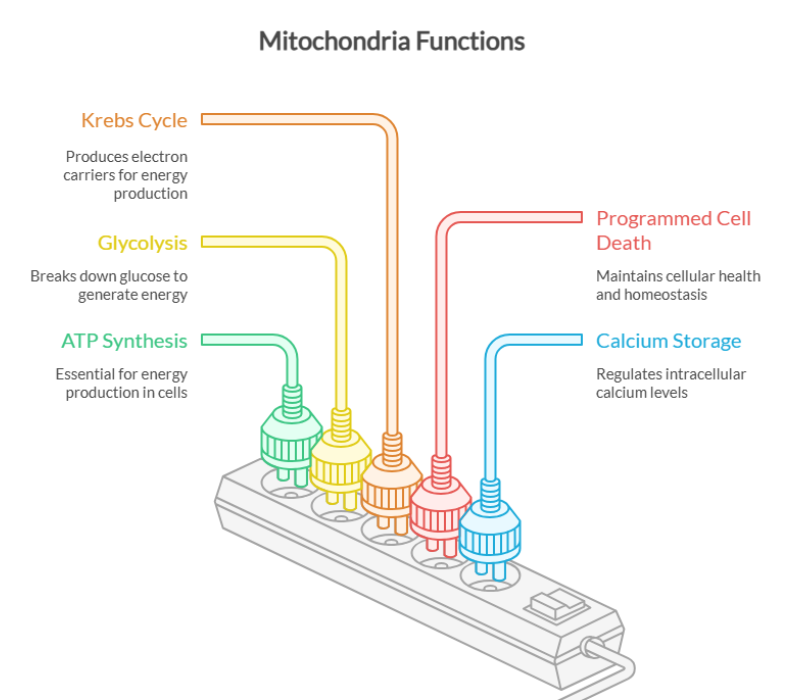
    What Are Mitochondria and Why Are They Important? 

    Mitochondria take the food you eat (glucose and fats) and convert it into ATP through a process known as cellular respiration. This process happens in two main steps:

    • The Krebs Cycle: breaks down nutrients to release electrons. 
    • The Electron Transport Chain (ETC): where these electrons create energy used to make ATP. 

    Think of it like a mini energy factory; raw materials (food) go in, and clean fuel (ATP) comes out. 

    Guess what? You will be surprised to know that mitochondria do more than just make energy. They help control cell growth, repair damage, and even decide when a cell should die (a process important for removing unhealthy cells and preventing disease). 

     Cells with high energy needs, such as muscle or brain cells, have many mitochondria to keep up with constant demand.(4) 

    Why Mitochondrial Health Matters?

    • Healthy mitochondria enable cells to generate sufficient energy for normal function.
    • Damaged mitochondria produce less energy and more free radicals. Factors such as poor diet, chronic stress, aging, and environmental toxins can impair mitochondrial function.
    • Excess free radicals lead to oxidative stress, which contributes to aging and chronic diseases (diabetes, Alzheimer’s, heart disease).
    • Supporting and protecting mitochondria is essential for sustained energy, healthy cells, and overall well-being. (5)

    Geranylgeraniol (GG): The Mitochondrial Connector

    As we have discussed earlier, inside every cell, mitochondria acts as your body’s power plants, producing ATP. Can you guess the key raw material that fuels these power plants?

    You’re right-that’s exactly where our star molecule GG steps in.

    What Is Geranylgeraniol?

    • Geranylgeraniol (GG) is a naturally occurring isoprenoid compound synthesized through the mevalonate pathway, the same biochemical route that produces cholesterol, CoQ10, and vitamin K2.
    • It is a vital building block that supports the body’s internal CoQ10 synthesis and helps maintain healthy mitochondrial function.

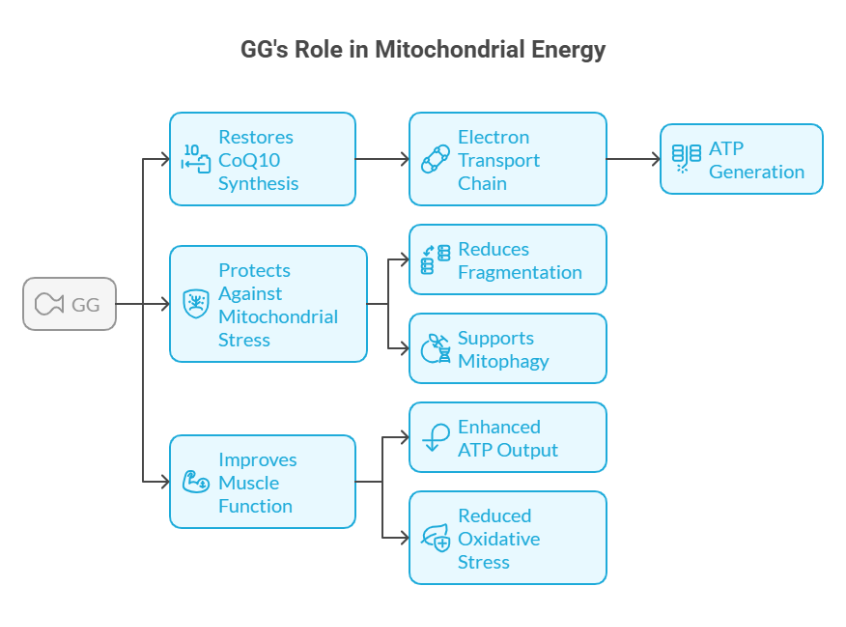
    How GG Fuels Mitochondrial Energy?

    • Restores CoQ10 Synthesis:
      • GG serves as a precursor for Coenzyme Q10 (ubiquinone)—an essential molecule in the electron transport chain where cellular energy (ATP) is generated.
      • When the mevalonate pathway is disrupted (e.g., by statins), CoQ10 levels drop, impairing mitochondrial efficiency.(3),(6)
      • In a Study published “Potential role of geranylgeraniol in managing statin-associated muscle symptoms: a COVID-19 related perspective” it was observed that GG supplementation can restore endogenous CoQ10 levels and revive mitochondrial respiration in such conditions. (7)
    • Protects Against Mitochondrial Stress:
      • GG reduces mitochondrial fragmentation, a hallmark of cellular stress and supports mitophagy (the recycling of damaged mitochondria) through PINK1 signaling.(8)
      • In animal and cell models, GG has shown protective effects against statin-induced muscle toxicity and diabetic muscle weakness, both linked to mitochondrial dysfunction.(9)
    • Improves Muscle Function and Bioenergetics:
      • Supplementing GG has been associated with improved muscle fiber quality, enhanced ATP output, and reduced oxidative stress(6)˒(7)

    GG’s Role in Mitochondrial Energy 

    Important Advice:  

    Avoid GG, if you’re on warfarin or any other blood thinners, as they influence Vitamin K2 activity, which can affect blood clotting balance. 

    Evidence Table 

    Study title Year Design Population/Model Key Outcome Major Findings 
    Geranylgeraniol induces mitophagy via PINK1(10) upregulation in skeletal muscle cells 2022 In vitro Skeletal muscle cells Mitophagy (PINK1) mitochondrial morphology GG triggered mitophagy, reduced mitochondrial fragmentation, and enhanced mitochondrial quality control. 
    Geranylgeraniol attenuates statin-induced skeletal muscle damage through mitochondrial protection(11) 2018 Animal study Statin-treated rats  Mitochondrial dysfunction & myopathy GG restored mitochondrial structure, improved ATP generation, and reduced muscle atrophy markers  
    Dietary geranylgeraniol improves mitochondrial function and muscle performance in aged mice(12) 2021 Animal study Aged mice Aging-related mitochondrial decline and muscle performance GG improved muscle strength, mitochondrial membrane potential, and oxidative capacity; reduced inflammation and oxidative stress. 
    The mevalonate pathway, geranylgeraniol, and mitochondrial function: a therapeutic connection(13) 2021 Mechanistic review Mevalonate pathway model CoQ10 biosynthesis, prenylation link Identified GG as a key isoprenoid restoring CoQ10 synthesis and protein prenylation under statin inhibition. 
    Geranylgeraniol boosts endogenous CoQ10 synthesis and cell-essential metabolites, overcoming CoQ10 supplementation limitations(6) 2021 Review / Commentary Human cell metabolism overview CoQ10 and energy metabolism Demonstrated GG’s role in enhancing endogenous CoQ10 and energy output more efficiently than CoQ10 alone. 
    Potential role of geranylgeraniol in managing statin-associated muscle symptoms: a COVID-19 related perspective(7) 2023 Clinical perspective Human (statin users) Statin-associated muscle symptoms (SAMS)  Proposed GG as an adjunct nutrient to prevent mitochondrial dysfunction and myopathy in statin users. 

    Conclusion: Energy That Starts Within You 

    Think of Geranylgeraniol (GG) as your cell’s gentle reminder of how to make its own power again. Instead of just giving your body more fuel, GG helps reignite your natural energy-making system by supporting CoQ10 production and repairing those hardworking mitochondria that keep you moving, thinking, and feeling alive. 

    It’s fascinating, isn’t it? A tiny molecule helping your cells remember how to thrive. Whether it’s easing statin-related fatigue, protecting muscle strength as you age, or simply helping you feel more energized in day to day life. 

    GG reminds us that real energy isn’t something you plug in, it’s something your body regenerates, one mitochondrion at a time. So instead of just fueling up, why not empower your body to recharge itself naturally. 

    Key Takeaways:

    • Mitochondria are the body’s true power engines, generating ATP to fuel every heartbeat, thought, and movement.
    • Aging, stress, poor nutrition, and statins weaken mitochondrial function, leading to low energy and muscle decline.
    • Stronger mitochondria support stamina, cognitive clarity, hormone balance, and vitality.
    • Nutrients like GG, CoQ10, and Vitamin K2 work together to power energy production and protect mitochondrial health.
    • Real strength starts inside the cell, support mitochondria for steady, lasting energy.
    • When your cells thrive, your whole body follows.

    FAQ’s 

    GG is a naturally occurring nutrient that helps your body produce CoQ10 and Vitamin K2, supporting cellular energy, muscle strength, and metabolic balance. 

    Q2. How does GG support mitochondrial energy?

    GG powers your body’s CoQ10 synthesis, fueling mitochondria (the energy engines inside every cell)

    Q3. Is GG the same as CoQ10?

    No. GG is the precursor, while CoQ10 is the end product that generates ATP (energy)

    Q4. Is Geranylgeraniol safe for long-term use?

    Yes, current research indicates that GG is well-tolerated and safe.

    Q5. Can I take GG and CoQ10 together?

    Yes, they work best in synergy (taken in combination)

    References 

    1. Fliefel RM, Entekhabi SA, Ehrenfeld M, Otto S. Geranylgeraniol (GGOH) as a Mevalonate Pathway Activator in the Rescue of Bone Cells Treated with Zoledronic Acid: An In Vitro Study. J Biol Chem. 2019; PMC6343170. https://pmc.ncbi.nlm.nih.gov/articles/PMC6343170/ 
    1. Hargreaves M, Spriet LL. Exercise metabolism: Fuels for the fire. Cold Spring Harb Perspect Med. 2018;8(8):a029744. doi:10.1101/cshperspect.a029744 
    1. Bentinger M, Tekle M, Dallner G. Coenzyme Q—biosynthesis and functions. Biochem Biophys Res Commun. 2010;396(1):74–79. doi:10.1016/j.bbrc.2010.02.147 
    1. Anwar A, et al. Natural compounds supporting mitochondrial health in aging. Front Pharmacol. 2023;14:1057267. 
    1. Brand MD, Nicholls DG. The role of mitochondrial function and cellular bioenergetics in ageing and disease. Br J Dermatol. 2013;169(Suppl 2):1–8. doi:10.1111/bjd.12208 
    1. Ogura K, et al. The role of geranylgeraniol in endogenous CoQ10 biosynthesis and mitochondrial function. Townsend Lett. 2021;455:48-52 
    1. Tan B, Chin K-Y. Potential role of geranylgeraniol in managing statin-associated muscle symptoms: a COVID-19 related perspective. Front Physiol. 2023;14:1246589. doi:10.3389/fphys.2023.1246589. PMID: 38046949 
    1. Tanaka S, et al. Geranylgeraniol induces mitophagy via PINK1 upregulation in skeletal muscle. J Nutr Biochem. 2022;105:109009. doi:10.1016/j.jnutbio.2022.109009 
    1. Wada T, et al. Dietary geranylgeraniol improves mitochondrial function and muscle performance in aged mice. Nutrients. 2021;13(4):1184. doi:10.3390/nu13041184 
    1. Singh F, Wilhelm L, Prescott AR, Ostacolo K, Zhao J-F, Ogmundsdottir MH, Ganley IG. PINK1 regulated mitophagy is evident in skeletal muscles. Autophagy Reports. 2024;3(1):2326402. doi:10.1080/27694127.2024.2326402 
    1. Jaśkiewicz A, Pająk B, Litwiniuk A, Urbańska K, Orzechowski A. Geranylgeraniol Prevents Statin-Dependent Myotoxicity in C2C12 Muscle Cells through RAP1 GTPase Prenylation and Cytoprotective Autophagy. Oxid Med Cell Longev. 2018;2018:6463807. doi:10.1155/2018/6463807. 
    1. Jiwan NC, Appell CR, Wang R, Shen CL, Luk HY. Geranylgeraniol supplementation mitigates soleus muscle atrophy via changes in mitochondrial quality in diabetic rats. In Vivo. 2022;36:2638–2649. PMID: 36309365. 
    1. Tricarico PM, Crovella S, Celsi F. Mevalonate pathway blockade, mitochondrial dysfunction and autophagy: a possible link. Int J Mol Sci. 2015;16(7):16067-16084. doi:10.3390/ijms160716067. 
  • Calcium Homeostasis and Bone Mineralization

    Calcium Homeostasis and Bone Mineralization

    TL/DR:

    Calcium homeostasis keeps calcium levels stable, while bone mineralization builds strong bones by depositing minerals. When this balance is disturbed, bone cells weaken. Geranylgeraniol (GG) supports calcium-dependent signaling in bone cells, promoting healthy bone mineralization.

    Your bones may seem still, but they’re some of the busiest tissues in your body, constantly breaking old cells and rebuilding new strength. And the quiet force directing this cycle is calcium homeostasis, which is the body’s way of regulating calcium. If this balance is disrupted, the bone-building and remodeling process can weaken over time.

    Well, the exciting part? Emerging Science points to new nutritional allies, and GG is becoming one of them, gaining attention for its role in keeping mineral balance and bone remodeling on track.

    Let’s now dive into how calcium homeostasis really works, what shapes the bone-building process, and why GG is becoming a rising star in bone health research.

    What is Calcium Homeostasis?

    • Calcium homeostasis is the body’s way of keeping blood calcium levels stable in blood and tissues (around 10 mg/dL) so that muscles, nerves, and bones can function properly. To maintain this balance, the body uses three key hormones.(1)

    The Calcium Booster-Parathyroid Hormone

    • Parathyroid hormone is released from small parathyroid glands located just behind the thyroid gland in the neck.
    • It is released when the blood calcium level drops.
    • It signals osteoclasts (bone-resorbing cells) to break down bone and release stored calcium into the bloodstream.

    The Absorption Expert-Vitamin D(Calcitriol)

    • Vitamin D begins its activation in the liver and completes it in the kidney.
    • It increases calcium absorption from the digestive system.
    • It helps in the deposition of calcium and phosphate into bones, making them strong.
    • It is crucial for preventing deficiency, thereby supporting healthy bone mineralization.

    The Calcium Regulator—Calcitonin

    • Calcitonin is formed in the thyroid gland, specifically by the tiny C-cells that regulate calcium levels.
    • It is released when blood calcium levels rise.
    • It slows down osteoclasts, reducing bone resorption (bone breakdown) and guides osteoblasts (bone-forming cells) to build new bones.
    • Helps remove excess calcium by increasing urinary excretion (2).

    Parathyroid Hormone vs Calcitonin

    PTH increases calcium availability while calcitonin decreases its balance.

    To understand the full picture, it is essential to understand how these hormones interact with the organs responsible for calcium regulation. Let’s explore the other players that step in to maintain calcium homeostasis.

    Also Read: Beyond Calcium: How Geranylgeraniol Could Be the Game-Changer in Your Bone Health Routine?

    Key Organs and Hormones That Keep Calcium in Balance

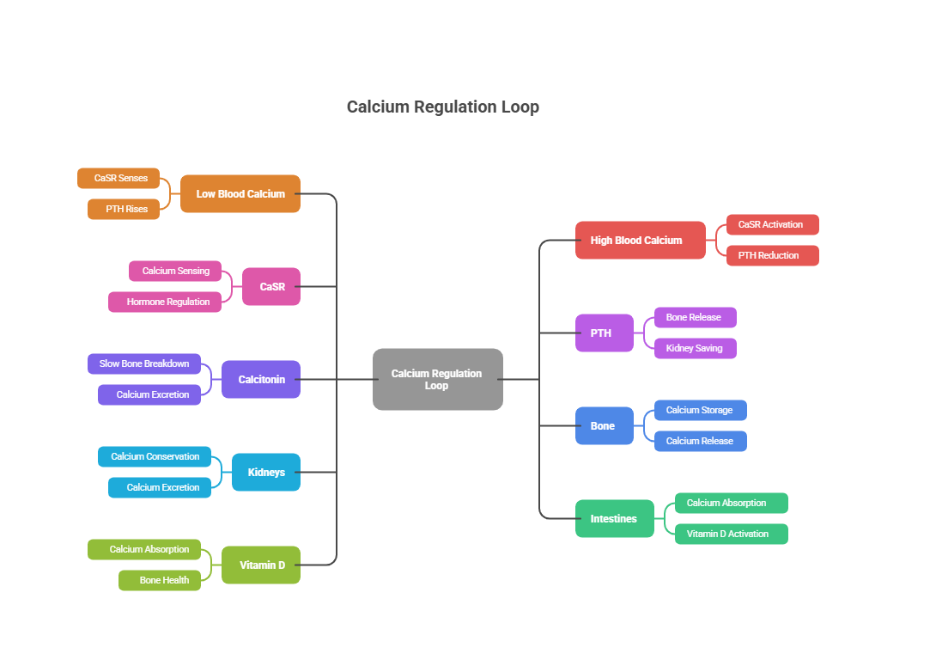
    Calcium Balance is a well-orchestrated team effort involving the intestine, kidneys, bones and parathyroid glands guided by powerful hormones and Calcium-sensing receptors (CaSR). Let’s understand each player individually.

    1. Bone—The Calcium Reservoir

    • Around 99% of the body’s calcium is stored in bones and teeth in the form of calcium phosphate (hydroxyapatite).
    • When dietary intake of calcium is low, parathyroid hormone and vitamin D (calcitriol) increase bone resorption.
    • They act partly through the RANKL/OPG system to stimulate osteoclast activity and release calcium.

    RANKL (Receptor Activator of Nuclear Factor-kB ligand) acts as an accelerator for bone resorption, whereas OPG (Osteoprotegerin) acts as a brake.

    2. Intestine-The Entry Gate for Dietary Calcium

    • Most of the dietary calcium is absorbed in the small intestine.
    • Calcium enters the body by two main routes:
      • Transcellular (active) transport – when the body requires calcium, Vitamin D pulls calcium through the intestinal cells using special channels (TRPV6) and proteins.
      • Paracellular (passive) transport – when there is a bulk of calcium available, it moves between cells through tight junctions into the bloodstream.
      • This system allows the body to adapt to low or high calcium intake by adjusting the amount based on needs. (1,3)
    • 1,25-dihydroxyvitamin D₃ (active vitamin D) upregulates intestinal calcium transport proteins, boosting absorption at the time of requirement.
    • Low vitamin D levels reduce absorption, forcing the body to rely more on bone calcium.

    3. Kidneys-Where Calcium is sorted, saved and kept in Balance

    • The kidneys continuously filter calcium, precisely regulate how much needs to be resorbed or excreted.
    • Most of the filtered calcium is reabsorbed in the proximal tubules (the first part of the kidney tube that reabsorbs most useful substances), with fine-tuning in other segments of the nephron.
    • Transporters like TRPV5 and calbindin help move calcium back into the bloodstream.(3)

    Do you know?

    Estrogen supports proteins that control calcium flow. After menopause, declining estrogen leaves these proteins with less support. This disrupts healthy bones and mineral balance.

    4. The Parathyroid Glands & CaSR-The Calcium Sensor and Control Centre

    • The parathyroid glands constantly monitor blood calcium through the calcium-sensing receptor (CaSR) on their cells.
    • When blood calcium drops, CaSR signals lead to increased PTH secretion.
    • When calcium levels rise, CaSR activation helps suppress PTH and can influence calcitonin release from thyroid C-cells. (1,3)
    Calcium Regulation Loop 

    With the calcium-regulation loop in place, the body ensures a steady supply of calcium in the blood. Let’s discuss how this calcium is actually laid down into bone through mineralization. 

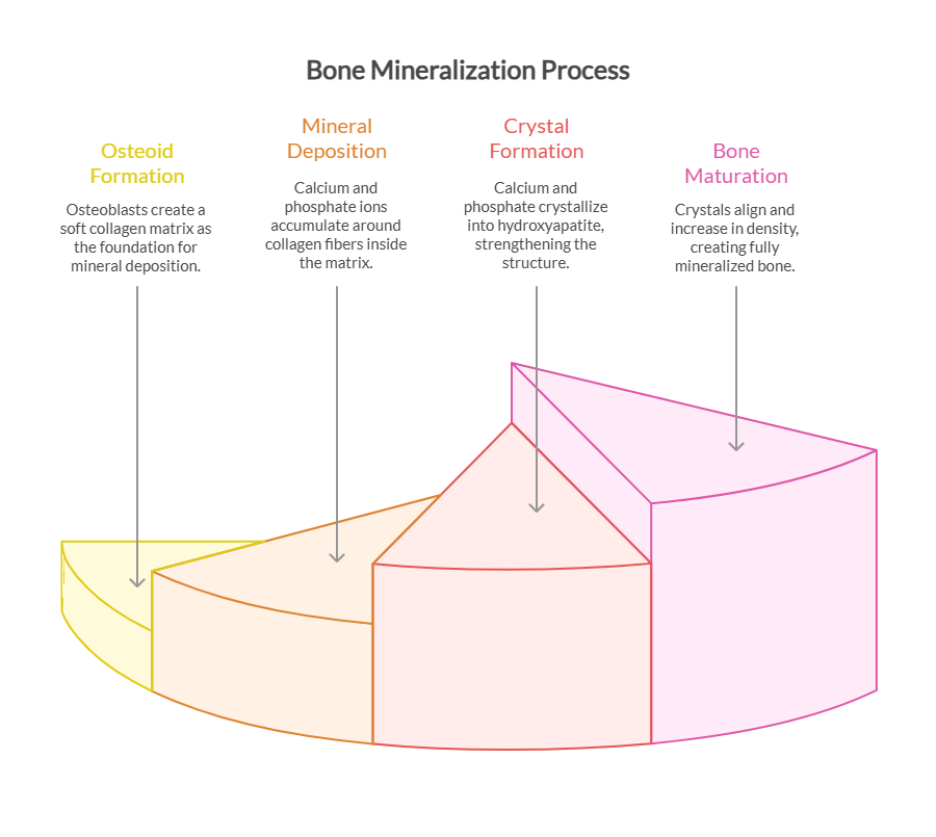
    Bone Mineralization: The Science of Making Strong Bones 

    Bone mineralization is the biological process of converting soft collagen matrix into a strong, rigid structure capable of supporting the body and resisting fractures. It is essential for skeletal strength, posture, and mobility throughout life. (1) 

    Key Components of Bone 

    Bone consists of both organic and inorganic elements. 

    Component Description Purpose 
    Collagen (Type I) Protein scaffold Provides flexibility and tensile strength 
    Hydroxyapatite  Mineral crystals Provides hardness and compression resistance 
    Osteoblasts Bone-forming cells Build collagen matrix & promote mineral deposition    
    Osteoclasts Bone-resorbing cells Clear old bone & release calcium 
    Osteocytes Mechanosensing cells Regulate turnover and mineralization 

    Together, collagen and hydroxyapatite help in making bone strong, resilient, thereby preventing everyday fractures. Now, let’s understand the mineralization process step by step. 

    Bone Mineralization Process-Step-By-Step 

    The above steps work beautifully in a healthy body. But with age, the bone mineralization process begins to lose efficiency,acting as the root cause for many health issues.

    Age-Related Decline in Mineralization

    • With aging, especially after menopause, mineralization declines due to low estrogen levels (increasd resorption).
    • Reduced Vitamin D synthesis from sunlight causes
      • Less dietary calcium absorption
      • Reduced mechanical loading (sedentary lifestyle)
      • Increased oxidative stress
    • These changes increase the risk of osteopenia and osteoporosis
    • It is seen that even early-stage bone loss can significantly elevate fracture risk.(4)

    Findings from the National Osteoporosis Risk Assessment (NORA) show that:(4)

    Osteopenia increases fracture risk by approximately 1.8X compared to normal BMD Osteoporosis increases fracture risk nearly 4X

    Recent data from North America shows that among adults aged 50 and above, 12.6% are already living with osteoporosis and 43.1% have low bone mass, putting nearly half of this population at risk for fractures.(4)

    As mineralization efficiency declines with age, the body’s bone-building cells require stronger biochemical support. Geranylgeraniol (GG) is a key molecule in this space. Let’s discuss in the next section.

    Understanding Geranylgeraniol (GG)

    • Geranylgeraniol (GG) is a naturally occurring isoprenoid synthesized in the body via the mevalonate pathway, the same metabolic route that produces cholesterol derivatives and essential signaling molecules. (5)
    • As a dietary compound, GG is found in small amounts in certain oils and plant-based foods, although dietary intake alone may be insufficient for therapeutic effects.

    Also Read: GG and Bone health-All you need to know about connection

    How GG Supports Bone Structure & Strength

    • GG plays a key role in osteoblast differentiation and function. In laboratory studies with human bone cells, GG restored prenylation (a molecular “switch” for cell-signaling proteins) and rescued osteoblast differentiation, and mineralization even under conditions that suppress bone-building.(6,7)
    • GG activates small GTPase proteins that help osteoblasts build and strengthen new bones more effectively.(7)
    • Moreover, GG influences the expression of genes related to bone formation and calcium regulation.
    • GG may restore bone-cell activity when suppressed by medications like bisphosphonates or statins, aging-related decline, or metabolic inflammation.(8)

    The GG –Vitamin K2 Connection in Bone Mineralization

    To build strong, well-mineralized bones, GG and vitamin K2 work together.

    • Vitamin K1 from foods can be converted inside the body into vitamin K2 (MK-4), which is the active form of vitamin K used by bones and blood vessels. This conversion needs GG. When GG levels are low, less MK-4 is produced in bone tissue.
    • MK-4 activates important bone proteins (osteocalcin and matrix Gla proteins). These proteins help lock calcium into the bone matrix and prevent it from settling in the arteries.

    Together, GG and vitamin K2 (MK-4) help guide calcium into bones, supporting stronger, well-mineralized bones and better overall skeletal health.(9)

    Also read: Unveiling the Powerful Connection of Geranylgeraniol and Bone Health

    Conclusion

    Bone’s health is not just a matter of ageing; it is a matter of proactive care. By understanding calcium homeostasis and embracing nutrients like GG, Vitamin D, and Vitamin K2, along with weight-bearing exercise and sunlight, we can create a lifestyle where bones stay resilient for decades, not just years.

    As research evolves, molecules like Geranylgeraniol (GG) offer new possibilities for improving mineralization and restoring balance where the body needs support. Nevertheless, to believe that healthy aging is not luck, it’s a strategy. And the decisions we make today can shape how confidently and independently we move tomorrow.

    Key Takeaways

    • Mineralization requires coordinated activity between collagen matrix production and hydroxyapatite deposition.
    • Ageing, menopause, low Vitamin D exposure, sedentary lifestyle, and inflammation disrupt mineralization and accelerate bone loss.
    • Even mild bone loss (osteopenia) increases fracture risk (fracture rates are 1.8× higher in osteopenia and 4× higher in osteoporosis.)
    • GG supports osteoblasts, restores prenylation signaling, improves mineralization, and helps maintain balance with osteoclasts.
    • GG assists in Vitamin K2 (MK-4) production, enabling activation of bone proteins like osteocalcin and MGP, which are crucial for directing calcium into bones.

    FAQ’s 

    Q1. Why do bones become weaker with age, especially after menopause? 

    With age, estrogen levels decline, which increases bone resorption (breakdown) and reduces the efficiency of calcium mineralization. Combined with reduced Vitamin D synthesis, lower activity, and slower cellular repair, this leads to bone loss and higher fracture risk. 

    Q2. Is calcium supplementation alone enough to prevent osteoporosis? 

    Not always. Calcium needs Vitamin D for absorption, and Vitamin K2 and GG for proper utilization inside bone tissue.  

    Q3. What is Geranylgeraniol (GG) and how does it support bone health? 

    GG is a natural compound produced in the mevalonate pathway. It supports osteoblast function, bone formation, protein signaling (prenylation), and healthy bone turnover. 

    Q4. How does GG work with Vitamin K2 for bone strength? 

    GG helps convert dietary Vitamin K1 into Vitamin K2 (MK-4), which activates osteocalcin and MGP, proteins that bind calcium to the bone matrix.  

    Q5. Who may benefit most from GG supplementation? 

    Older adults, post-menopausal women, people with statin or bisphosphonate-related muscle/bone effects, sedentary individuals, and those with low Vitamin D or K2 intake can be benefitted from GG supplementation

    References 

    1. Pu F, Chen N, Xue S. Calcium intake, calcium homeostasis and health. Food Sci Hum Wellness. 2016;5(1):8-16. doi:10.1016/j.fshw.2016.01.001. 
    1. Yu E, Sharma S. Physiology, Calcium. StatPearls. Treasure Island, FL: StatPearls Publishing; August 14, 2023. 
    1. Khan MM, Desborough JP. Calcium Homeostasis. Bulletin of the Royal College of Anaesthetists. Reproduced with permission. London: St George’s School of Anaesthesia & Epsom and St Helier NHS Trust. 
    1. Aggarwal N, Raveendran A, Khandelwal N, et al. Prevalence and related risk factors of osteoporosis in peri- and postmenopausal Indian women. J Midlife Health. 2011;2(2):81-85. doi:10.4103/0976-7800.92537. 
    1. Sharma P. The Science of Geranylgeraniol: Why It Matters for Your Health. Wellness Extract Blog. Published March 13, 2025. Pennsylvania, USA.  
    1. Fliefel R, Entekhabi S, Ehrenfeld M, Otto S. Geranylgeraniol (GGOH) as a Mevalonate Pathway Activator in the Rescue of Bone Cells Treated with Zoledronic Acid: An In Vitro Study. Stem Cells Int. 2019;2019:4351327. 
    1. Mungpayabarn H, et al. Timing of geranylgeraniol addition increases osteoblast activities under alendronate condition. J Oral Biol Craniofac Res. 2021;11:396–401. 
    1. Tan B, Chin KY. Potential role of geranylgeraniol in managing statin-associated muscle symptoms: a COVID-19 related perspective. Front Pharmacol. 2021;12:733861. doi:10.3389/fphar.2021.733861. 
    1. Hiruma Y, Nakahama K, Fujita H, Morita I. Vitamin K2 and geranylgeraniol, its side chain component, inhibited osteoclast formation in a different manner. Biochem Biophys Res Commun. 2004;314(1):24-30. doi:10.1016/j.bbrc.2003.12.051. 
  • Statin Associated Muscle Symptoms (SAMS)Prevention Studies

    Statin Associated Muscle Symptoms (SAMS)Prevention Studies

    TL/DR 

    Statins are medicines that lower bad cholesterol levels in the blood. They are essential for heart health but may cause muscle discomfort. Geranylgeraniol (GG) supports mitochondrial function and promotes healthier muscle performance, making long-term statin use more comfortable and sustainable. 

    Statins are medications that reduce cholesterol production in the body that are widely used for primary and secondary prevention of cardiovascular diseases (heart attack, stroke, atherosclerotic disease). 

    They work by lowering LDL (low-density lipoprotein, also known as bad cholesterol), which reduces the risk of atherosclerosis (fatty deposits that narrow blood vessels). Moreover, they also block HMG-CoA reductase, the rate-limiting enzyme in the liver’s cholesterol biosynthesis pathway 

    However, due to prolonged use of statins, some individuals may gradually notice mild muscle discomfort over time. These effects, ranging from mild soreness to a sense of muscle heaviness, are clinically grouped as statin-associated muscle symptoms (SAMS). 

    While not everyone experiences them, understanding SAMS offers a more balanced and realistic view of long-term statin use in everyday life. Let’s begin by understanding how statin works. 

    Statins: How Do They Work 

    The clinical impact of statins can be best understood by examining their dual action on cholesterol metabolism and the mevalonate pathway. 

    Statins work by blocking the liver’s cholesterol production, reducing cardiovascular disease risk and offering additional anti-inflammatory and vascular-protective benefits. 

    1. Cholesterol-Lowering Effect 

    Statins block HMG-CoA Reductase (3-Hydroxy-3-Methylglutaryl-Coenzyme A) in the liver, reducing cholesterol production. This drop in intracellular cholesterol signals liver cells to increase LDL receptor expression, pulling more LDL (“bad”) cholesterol from the bloodstream. As a result, statins lower LDL levels by 20–60% and significantly reduce cardiovascular risk. 

    2. Mevalonate Pathway Effect 

    • HMG-CoA reductase is also a key enzyme in the mevalonate pathway that functions primarily in the liver cells.
    • Important by-products of this pathway include:
      • Cholesterol: essential for the formation of cell membranes and the synthesis of hormones.
      • Coenzyme Q10 (CoQ10 or ubiquinone): essential for mitochondrial energy production
      • Isoprenoid intermediates such as farnesyl pyrophosphate (FPP), geranylgeranyl pyrophosphate (GGPP), and geranylgeraniol (GG), which support cellular signaling and survival.(1)
    • Reduction of HMG-CoA into mevalonate is an essential rate-limiting step in cholesterol production.
    • The rate-limiting step means it controls the overall speed of the entire pathway.

    How Statins Interrupt the Mevalonate Pathway 

    • Statins inhibit HMG-CoA reductase, the rate-limiting enzyme of the mevalonate pathway, reducing mevalonate production at its source.  
    • This slowdown lowers downstream by-products, including cholesterol, CoQ10, GGPP, and GG, and limits protein prenylation. 
    • As a result, key processes such as cell repair, mitochondrial energy production, muscle signaling, and anti-inflammatory balance are affected. 
    • Over time, GGPP depletion may contribute to muscle pain, weakness, and exercise intolerance, collectively referred to as statin-associated muscle symptoms (SAMS). 

    Let’s take a closer look at what SAMS really means and why it matters.

     Statins-Mechanism of Action

    Understanding Statin Associated Muscle Symptoms (SAMS)

    • Statin-associated muscle symptoms refer to any muscle-related discomfort that appears while a person is on long term statin medication.
    • These symptoms can manifest as muscle aches, soreness, stiffness, tenderness, cramps, fatigue, and rarely as prolonged weakness.
    • Understanding SAMS is critical, as it is the leading cause of statin discontinuation, increasing the risk of heart attack, stroke, and cardiovascular death.
    • SAMS affects about 1 in 10 people taking statins, although reports range from 5–25%. Muscle symptoms directly caused by statins are far less common, occurring in only 1–2% of users.

    Typical Muscle Symptoms Linked to Statins

    Most people who experience muscle symptoms with statins notice:

    • Pain or soreness on both sides of the body.
    • Discomfort in the thighs, calves, or upper arms.
    • Symptoms starting 4–8 weeks after beginning or increasing statin.
    • Normal or slightly high creatine kinase(CK) levels on blood tests.
    • Serious muscle damage is very rare.(2)

    Who is at Higher Risk?

    • Older adults
    • High-dose statin users
    • Individuals with vitamin D deficiency
    • People with hypothyroidism, diabetes, or high physical activity
    • Drug interactions affecting statin metabolism

    Now that we have explored SAMS, the next step is to examine clinical studies and understand how these symptoms can be prevented.

    Clinical Evidence: What Research Shows about Statin-Associated Muscle Symptoms (SAMS)Prevention 

    SAMS becomes clearer when viewed through clinical data, which also highlights how these symptoms can be prevented. Over the past decade, researchers have conducted randomized trials, mechanistic experiments, and large meta-analyses to uncover why muscle symptoms occur, how often they are truly caused by statins, and what strategies help patients stay on therapy. Let’s take a look at it. 

    Clinical Evidence Table: Statin Associated Muscle Symptoms (SAMS) Prevention Studies 

    Study / Year Design N Population Dose / Intervention Duration Key Result 
    STATIN WISE, 2021(3) N-of-1 Randomized, Placebo-Controlled 151 Patients with previous SAMS Atorvastatin 20 mg vs placebo 12 months Muscle symptoms did not differ between statin and placebo. It showed strong nocebo effect (feeling symptoms because you expect them) 
    SAMSON, 2021(4) N-of-1 Randomized 60 Individuals who recently stopped statins due to SAMS Statin vs placebo vs empty pill bottle 12 months 90% of symptoms also occurred on placebo; many patients restarted statins after trial. 
    STOMP, 2013(5) RCT 420 Statin-naïve adults Atorvastatin 80 mg 6 months Small increase in muscle pain and CK; no change in strength or exercise performance. 
    CTT Meta-analysis, 2022(6) Meta-analysis of 23 RCTs 154,664 General statin users All statins (various doses) Up to 5 years <1% true pharmacologic SAMS; most symptoms not caused by statins. 
    CoQ10 Trials (Meta-analyses)(7) Multiple RCTs ~800 total SAMS patients CoQ10 (100–600 mg/day) 4–12 weeks Mixed results, some show reduced pain, others no difference. 
    Vitamin D RCTs (VITAL Substudies)(8) RCT >2,000 Individuals with & without deficiency Vitamin D 2000 IU/day 2–4 years Did not reduce SAMS incidence or severity; benefit only possible in severe deficiency. 
    RACING Trial, 2022(9) RCT 3,780 ASCVD patients Rosuvastatin 10 mg + ezetimibe vs rosuvastatin 20 mg 3 years Combination therapy improved statin tolerability & LDL-C target achievement. 
    Statin Switching Cohorts(10) Observational ~1,000 SAMS patients switching statins  Pravastatin or rosuvastatin Variable Hydrophilic statins associated with fewer muscle symptoms. 

    Overall, high-quality trials show that true pharmacologic SAMS is uncommon (<1–2%), with most muscle symptoms explained by a nocebo effect (muscle symptoms triggered by worry or expectation, not the statin itself) rather than statin toxicity.  

    Strategies such as dose adjustment, statin switching, or combination therapy can improve tolerability while preserving LDL-lowering benefits. 

    After examining what clinical studies reveal about SAMS, it’s important to look beyond symptoms and understand the underlying biochemistry. This is where a naturally occurring compound Geranylgeraniol (GG) comes into focus. Let’s understand what GG is and its relation to long term statin use. 

    What is Geranylgeraniol (GG) 

    Geranylgeraniol (GG or GGOH) is a naturally occurring diterpene alcohol produced endogenously via the mevalonate pathway—the same metabolic route that generates cholesterol, Coenzyme Q10 (CoQ10), vitamin K2, and other isoprenoid-derived compounds.(11) Functionally, GG supports:  

    • Mitochondrial energy production, by helping maintain CoQ10 synthesis, which is vital for electron transport chain function. 
    • Hormone synthesis, including testosterone production in Leydig cells. 

    Also Read: Is your supplement missing an important ingredient: Geranylgeraniol 

    GG as a Precursor to an Essential Molecule (GGPP) 

    • Inside the body, GG is converted into geranylgeranyl pyrophosphate (GGPP) through mevalonate pathway to keep cells functioning normally. 
    • GGPP is required to activate various GTP binding proteins which help in cell growth, muscle repair, and mitochondrial energy output. Without GTP-binding, these proteins stay inactive, leading to impaired cellular function.(12) 

    Also Read: The Potential of Geranylgeraniol in Lowering Cholesterol 

    Geranylgeraniol (GG) as Major Player in Muscle Health and Energy Production 

    • Geranylgeraniol (GG) acts as a precursor to Geranylgeranyl pyrophosphate (GGPP), which anchors important proteins to cell membranes and supports muscle function and calcium balance. 
    • GG helps mitochondria in maintenance of ATP (energy) production and lower oxidative stress.(11) 

    Muscles especially cardiac(heart) and large skeletal muscles depend entirely on mitochondria, so GGPP is crucial for their performance and recovery 

    GG As Regulator of Inflammation and Antioxidant Pathways 

    It is seen that GG influences NF-kB (inflammation control), antioxidant enzymes and cell survival pathways, thereby preventing muscle breakdown from metabolic or oxidative stress. 

    Geranylgeraniol (GG) and Statin Associated Muscle Symptoms (SAMS)

    Statins block HMG-CoA reductase, the enzyme at the start of the mevalonate pathway. 
    This reduces cholesterol, which is definitely a good sign, but it also lowers GGPP and CoQ10, which can affect muscle function in some individuals. 

    As GGPP drops, it might lead to the development of Statin-Associated Muscle Symptoms 

    Long-term statin use → reduced GGPP → impaired protein prenylation → mitochondrial dysfunction → increased oxidative stress → SAMS 

    However, taking GG supplementation can work wonders. 

    Also Read: Geranylgeraniol and Statins: What to know about GG as an alternative to GG Side-Effects 

    Early human studies show that GG is safe and well-tolerated. To make things clearer, let’s look at a summary of the key studies that link GG, muscle health, and statin use(11) 

    Geranylgeraniol (GG) and Statin Research Summary Table 

    Study / Year Design N Population / Model Dose / Intervention Key Result 
    Jiwan et al., 2022(13) In-vivo Rodents Diabetic skeletal muscle degeneration model Oral GG Improved mitochondrial quality, enhanced autophagy, and prevented muscle degeneration. 
    Shirakawa et al. 2021(14) In-vivo Rodents Oral frailty / muscle atrophy affecting chewing & speech Oral GG Reversed oral muscle atrophy and improved muscle function. 
    Sanvee et al., 2021(15) Mechanistic review + experimental evidence — Human cells & animal models GG rescue mechanisms GG restored CoQ10, reduced statin myotoxicity, improved mitochondrial function. 
    Irwin et al., 2020(16) In-vivo Rodents Statin-induced muscle fatigue model Oral GG Prevented muscle fatigue; improved force production and endurance. 
    Miyawaki et al., 2020(17) In-vivo Rodents Denervation-induced skeletal muscle atrophy GG supplementation Preserved muscle fiber size and prevented atrophy progression. 
    Matsubara et al., 2018(18) In-vitro Cell study Skeletal muscle cells GG supplementation Increased myogenic differentiation; reduced muscle atrophy markers (atrogin-1, MuRF1). 
    Irwin et al., 2018(19) In-vivo Rodents Statin-induced muscle atrophy model Oral GG Increased muscle force; reduced atrogin-1; improved muscle integrity. 
    Schumacher et al., 2015(20) Molecular enzymatic study — UBIAD1 pathway (vitamin K pathway) GG–UBIAD1 interaction Identified GG as required for MK-4 (menaquinone-4) synthesis → supports musculoskeletal health. 
    Campia et al., 2009(21) In-vitro Cell study Monocytic cells exposed to statins GG supplementation Restored mitochondrial respiration; suggested role in CoQ10 regeneration. 
    Cao et al., 2009(22) In-vitro & Animal Various Statin-treated myocytes & rodents GG rescue treatment Completely reversed statin-induced myofiber loss; reduced atrogin-1 by ~65%. 
    Johnson et al., 2004(23) In-vitro mechanistic Cell study Statin-induced toxicity GG supplementation Demonstrated that statins block GG synthesis → impaired prenylation → muscle toxicity. 
    Raiteri et al., 1997(24) Mechanistic case-series — Statin-induced rhabdomyolysis — Identified GG depletion—not cholesterol—as a cause of severe muscle breakdown. 

    To sum up, preclinical evidence indicates that GG supplementation improves mitochondrial health and muscle integrity in models of statin-associated muscle stress. This supports further investigation of GG as a nutritional strategy targeting mevalonate pathway related muscle dysfunction.

    Limitations of Current Evidence

    • Many muscle symptoms happen even with placebo (a dummy treatment with no active drug), so it’s hard to know which are truly caused by statins.
    • Human studies on GG are still missing as most evidence comes from animals and cell models.
    • Different types of statins may have varying effects on muscle health, yet many studies do not clearly compare these differences.
    • High-risk groups (older adults, women, diabetics) are not well represented in trials.
    • Muscle pain is usually self-reported, which can be subjective.

    Conclusion

    Although uncommon, true SAMS may be associated with reduced levels of Geranylgeraniol (GG). Incorporating GG can be a practical way to support muscle health and improve overall statin tolerance, allowing individuals to enjoy the heart-protective benefits of statins with greater ease.

    Key takeaways

    • Statins lower cholesterol effectively and remain essential for long-term heart health.
    • Statins reduce not only cholesterol but also important compounds like GGPP and CoQ10, which support muscle energy.
    • Geranylgeraniol (GG) helps restore the mevalonate pathway and supports healthier muscle function.
    • GG promotes better mitochondrial energy production and reduces oxidative stress in muscle cells.
    • Supporting muscle health with GG allows people to enjoy the cardiovascular benefits of statins with improved ease and confidence.

    FAQ’s

    Q1. What are the symptoms of Statin-Associated Muscle Symptoms (SAMS) 

    Statin-associated muscle symptoms (SAMS) typically involve mild, symmetrical muscle aches, soreness, weakness, or fatigue, often with normal blood tests.

    Q2. Why do statins cause muscle pain? 

    Statins may lower muscle-supporting molecules like GGPP and CoQ10, and factors such as age, activity level, and drug interactions can increase susceptibility. 

    Q3. Should I stop my statin if I feel muscle pain? 

    No, speak to your doctor. Often, the dose, type of statin, or timing can be adjusted safely. 

    Q4. Is GG safe to use with statins? 

    Animal studies suggest Geranylgeraniol is safe and may reduce muscle problems, but human studies are still needed.  

    Q5. Can GG improve muscle strength or endurance? 

    Animal and cell studies show GG supports muscle force, recovery, and mitochondrial performance, suggesting potential for improved muscle function. 

    References

    1. McFarland AJ, Anoopkumar-Dukie S, Arora DS, Grant GD, McDermott CM, Perkins AV, Davey AK. Molecular mechanisms underlying the effects of statins in the central nervous system. Int J Mol Sci. 2014;15(11):20607–20637. doi:10.3390/ijms151120607. PMID: 25391045; PMCID: PMC4264186.
    2. Warden BA, Guyton JR, Kovacs AC, et al. Assessment and management of statin-associated muscle symptoms (SAMS): A clinical perspective from the National Lipid Association. J Clin Lipidol. 2023;17(1):19-39. doi:10.1016/j.jacl.2022.09.001
    3. Herrett E, Williamson E, Brack K, et al. Statin treatment and muscle symptoms: series of randomised, placebo controlled n-of-1 trials. BMJ. 2021;372:n135.
    4. Howard JP, Wood FA, Finegold JA, et al. Side effect patterns in a crossover trial of statin, placebo, and no treatment. J Am Coll Cardiol. 2021;78(12):1210-1222.
    5. Parker BA, Capizzi JA, Grimaldi AS, et al. Effect of statins on skeletal muscle function. Circulation. 2013;127(1):96-103.
    6. Cholesterol Treatment Trialists’ Collaboration. Effect of statin therapy on muscle symptoms: an individual participant data meta-analysis of large-scale, randomised, double-blind trials. Lancet. 2022;400(10360):832-845.
    7. Qu H, Guo M, Chai H, Wang WT, Gao ZY, Shi DZ. Effects of Coenzyme Q10 on statin-induced myopathy: an updated meta-analysis of randomized controlled trials. J Am Heart Assoc. 2018;7(19):e009835.
    8. Manson JE, Cook NR, Lee IM, et al. Vitamin D supplements and prevention of cancer and cardiovascular disease. N Engl J Med. 2019;380:33-44. (VITAL Trial includes muscle symptom analyses)
    9. Kim BK, Hong SJ, Lee YJ, et al. Long-term efficacy and safety of moderate-intensity statin with ezetimibe combination therapy versus high-intensity statin monotherapy in patients with atherosclerotic cardiovascular disease (RACING). Lancet. 2022;400(10354):380-392.
    10. Bruckert E, Hayem G, Dejager S, Yau C, Bégaud B. Mild to moderate muscular symptoms with high-dosage statin therapy—the PRIMO study. Cardiovasc Drugs Ther. 2005;19(6):403-414. (Supports statin switching evidence)
    11. Tan BK, Chin KY. Potential role of geranylgeraniol in managing statin-associated muscle symptoms: a COVID-19 related perspective. Front Physiol. 2023;14:1246589. doi:10.3389/fphys.2023.1246589. eCollection 2023.
    12. Muehlebach ME, Holstein SA. Geranylgeranyl diphosphate synthase: Role in human health, disease and potential therapeutic target. Clin Transl Med. 2023;13(1):e1167. doi:10.1002/ctm2.1167.
    13. Jiwan R, Ohno Y, Maekawa M, et al. Geranylgeraniol improves mitochondrial quality and alleviates skeletal muscle degeneration in diabetic mice. Nutrients. 2022;14(5):1010.
    14. Shirakawa T, Kimira M, Tanaka T, et al. Oral geranylgeraniol reverses skeletal muscle atrophy associated with oral frailty. Nutrients. 2021;13(11):3848
    15. Sanvee GM, Panajatovic MV, Lerch M, et al. Mechanisms of statin-associated myopathy: emerging biomarkers and therapeutic strategies. Pharmacol Ther. 2021;217:107663
    16. Irwin R, Lin H, Owens JA, et al. Geranylgeraniol prevents statin-induced muscle fatigue and improves muscle force production. J Cachexia Sarcopenia Muscle. 2020;11(2):447-461.
    17. Miyawaki K, Miyake M, Nomura K, et al. Geranylgeraniol prevents denervation-induced skeletal muscle atrophy. J Physiol Sci. 2020;70(1):32
    18. Matsubara T, Naruse K, Arakawa T, et al. Geranylgeranyl-pyrophosphate promotes myogenic differentiation and suppresses muscle atrophy-related ubiquitin ligases. Biochem Biophys Res Commun. 2018;495(1):1449-1455
    19. Irwin R, Lee J, Owens JA, et al. Geranylgeraniol increases muscle force output and protects against statin toxicity. J Cachexia Sarcopenia Muscle. 2018;9(4):788-802.
    20. Schumacher MM, Elsabrouty R, Seemann J, et al. The UBIAD1 prenyltransferase links intracellular cholesterol transport to vitamin K metabolism. Cell Metab. 2015;21(5):758-770.
    21. Campia I, Gamba P, Panzalorto M, et al. Statins impair mitochondrial respiration in human monocytic cells: protective role of geranylgeraniol. Atherosclerosis. 2009;203(2):429-438.
    22. Johnson TE, Zhang X, Bleicher KB, et al. Statins induce muscle damage by inhibiting geranylgeranyl pyrophosphate synthesis. Toxicol Appl Pharmacol. 2004;200(3):192-200.
    23. Raiteri M, Granata A, Lugli F, et al. Mevalonate pathway intermediates and statin-induced rhabdomyolysis. Pharmacol Res. 1997;35(4):301-307.
  • Cholesterol Biosynthesis Relationship and Regulation

    Cholesterol Biosynthesis Relationship and Regulation

    Tl/DR:

    Cholesterol is your body’s essential builder. Through the mevalonate pathway, your body creates cholesterol to form cell membranes, hormones, vitamin D, along with bile acids that help digest fats. Cholesterol isn’t meant to be shut down; it’s meant to be regulated for the best outcomes.

    Cholesterol is one of the body’s most powerful and essential molecules working every second inside your cells to support hormonal health, digestion, immunity, and energy and it’s importance goes far beyond what blood test numbers reveal.

    In fact, when cholesterol pathways flow in harmony, it gives rise to remarkable compounds like Geranylgeranoil (GG), which is an emerging, highly potent molecule catching attention for its role in restoring cellular energy and longevity.

    Maybe cholesterol was never fighting against us; we were simply too blind to notice how it was guiding us towards balance and renewal all along. So, let’s look at it with fresh insight and uncover its hidden mysteries.

    What is cholesterol?

    Cholesterol is an essential lipid made largely in the endoplasmic reticulum (ER) of cells that helps maintain cell-membrane rigidity and permeability. You will be amazed to know that it is essential for each and every cell in your body.1

    Cholesterol is a vital molecule for the body, an imbalance of which can lead to health problems.

    Let’s have a look at its myriad functions.

    Think of cholesterol as your body’s multi-purpose construction material. It helps to:

    • Build cell membranes, keeping cells flexible and strong.
    • Makes hormones, acts as a precursor for estrogen, testosterone, and cortisol.
    • Produce vitamin D, vital for bone and immune health.
    • Form bile acids, which help digest fats.2

    Where is Cholesterol formed?

    While the liver leads in synthesizing cholesterol through the mevalonate pathway (70–80%), other organs such as intestines, adrenal glands and reproductive organs also lend a helping hand.3

    This natural process is called cholesterol biosynthesis, and it takes place primarily in the endoplasmic reticulum (ER), a specialized structure inside your cells that works like a biochemical factory. We will discuss biosynthesis in the later section.

    DO YOU KNOW?

    Your Body Has Two Sources of Cholesterol!

    Exogenous Cholesterol comes from your diet (foods like eggs, seafood, and organ meats) Among these, eggs contribute the most to dietary cholesterol intake.

    Endogenous cholesterol is produced inside body through mevalonate pathway, mainly in liver

    This dual system keeps cholesterol levels balanced.

    Cholesterol Balance: LDL vs HDL 

     When it comes to health, the body is a masterpiece of balance and harmony. Every system, every molecule, works together to keep life in the rhythm, and cholesterol is no exception. To understand this harmony better, let’s borrow a little wisdom from ancient Chinese philosophy. 

    The idea of Yin and Yang comes from traditional Chinese thought, where two opposing yet complementary forces (one calm and inward, the other active and outward) unite to create balance. In many ways, our cholesterol system mirrors this principle beautifully. 

    Name Type Role in Body Nature Key Insight 
    YIN – HDL “Good” Cholesterol Removes excess cholesterol and returns it to the liver for recycling Protective, cleansing, stabilizing Higher HDL supports heart health, balances LDL, and promotes cellular energy via the same pathway that produces Geranylgeraniol (GG) and CoQ10 
     YANG – LDL “Bad” Cholesterol (only in excess) Delivers cholesterol to cells for hormone, membrane, and vitamin D production Constructive but can turn harmful when oxidized Needed for essential functions, but imbalance or oxidation increases heart risk and reduces pathway efficiency 
     Balance Point – GG Connection Pathway Support Molecule Supports the mevalonate pathway that creates both cholesterol and energy molecules Restorative, harmonizing GG helps maintain balance — sustaining cholesterol’s good side while fueling cellular vitality and healthy aging 
    Cholesterol balance and GG Connection 

    The story of cholesterol’s balance begins where it’s born (inside our cells). Let’s take a closer look at how this remarkable process unfolds.

    Cholesterol Biosynthesis-Hidden pathway that fuels Energy and vitality

    Cholesterol synthesis is a complex, multi-step pathway that has many layers of regulation to ensure homeostasis (body’s natural way of maintaining balance) .(4)

    Let’s look at how these regulatory steps work in practice in the next section.

    How It Happens?

    • It starts with Acetyl-CoA, a small molecule your body makes when you digest food.
    • Several steps later, an enzyme called HMG-CoA reductase turns it into mevalonate — this is the key control point (and the same step that statins block).(5)
    • Mevalonate is then converted into small building blocks called isoprenoids like Lego pieces your body can combine into larger molecules.
    • These pieces join to form farnesyl pyrophosphate (FPP) and geranylgeranyl pyrophosphate (GGPP).
    • From here, the pathway can go two ways:
    • Build cholesterol, which helps make hormones, vitamin D, and cell membranes.
    • Or create energy helpers such as Coenzyme Q10 (CoQ10) and Geranylgeraniol (GG), both vital for muscle energy and healthy aging.(6)

    Also Read: CoQ10 Benefits: What is Coenzyme Q10 Used For?

    Cholesterol Biosynthesis Pathway 
    Cholesterol  formation 

    Why It Matters

    • The mevalonate pathway isn’t just about cholesterol, it’s about balance.
    • When it’s disrupted (like aging or statin use), your body makes less cholesterol and less GG, which can leave cells tired and less efficient.

    Supporting this pathway naturally helps maintain energy, hormone balance, and overall vitality.

    Also Read: Uncovering the Potential of GG in Lowering Cholesterol

    Regulation of Cholesterol Biosynthesis

    What keeps your body from making too much, or too little cholesterol?

    Well, credit goes to your smart internal control system called cholesterol biosynthesis regulation. At its heart is HMG-CoA reductase, the enzyme that decides when to turn cholesterol production on or off.(7)

    Guided by sensors like SREBP-2, hormones, diet, and even your body’s energy status, this pathway keeps everything in balance. They ensure your cells get just what they need to build membranes, hormones, and energy molecules.

    But when this system is blocked, as with statin therapy, it doesn’t just lower the cholesterol; it also reduces vital compounds like GG and CoQ10, which your cells rely on for energy and repair. Understanding this regulation helps shift the focus from merely lowering cholesterol to restoring balance and cellular vitality.

    1. Transcriptional Regulation (SREBP Pathway)(8)

    Your body has an in-built “smart switch” that decides when to make or stop making cholesterol, a protein called SREBP (Sterol Regulatory Element-Binding Protein)

    When cholesterol is low:

    SREBP moves from the endoplasmic reticulum (ER) to the Golgi apparatus, where it’s cleaved and activated. The active fragment then travels into the nucleus and switches on genes that boost production of HMG-CoA reductase and other key enzymes. Thus, restarting cholesterol synthesis.

    When cholesterol is high:

    SREBP stays in the ER, keeping those genes off and preventing excess cholesterol buildup.

    This elegant feedback loop acts like a metabolic thermostat, helping the body maintain just the right cholesterol level essential compounds like Coenzyme Q10 and GG, but not so much that it becomes harmful.

    In simple terms, SREBP is your body’s “auto-regulator” for cholesterol balance — a molecular system of checks and balances that supports cellular health and longevity.10

    DO YOU KNOW?

    Nucleus – The cell’s command center, where genetic instructions turn into action and guide what the cell produces.

    Endoplasmic Reticulum (ER) – The cell’s factory floor, assembling fats, proteins, and cholesterol that keep your body running.

    Golgi Apparatus – The shipping hub of the cell, packaging and delivering vital molecules to where they’re needed most.

    1. Feedback Inhibition
      Your body’s cholesterol has a built-in “off switch.”
      When cholesterol levels rise, it binds directly to HMG-CoA reductase (a key enzyme in cholesterol synthesis), lowering its activity and tagging it for breakdown.
    1. Enzyme Degradation
      Too much cholesterol? The cell speeds up HMG-CoA reductase destruction.
      Helper proteins like INSIG and gp78 mark it for recycling, preventing harmful buildup.
    2. Energy-Based Control
      When energy is low, the enzyme AMPK (AMP-activated protein kinase) steps in to pause cholesterol production by adding a phosphate “lock.” This keeps energy focused on essential survival functions.
    3. Dietary Regulation
      High-cholesterol meals tell the liver to ease production as your body’s natural balancing act between dietary intake and internal synthesis.
    4. Hormonal Regulation
      Insulin and glucose encourage cholesterol production by activating SREBP and protecting HMG-CoA reductase from breakdown. (9)

    Meanwhile, glucagon acts as the brake, slowing down synthesis during fasting or stress.

    Your body keeps cholesterol in check through a smart feedback system — using genes, enzymes, hormones, and diet signals. When this balance is disturbed (like during statin use), key molecules such as Geranylgeraniol (GG) and CoQ10 also drop, making GG restoration important for maintaining energy, muscle strength, and cellular health.

    Geranylgeraniol (GG) and Cholesterol: A Metabolic Connection

    • GG is an isoprenoid alcohol synthesized through the mevalonate pathway, the same biochemical route responsible for cholesterol and Coenzyme Q10 (CoQ10) production.
    • GG plays a crucial role as a metabolic bridge between cholesterol biosynthesis and overall cellular health. When GG levels decline (during statin therapy) it blocks the mevalonate pathway, and key cellular functions are disrupted. (10)
    • This includes impaired protein prenylation, a process that enables vital proteins to attach to cell membranes, and reduced CoQ10 synthesis, essential for mitochondrial energy generation.
    • In article “Potential role of GG managing statin-associated muscle symptoms: a COVID-19 related perspective”(10)it is suggested that restoring GG levels can help mitigate statin-associated muscle weakness, fatigue, and mitochondrial dysfunction, without altering cholesterol-lowering benefits.13

    Conclusion

    Cholesterol’s story reminds us that our body is an intelligent system designed for balance, repair, and renewal. When we understand how its pathways work, from cholesterol to GG, we realize that true health isn’t about suppression but supporting the body’s natural rhythm.

    By nurturing these pathways, you don’t just manage cholesterol levels; you also support cellular vitality, hormone balance, and lasting energy. Because in the end, balance isn’t something you chase, it’s something your body already knows how to create, when you simply learn to listen.

    Key Takeaways

    • Cholesterol isn’t the enemy; Imbalance is. It’s vital for hormones, vitamin D, and cell health.
    • The mevalonate pathway powers more than cholesterol. It also produces CoQ10 and GG, which are keys to energy and longevity.
    • GG is a metabolic bridge. It links cholesterol synthesis with mitochondrial strength and cellular repair.
    • Statins can lower GG and CoQ10. This may affect muscle energy and overall vitality.
    • Support cellular balance, not just cholesterol levels. Wellness starts within your cells where energy and renewal begin.

    FAQs

    Q1. What is the mevalonate pathway and how does it relate to cholesterol?

    The mevalonate pathway is a key metabolic route inside your cells that produces cholesterol, CoQ10, and GG. This pathway connects energy production, hormone regulation, and cellular repair supporting overall metabolic health.

    Q2. What is Geranylgeraniol (GG)?

    GG is an isoprenoid alcohol naturally produced through the mevalonate pathway. It acts as a metabolic bridge between cholesterol synthesis and cellular energy.

  • Stronger From the Inside: The GG Way of Oxidative Stress Management

    Stronger From the Inside: The GG Way of Oxidative Stress Management

    Tl/DR:

    Your strongest antioxidant protection comes from within. GG supports CoQ10 and mitochondrial health, making your cells more resilient against oxidative stress.

    What if the air you breathe, the processed foods you eat, and hours of sitting were quietly damaging your cells? Modern living overloads your body with oxidative stress, thereby weakening energy, focus, metabolism, and accelerating aging. Your cells fight back with antioxidants, but sometimes, it’s not about taking only Vitamin C or E.

    The real key to protection is boosting your body’s own antioxidant engine, and that’s where Geranylgeraniol (GG) plays a crucial role. It supports the production of CoQ10 and other cellular antioxidants, helping your cells stay energized, resilient, and protected against oxidative damage.

    What is Oxidative Stress?

    • Oxidative stress happens when your body produces more free radicals than it can neutralize.
    • Free radicals are unstable molecules generated from normal metabolism but their levels spike with pollution, smoking, processed foods, chronic stress, and certain medications.(1)
    • Under normal conditions, your body constantly produces free radicals (from breathing, metabolism, immune responses) and neutralizes them using antioxidants like glutathione, vitamin C, vitamin E, and antioxidant enzymes (SOD, catalase)
    • When free radical production rises too high (pollution, smoking, inflammation, certain drugs) or antioxidant defenses drop too low (poor diet, illness, aging), this balance tips. That imbalance is what we call oxidative stress.(1)
    • When these reactive molecules build up, they begin attacking essential cellular components:
      • Lipids → causing membrane damage and impaired cell signaling
      • Proteins → altering structure and function of enzymes and tissues
      • DNA → leading to mutations, accelerated aging, and increased disease risk(2)
    Mitigating Oxidative Stress Damage

    What happens when antioxidant defense falls behind?

    When lipid and protein accumulate, and DNA damage occurs faster than the body can repair it, oxidative stress causes fatigue, premature aging, cardiovascular disease, diabetes, neurodegeneration, kidney disease and chronic inflammation.

    But here’s the reassuring part: your body has its own antioxidant machinery designed to handle this stress. Let’s discuss this further in the next section.

    How Your Body’s Built-In Antioxidant System Protects You

    Your body is equipped with a highly sophisticated internal antioxidant network that works around the clock to neutralize free radicals, repair damage, and keep your cells functioning at their best. These include Glutathione, antioxidant enzymes (catalase, glutathione peroxidase), and Coenzyme Q10 (CoQ10).

    • At the center of this defense is glutathione (GSH), often called the body’s “master antioxidant.”
      • Glutathione directly neutralizes reactive oxygen species (ROS) and detoxifies harmful byproducts before they can injure your cells.
      • When glutathione levels drop (aging, chronic stress, or inflammation), the body becomes far more vulnerable to oxidative damage and metabolic slowdown.
    • Working alongside glutathione are powerful antioxidant enzymes, working day and night as quiet, tireless warriors.
    Superoxide dismutase (SOD) converts highly reactive superoxide radicals into hydrogen peroxide, while catalase and glutathione peroxidase (GPx) break that hydrogen peroxide down into harmless water and oxygen.
    • Together, these enzymes protect your mitochondria, defend DNA, and reduce inflammation at the cellular level.
    • Another essential player is CoQ10; the antioxidant embedded deep within mitochondrial membranes.
      • CoQ10 supports in ATP energy production
      • It also stabilizes mitochondrial structure and
      • It prevents lipid peroxidation, making it especially important for the heart, brain, and muscle health.
    Strong CoQ10 levels = stronger antioxidant protection, better energy, and healthier aging.
    Internal Antioxidant Network 

    All these components work as your internal “antioxidant security team,” keeping oxidative stress under control so you can stay energized, mentally sharp, and biologically resilient.

    And here’s the key connection: Instead of acting as a direct antioxidant, geranylgeraniol (GG) helps your body strengthen this entire built-in defense system. Let’s understand this in next section.

    Geranylgeraniol (GG) is an isoprenoid naturally produced in the mevalonate pathway, the biochemical highway that generates cholesterol, steroid hormones, vitamin D, and CoQ10. GG plays three major roles

    • It fuels CoQ10 biosynthesis
    • Supports mitochondrial function
    • Maintains cellular structure through protein prenylation(4)

    Read more: A comprehensive guide to GG supplement

    How GG Supports Antioxidant Capacity

    1. GG Helps Your Body Make More CoQ10

    • CoQ10 is one of the most powerful antioxidants in human physiology, but the body relies on the mevalonate pathway to produce it.
    • GG is a crucial intermediate in this pathway. Without enough GG, CoQ10 production slows down, leaving mitochondria more vulnerable to oxidative damage. This explains why low-GG states (aging, statins) often coincide with fatigue and muscle weakness.(5)

    Reduced GG → Reduced CoQ10 → weakened antioxidant defense.

    Read more: CoQ10 Benefits: What is Coenzyme Q10 Used For?

    2. GG Improves Mitochondrial Quality 

    • Healthy mitochondria produce fewer free radicals.
    • Studies such as Jiwan et al. (2022, In Vivo) show that GG supplementation improved mitochondrial enzyme function and reduced oxidative stress markers in diabetic rats leading to healthier muscle tissue. (6)
    • Better-functioning mitochondria are more efficient at energy production and generate far less oxidative “waste.”

    3. GG Reduces Inflammation-Driven Oxidative Stress 

    • Chronic inflammation is one of the biggest drivers of oxidative stress.
    • Research done by Chung et al. (2021, Nutrition Research) demonstrated that GG supplementation lowered inflammatory cytokines like IL-6 and MCP-1 in obese mice.
    • By quieting inflammation, GG helps reduce the free radical load that inflammation normally triggers.(7)
    Study Year Design N Model Dose Duration Key Results 
    Shen C-L et al. Effect of Dietary GG and Green Tea Polyphenols on Inflammation and Oxidative Stress in Obese Mice(8) 2023 Animal study Not reported Obese mice on high-fat diet 400 mg/kg diet 12 weeks GG reduced pro-inflammation and oxidative stress by inhibiting NF-KB activation; improved overall redox balance 
    Meister M et al. Dietary Geranylgeraniol and Statins May Act in Synergy to Improve Metabolic Health(9) 2022 Animal study Not reported Obese mice treated with statins ± GG 400 mg/kg diet 10 weeks GG improved mitochondrial function and  reduced oxidative stress in statin-treated mice; restored redox homeostasis via the mevalonate pathway 

    Evidence table: Recent Studies on GG and Oxidative Stress Reduction

    Now, that we have seen how GG backs up your antioxidant system, you might wonder, how is it different from usual antioxidants we take? Let’s find out.

    How GG Differs from Traditional Antioxidants

    Most antioxidants we consume (vitamin C, vitamin E, polyphenols) work by directly neutralizing free radicals. GG works differently. It supports the internal pathways that power antioxidant production and mitochondrial efficiency. By supporting upstream pathways, GG enhances the body’s own long-lasting antioxidant machinery.(10)

    Direct antioxidants are firefighters. GG helps in preventing fire in the first place.

    Conclusion

    Oxidative stress is universal and to counteract , your body has powerful built-in defenses. By supporting the mevalonate pathway and CoQ10 production, GG strengthens your antioxidant foundation from the inside out. Instead of working like a typical antioxidant, GG fuels the underlying system that keeps your cells protected, energized, and more resilient against daily oxidative challenges.

    For individuals seeking deeper cellular support, GG is emerging as a promising, science-backed approach to oxidative stress management.

    Key Takeaways

    Oxidative stress occurs when free radicals exceed your body’s antioxidant capacity, leading to cellular damage, fatigue, and accelerated aging.

    Your body has a built-in antioxidant defense system(glutathione, CoQ10, SOD, catalase, and GPx)that protects cells around the clock.

    CoQ10 supports energy production and prevents lipid peroxidation, especially in heart and muscle tissues.

    Geranylgeraniol (GG) fuels the mevalonate pathway, enabling CoQ10 biosynthesis and cellular repair processes.

    GG strengthens the antioxidant system from the inside out, instead of acting like a direct antioxidant (e.g., vitamin C or E).

    FAQ’S 

    Q1. What makes GG different from regular antioxidants? 

    Unlike vitamin C or E, GG doesn’t neutralize free radicals directly. Instead, it supports CoQ10 production and mitochondrial function thereby strengthening the body’s internal antioxidant defense system.

    Q2. How does GG help reduce oxidative stress?

    GG boosts CoQ10 biosynthesis, improves mitochondrial efficiency, and lowers inflammation-driven ROS production. These upstream effects reduce oxidative damage at the cellular level. You can read more on this

    Q3. Is GG helpful for people taking statins?

    Statins reduce GG and CoQ10 through mevalonate pathway inhibition. Supplementing GG may help maintain CoQ10 levels and support muscle health. Always consult your healthcare provider.

    Q4. Does GG act as an antioxidant?

    Not directly. GG supports the pathways that produce antioxidants like CoQ10 and glutathione, making it a potent upstream antioxidant enhancer.

    Q5. Who benefits most from GG supplementation?

    Adults over 40, statin users, athletes, people dealing with chronic stress, inflammation, pollution exposure, or low energy levels.

    References 

    1. Pizzino G, Irrera N, Cucinotta M, et al. Oxidative stress: harms and benefits for human health. Oxid Med Cell Longev. 2017;2017:8416763. doi:https://doi.org/10.1155/2017/8416763 
    1. Valko M, Leibfritz D, Moncol J, Cronin MTD, Mazur M, Telser J. Free radicals and antioxidants in normal physiological functions and human disease. Int J Biochem Cell Biol. 2007;39(1):44-84. doi:10.1016/j.biocel.2006.07.001. 
    1. Yang K, Cao F, Xue Y, Tao L, Zhu Y. Three classes of antioxidant defense systems and the development of postmenopausal osteoporosis. Front Physiol. 2022;13:840293. doi:10.3389/fphys.2022.840293. 
    1. MuseChem. The Science of Geranylgeraniol: Why It Matters for Your Health. MuseChem Blog. Published March 13, 2025. 
    1. Tan B, Chin KY. Potential role of geranylgeraniol in managing statin-associated muscle symptoms. Front Physiol. 2023;14:1246589. doi:10.3389/fphys.2023.1246589 
    1. Jiwan NC, et al. Geranylgeraniol supplementation mitigates soleus muscle mitochondrial dysfunction in diabetic rats. Int J Oncol Res. 2022;36(6):2638-2646. 
    1. Chung E, Elmassry MM, Cao JJ, Kaur G, Dufour JM, Hamood AN, Shen C-L. Beneficial effect of dietary geranylgeraniol on glucose homeostasis and bone microstructure in obese mice is associated with suppression of proinflammation and modification of gut microbiome. Nutr Res. 2021;93:27-37. doi:10.1016/j.nutres.2021.07.001 
    1. Shen C-L, Elmassry MM, Cao JJ, et al. Beneficial effect of dietary geranylgeraniol on glucose homeostasis and bone microstructure in obese mice is associated with suppression of proinflammation and modification of gut microbiome. Nutr Res. 2021;93:27-37. doi:10.1016/j.nutres.2021.07.001 
    1. Meister M, Shen C-L, Feresin R. Dietary geranylgeraniol and statins may act synergistically to mitigate oxidative stress in obese mice. Int J Environ Res Public Health. 2022;19(11):6639. doi:10.3390/ijerph19116639. PMCID: PMC9193629
    1. Hashim OA, Numan IT, Mohammed NH. The protective effect of coadministration of coenzyme Q10 and vitamin E on myopathy induced by simvastatin in rats. Toxicol Rep. 2025;14:101942. doi:10.1016/j.toxrep.2025.101942. PMID: 40612652. PMCID: PMC12223430. 
  • Cell Cycle Regulation and Growth Factor Signaling

    Cell Cycle Regulation and Growth Factor Signaling

    Tl/DR:

    The cell cycle runs your body’s repair and renewal system. Growth factors guide it, checkpoints control it, and Geranylgeraniol (GG) maintains stable signaling and energy flow, so cells divide safely and efficiently.

    Have you ever wondered, how your skin heals after a scratch, how your gut lining renews itself, and how your immune system stays ready for action.

    Feels nothing short of magic, right? But that magic “the cell cycle” is your body’s most meticulous program where millions of cells are making life or death decisions: to grow, to pause, to divide or to repair. Even though we rarely think about it, this cycle is the master engine behind tissue growth, repair, and overall vitality.(1)

    These decisions depend on two things working in perfect sync:

    • Cell cycle regulation, which determines when a cell should divide
    • Growth factor signaling, which provides the external cues that tell a cell what to do

    Uncontrolled or poorly timed cell division can lead to DNA damage, chronic inflammation, or even cancer.(2)

    Behind these signals sits the mevalonate pathway, best known for producing cholesterol but just as critical for producing the isoprenoids that anchor key signaling proteins.

    One of those isoprenoids is Geranylgeraniol (GG), the precursor to GGPP (Geranylgeranylpyrophosphate), which is required for proper functioning of the small GTPases that keep growth factor signaling precise.GG helps support small GTPases, which act as little molecular “switches” that pass growth factor signals inside the cell. 3)When these switches work smoothly, your cells stay in synchronization.

    Let’s explore this in detail in the next sections.

    What Is the Cell Cycle?

    The cell cycle is the sequence of events by which a cell grows, replicates its DNA, and divides into two new daughter cells.

    It is divided into two major stages:

    1. Interphase (G1, S, G2)

    This is the cell preparation stage where it grows, checks its environment, and copies its DNA. It further consists, of G1, S, and G2 phases.

    G1 phase: Cell grows, builds energy, and produces proteins required for DNA replication.

    S phase: DNA synthesis occurs; Cyclin A & Cyclin E activate CDK2 to drive replication.

    G2 phase: Cell performs final checks, ensures DNA is error-free, and prepares for mitosis.

    Interphase = Growth + DNA replication + quality checks
    1. Mitotic Phase (M phase)

    This is where the actual division happens. It includes:

    • Mitosis: Division of the nucleus. It can be further subdivided into various types:
      • Prophase, Prometaphase, Metaphase, Anaphase, Telophase
    • Cytokinesis: Division of the cytoplasm → two identical daughter cells{4)
    M phase = Nuclear division + Cytoplasmic division

    Each phase depends on the proper completion of the previous phase, keeping the cycle tightly controlled. They are essential for growth, immunity, tissue maintenance, and reproduction.

    Main Phase Sub-Phase Key Events Checkpoint / Control 
    Interphase G1 (Gap 1) • Cell grows and accumulates energy  
    • Produces proteins needed for DNA replication 
    G1/S checkpoint: Ensures sufficient nutrients, organelles, and no DNA damage 
    Interphase S (Synthesis) • DNA is duplicated  
    • Cyclin A & Cyclin E activate CDK2 to drive DNA synthesis 
    S-phase checkpoint: ATM/ATR → CHK1/CHK2 monitor DNA structure and replication accuracy 
    Interphase G2 (Gap 2) • Final preparation for cell division  
    • Confirms DNA integrity and cell size 
    G2/M checkpoint: Stops division if DNA is damaged or incomplete 
    Mitotic Phase Prophase • Chromosomes condense into chromatids  
    • Centrioles move to opposite poles 
    Start of mitotic spindle formation 
    Mitotic Phase Metaphase • Chromatids align on metaphase plate via microtubules M checkpoint: Ensures proper chromosome alignment 
    Mitotic Phase Anaphase • APC activation separates sister chromatids Chromatids pulled to opposite poles 
    Mitotic Phase Telophase • Nuclear envelopes form around chromosomes Cell begins returning to interphase structure 
    Mitotic Phase Cytokinesis • Cytoplasm divides → two identical daughter cells Completes cell division(4) 
     Phases of the cell cycle

    Do you know: What is senescence?

    Senescence is Permanent Growth Arrest

    1. It is characterized by G1 arrest and increased cell cycle inhibitors.
    2. It increases with aging but protects against malignant transformation.

    Senescent cells can re-enter the cycle when exposed to mitogens during tissue repair.

    A cell will divide only when the timing is right, and the conditions are safe.

    Careful decision-making is the essence of cell-cycle regulation. Let’s unfold this process in the next section.

    How Is the Cell Cycle Regulated?

    The cell cycle is directed by a group of protein regulators that work together to keep cell division accurate and tightly controlled.

    • Cyclins and Cdks are the core drivers that pair up to push the cell from one stage to the next, like engines that only start when the right partner is present.
    • Cdk inhibitors such as p21, p27, p15, and p16 act as brakes, stopping the cycle when the cell is stressed, damaged, or not ready.
    • Checkpoint proteins like p53, Chk1, and Cdc25 monitor the cell’s DNA and prevent division if errors are detected.
    • Finally, decision-making regulators such as Rb, E2F, and growth-factor–controlled cyclin D help determine whether the cell should divide at all. Together, these groups maintain balance, ensuring cells grow and divide safely, accurately, and only when needed.(5)
    Cell Cycle Regulators

    The table below breaks down these key protein regulators and their specific roles in cell cycle.(5)

    Cell Cycle Regulators

    Regulator What It Is What It Does When It Acts Features 
    MPF (Cdk1 + Cyclin B) A protein pair that triggers mitosis Pushes the cell into M phase G2 → M Works like a “sta rt button” for cell division 
    Cyclin D Growth-signal–responsive protein Helps the cell move through early G1 Early G1 Appears only when the cell gets growth signals 
    Cyclin E Late G1 cyclin Starts DNA replication G1 → S Tells the cell “time to copy DNA” 
    Cyclin A S-phase cyclin Keeps DNA replication going S phase Makes sure DNA is copied smoothly 
    Cyclin B Mitotic cyclin Activates Cdk1 to start mitosis G2 → M Builds up before mitosis, then destroyed after 
    Cdk4/6 + Cyclin D Enzyme + cyclin pair Pass the G1 restriction point G1 Gives the cell permission to divide 
    Cdk2 + Cyclin E Enzyme + cyclin Triggers DNA synthesis G1 → S Commits the cell to making new DNA 
    Cdk2 + Cyclin A Enzyme + cyclin Drives S-phase forward Ensures DNA replication completes properly 
    Cdk1 + Cyclin B MPF complex Starts mitosis G2 → M Launches all events of mitosis 
    Wee1 Inhibitory kinase Puts brakes on Cdk1/2 Late S → G2 Stops the cell from entering mitosis too early 
    Cdc25 Activating phosphatase Removes brakes from Cdks G2 → M Unlocks MPF to allow mitosis 
    Cip/Kip inhibitors (p21, p27)  Cip/Kip inhibitors (p21, p27)  Slow down or stop Cdks  G1 & S  Pause the cell cycle when the cell is stressed  
    INK4 inhibitors (p15, p16) Specific Cdk4/6 blockers Prevent G1 progression Early G1 Stop cells from dividing when signals are not right 
    Rb Tumor-suppressor protein Blocks E2F until cell is ready G0 → G1 → S Acts like a gatekeeper for DNA replication 
    E2F Transcription factor Turns on S-phase genes Late G1 Activates genes for DNA replication 
    p53 Genome guardian Activates p21 during DNA damage G1/S checkpoint Stops cell cycle to allow DNA repair 
    p21 Cdk inhibitor Blocks Cdks + DNA replication G1 & S Prevents damaged DNA from being copied 
                                             Chk1 Checkpoint kinase Blocks Cdc25 → stops mitosis G2/M checkpoint Makes sure DNA is fully replicated before division 
    TGF-β → p15 Extracellular inhibitory signal Stops Cdk4/6 G1 A natural “slow down” signal from outside the cell  

    Diseases Linked to Cell Cycle Dysfunction

    When these regulators function correctly, cells grow and replicate with precision whereas when they malfunction, the risk of uncontrolled growth and disease increases. A single missed signal or unresolved DNA error can push cells into uncontrolled division acting as root cause of many human diseases like:

    • Cancer: uncontrolled proliferation (e.g., neuroblastoma driven by N-MYC).
    • Kidney disease: impaired MSC regeneration due to senescence. (5)
    • Alzheimer’s disease: dysregulation of cell cycle checkpoint proteins and CDK5.

    Before a cell commits to divide, it listens to signals from outside,”cues” that say grow, pause or repair.

    These instructions come from growth factor signaling, the upstream control system that shapes how the cell-cycle control tem behaves.

    Let’s look at how this signaling sets the stage for healthy cell regulation.

    What Is Growth Factor Signaling?

    Growth factor signaling is the way cells receive external messages that tell them when to grow, survive, or divide. Growth factors are special proteins released by cells or tissues, thus acting like messengers. They travel to nearby cells and tell them how to respond.

    When a growth factor reaches a target cell, it binds to a specific receptor on the cell’s surface and triggers a series of internal signaling that eventually change the cell’s behavior or gene activity.

    Through this process, growth factor signaling controls important decisions like whether a cell should stay in a resting state, enter the cell cycle, make new DNA, or move toward division. (6)

    Now that we know what growth factor signaling is, let’s have a look at what these signals do to your cells.

    Why does Growth Factor Signaling matter?

    Growth factor signaling influences many important biological processes.

    • During embryonic development, these signals guide how tissues and organs form.
    • In adults, growth factors help with wound healing, tissue repair, and the ongoing maintenance of healthy tissues.

    Most growth factor receptors belong to a family called Receptor Tyrosine Kinases (RTKs). Different families of growth factors play different roles such as EGF, TGF-β, FGF, and VEGF families are all heavily involved in wound repair and regeneration. (6)

    To ensure cells do not grow uncontrollably, growth factor signals are tightly regulated as cells activate feedback loops and natural inhibitors to maintain balance. When these controls fail, the consequences can be serious.

    Do You Know?

    Blocking just one receptor (EGFR) can slow aggressive cancers. That’s why EGFR-targeted therapies have transformed treatment for colorectal, lung, pancreatic, and head & neck cancers.

    To connect everything we have discussed so far, we now turn to GG, which is a metabolic link that influences signaling, stability, and cell-cycle flow.

    Geranylgeraniol (GG) in Cell Cycle Regulation

    Geranylgeraniol (GG) is a vital intermediate in the mevalonate pathway and plays central role in regulating the cell cycle through protein prenylation (a process of attaching a small fatty molecule to proteins so it can stick to the cell membrane and work properly) and downstream signaling. Its influence depends heavily on the cellular environment by supporting healthy cell growth in normal cells while inhibiting proliferation in certain cancer cells.14

    Also Read: A comprehensive guide to GG

    1. Supports Protein Prenylation and G1–S Progression

    GG enables the prenylation of small GTPases such as Rho, Rac, and Cdc42, which are required for proper cell signaling, cytoskeletal organization, and movement through the G1–S checkpoint.

    When prenylation is disrupted like during statin or bisphosphonate use, cyclin D1 levels fall, CDK4/6 activity decreases, and cells arrest in G1. GG supplementation restores prenylation and helps re-establish normal cell-cycle progression.(15,16)

    2. Maintains Mitochondrial Energy for Division

    By supporting CoQ10 production and mitochondrial function, GG helps provide the ATP needed for DNA replication, mitosis, and overall cellular turnover.

    Also Read: How GG Supplements Support CoQ10 Production for Better Cellular Health

    3. Activates Rho–YAP Pathways for Survival and Mitosis

    GG also rescues Rho-dependent YAP activation, a pathway essential for viability and for the activation of genes involved in mitosis, such as kinetochore/centromere regulators. This makes GG important for maintaining healthy cell renewal.

    4. Context-Dependent Effects: Protective vs. Anti-Proliferative

    • GG behaves differently depending on the cell type: Normal or GG-depleted cells: GG restores growth-factor signaling, prevents G1 arrest, and protects against apoptosis.
    • Cancer cells: GG can suppress HMG-CoA reductase, reduce cyclin D1, induce G1 arrest, and lower cell viability.(16,17)

    This dual behavior highlights GG’s unique ability to support healthy cell turnover while exhibiting anti-proliferative activity in tumor cells.

    Conclusion

    Understanding the cell cycle through the lens of growth-factor signaling and growth regulators gives a clearer picture of how diseases develop and how they can be prevented or managed.

    As research evolves, metabolic intermediates like GG are emerging as key modulators of immune function, bone health, muscle maintenance, and even treatment responses. They are not drugs, but they influence the same pathways targeted by major therapeutics such as statins, bisphosphonates, and cancer therapies.

    This creates a powerful opportunity: by supporting metabolic balance, we may enhance cellular performance, reduce therapy-related side effects, and promote healthier regeneration throughout life. The future of cellular wellness lies in understanding these metabolic, signaling intersections, and GG is right at the center of that conversation.

    Key Takeaways

    1. Cell cycle = decision system: Cells check nutrients, damage, and signals before dividing.
    2. Checkpoints = safeguards: They stop the cycle if DNA errors or risks are detected.
    3. Growth factors set the pace: Signals like EGF or TGF-β speed up, slow down, or pause division based on cellular needs.
    4. GG enables proper cell-cycle progression by supporting prenylation-driven growth signaling.
    5. Checkpoint or signaling failures can trigger diseases like cancer, neurodegeneration, and impaired wound healing.
    Q1. What does the cell cycle do in the body?

    The cell cycle manages how cells grow, repair damage, and divide. It keeps tissues like skin, gut, and immune cells constantly renewed.

    Q2. How do growth factors influence cell division?

    Growth factors bind to receptors on the cell surface and activate signaling pathways that tell the cell whether to stay at rest, start preparing for division, or move forward into DNA replication.

    Q3. Why is the mevalonate pathway important for the cell cycle?

    This pathway produces essential lipids especially GGPP and its precursor GG which allow signaling proteins to attach to cell membranes. Without this step, cells can’t receive proper growth signals and may halt the cycle.

    Q4. How does GG help regulate the cell cycle?

    GG restores prenylation of small GTPases like Rho and Rac, supports mitochondrial energy, and helps the cell transition from G1 to S phase. It keeps normal cells functioning smoothly, especially when the pathway is blocked by medications.

    Q5. Why can GG inhibit cancer cell growth if it supports cell division?

    Cancer cells heavily depend on the mevalonate pathway. In these cells, GG can lower cyclin D1 and HMG-CoA reductase levels, causing G1 arrest and reduced viability. This makes GG protective in healthy cells but suppressive in tumor environments.

    References 

    1. Schafer KA. The cell cycle: a review. Vet Pathol. 1998;35(6):461-478  
    1. Kastan MB, Bartek J. Cell-cycle checkpoints and cancer. Nature. 2004;432(7015):316-323
    1. Singhatanadgit W, Hankamolsiri W, Janvikul W. Geranylgeraniol prevents zoledronic acid–mediated reduction of viable mesenchymal stem cells via induction of Rho-dependent YAP activation. R Soc Open Sci. 2021;8(6):202066. doi:10.1098/rsos.202066 
    1. Enzo Biochem Inc. The Cell Cycle Explained, and How to Study It. Published February 6, 2023. Accessed [insert date]. Available at: https://www.enzolifesciences.com/science-center/notes/2023/february/the-cell-cycle-explained-and-how-to-study-it/ 
    1. Cooper GM. The Cell: A Molecular Approach. 2nd ed. Sunderland, MA: Sinauer Associates; 2000. Regulators of Cell Cycle Progression. Accessed [today’s date]. https://www.ncbi.nlm.nih.gov/books/NBK9962/ 
    1. Wang Z. Regulation of cell cycle progression by growth factor–induced cell signaling. Cells. 2021;10(12):3327. doi:10.3390/cells10123327. 
    1. Zhang H, Li X, Wu Q, et al. CDKL3 is a targetable regulator of cell cycle progression in cancers. Nat Commun. 2024;15:47155. doi:10.1038/s41467-024-47155-3
    1. Chen B, Liu H, Wang Z, et al. Development of CDK12 as a cancer therapeutic target. Pharmacol Res. 2024;107321. doi:10.1016/j.phrs.2024.107321
    1. Thamjamrassri P, Boonchuen P, Sritana N, et al. Circular RNAs in cell cycle regulation of cancers. Int J Mol Sci. 2024;25(11):6094. doi:10.3390/ijms25116094. 
    1. Li Q, Zhao L, Song W, et al. Signalling pathways involved in colorectal cancer. Signal Transduct Target Ther. 2024;9:193. doi:10.1038/s41392-024-01953-7. 
    1. Patel S, Roy A, Singh P, et al. Targeting ATR/CHK1 in TP53-mutant cancers. J Exp Clin Cancer Res. 2024;43:146. doi:10.1186/s13046-024-03146-2
    1. Smith L, Morgan A, Hughes T, et al. WEE1 inhibition in cancer therapy. Br J Cancer. 2024;131:889–901. doi:10.1038/s41416-024-02889-4
    1. Fisher JE, Rogers MJ, Halasy JM, et al. Alendronate mechanism of action: geranylgeraniol, an intermediate in the mevalonate pathway, prevents inhibition of osteoclast formation, bone resorption, and kinase activation in vitro. Proc Natl Acad Sci U S A. 1999;96(1):133-138. doi:10.1073/pnas.96.1.133. 
    1. Geranylgeraniol suppresses the viability of human DU145 prostate cancer cells by inducing G1 arrest. Ovid. Accessed November 2025. 
    1. Katuru R, Fernandes NV, Elfakhani M, et al. Mevalonate depletion mediates the suppressive impact of geranylgeraniol on murine B16 melanoma cells. Lipids Health Dis. 2011;10:187. doi:10.1186/1476-511X-10-187
    1. Fliefel RM, Entekhabi SA, Ehrenfeld M, Otto S. Geranylgeraniol (GGOH) as a mevalonate pathway activator in the rescue of bone cells treated with zoledronic acid: an in vitro study. BioMed Res Int. 2019;2019:4351327. doi:10.1155/2019/4351327 
    1. Fernandes NV, Yeganehjoo H, Katuru R, et al. Geranylgeraniol suppresses the viability of human DU145 prostate carcinoma cells and the level of HMG CoA reductase. Exp Biol Med (Maywood). 2013;238(11):1265-1274. doi:10.1177/1535370213492693.