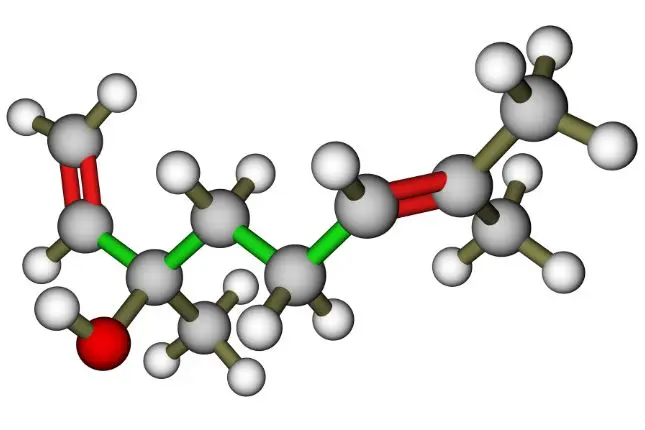
TL/DR:
Geranylgeraniol (GG) is a natural compound from the mevalonate pathway that supports CoQ10, hormone balance, and mitochondrial health,Thus,helping cells age better.
What makes a molecule both fascinating and functional? Any guesses?
It is it’s unique molecular and chemical structure!
In this blog, we are going to unravel the molecular structure and chemical properties of a powerful compound; Geranylgeraniol (GG).
Though it may not be as familiar as other vitamins or antioxidants, this secret yet mighty compound helps cells function smoothly and may hold the key to healthy life.
Looking closer at its standout traits, let’s discover why compounds like GG are carving out a larger role in wellness and longevity.
Geranylgeranoil: Unveiling the Untapped Power of a Little-Known Isoprenoid
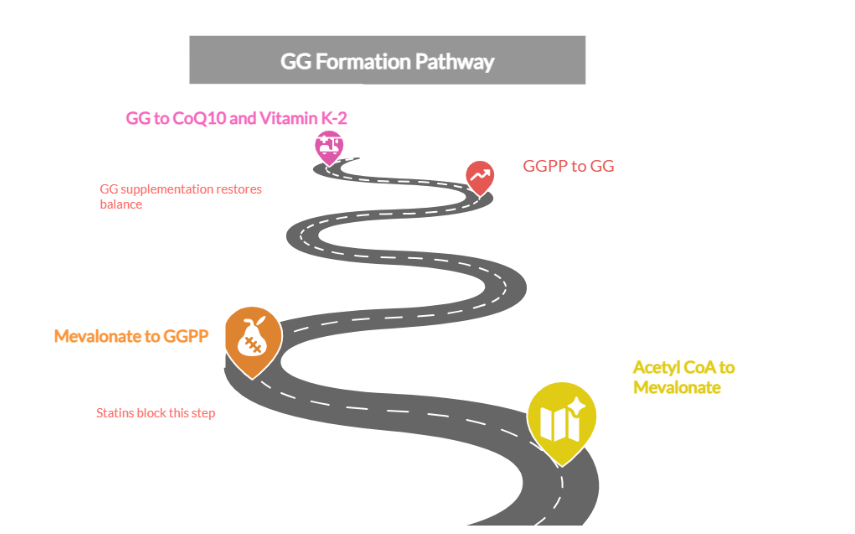
Geranylgeraniol (GG or GGOH) is a naturally occurring diterpene alcohol produced endogenously via the mevalonate pathway—the same metabolic route that generates cholesterol, Coenzyme Q10 (CoQ10), vitamin K2, and other isoprenoid-derived compounds.[1,2] Functionally, GG supports:
- Mitochondrial energy production, by helping maintain CoQ10 synthesis, which is vital for electron transport chain function.
- Hormone synthesis, including testosterone production in Leydig cells.[3]
- Certain pharmaceuticals, such as statins and bisphosphonates, suppress the mevalonate pathway and may cause unwanted side effects, which is not the case with GG. So, supplementing with GG means no sore muscles.[4,5]
Sounds like a game-changer? Indeed, GG ticks all the right boxes on a health chart! But, what makes it so unique?
Lets find out in the next section.
Molecular Structure of Geranylgeraniol
The molecular structure of GG demands a spotlight. Why?
Lets figure it out in following points:
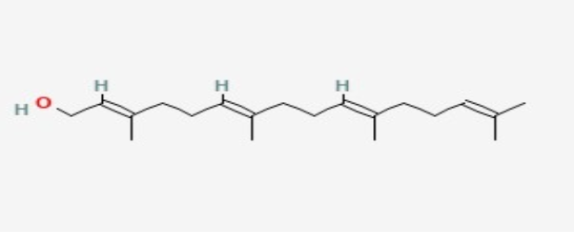
- GG is a diterpenoid alcohol (a compound with more than one –OH bond) with the formula C₂₀H₃₄O
- GG is built from four isoprene units, giving it a long, branched hydrocarbon chain. At one end, it carries a hydroxyl group (-OH).
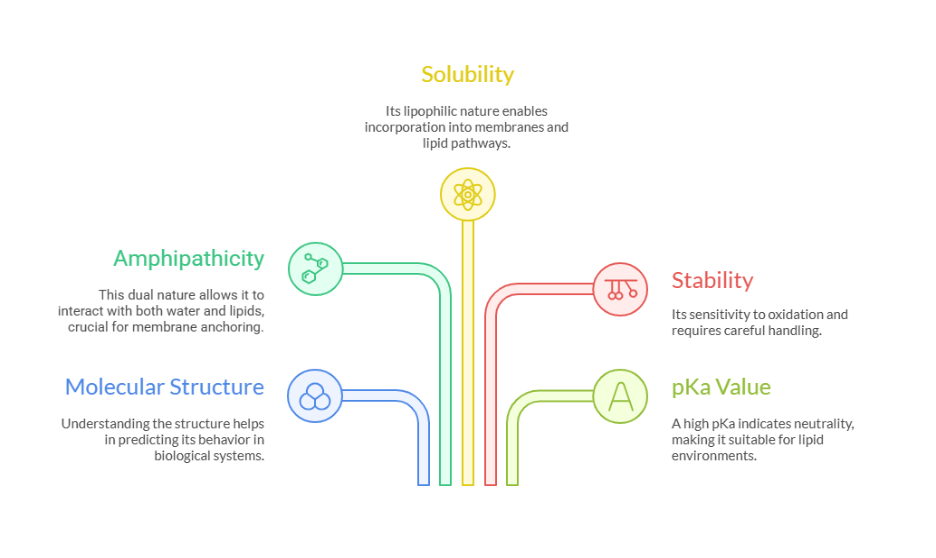
- GG has an Amphipathic Character (hydrophobic; i.e. water-repelling end and a hydrophilic water-loving end). This dual relation of GG with water makes it shine. This amphipathicity is crucial for:
- Anchoring to membranes (hydrophobic tail interacts with lipid bilayer, OH stays at the interface).
- Acting as a lipid modification in protein prenylation (helps proteins associate with cell membranes).
- Balancing solubility in both hydrophobic and hydrophilic environments.[1]
Chemical Properties of Geranylgeraniol
Geranylgeraniol is recognized for its distinctive chemical behaviors stemming from conjugated double bonds and its alcohol group:
1. Solubility
- GG is strongly hydrophobic due to its long hydrocarbon chain, therefore shows negligible solubility in water but dissolves efficiently in organic solvents such as ethanol, methanol, chloroform, and non-polar hydrocarbons.
- Its lipophilic character enables incorporation into membranes and lipid-associated biochemical pathways.
2. Stability
- Chemically sensitive because of its multiple double bonds.
- Prone to oxidation, isomerization, and degradation when exposed to oxygen, heat, or light. Oxidation can yield peroxides and breakdown products that reduce biological activity.[1,6]
Stability Tip: GG can oxidize or degrade when exposed to air, heat, or light. For best results, it should be stored in cool, dark conditions. Proper storage preserves GG’s biological power and shelf life.
3. pKa (Measurement of its strength)
- A pKa of 14.4 means Geranylgeraniol is a very weak acid (barely donates hydrogen in water). That makes it neutral, stable, and perfectly suited to survive inside lipid environments.
- A high pKa (~14) = gentle, non-corrosive, cell-friendly molecule.
Biological and Wellness Relevance
GG acts as a molecular cornerstone for numerous physiological processes of profound relevance to wellness as:
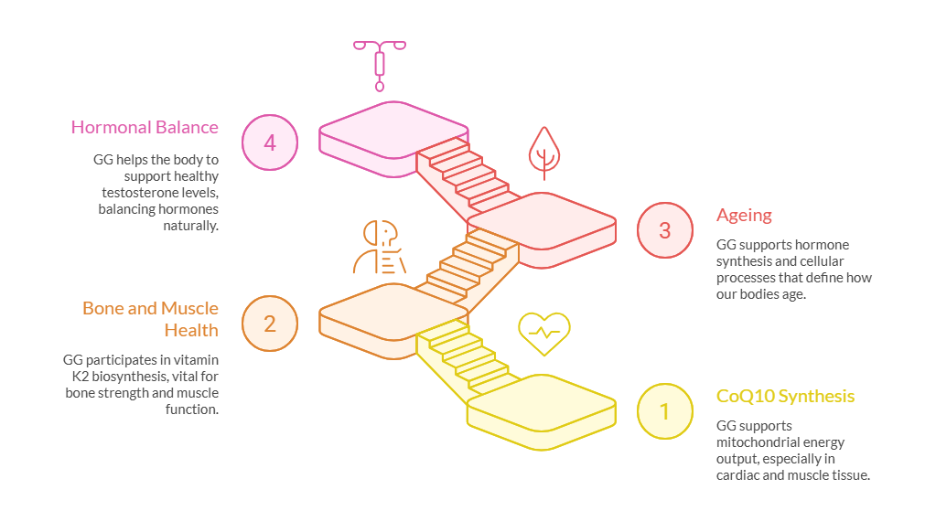
1. CoQ10 Synthesis
- GG is critical for the endogenous production of CoQ10 which support mitochondrial energy output, especially in cardiac and muscle tissue.
- CoQ10 is a fat-soluble compound produced by the body for the proper functioning of cells with high metabolic demands, and it’s most highly concentrated in the heart, liver, brain, and kidneys.[7]
- Statin drugs, commonly prescribed for cholesterol, inhibit GG production, which may partly explain statin-induced muscle issues and fatigue. Supplementation with GG may help mitigate these effects and maintain cardiac health.[8]
Pharmacology shows that GG has a broader protective effect against the cytotoxicity of statins than exogenous ubiquinone. Therefore, GG is more useful and practical means of limiting the toxicities of statins, without reducing their efficacy as cholesterol-lowering agents.
2. Bone and Muscle Health
- GG participates in vitamin K2 biosynthesis, which is vital for calcium homeostasis (calcium regulation) and bone strength.
- A review published in Nutrition Research suggests that GG improves bone microstructure as well as helps in decreasing inflammation.[9]
3. Ageing
GG supports the hormone synthesis pathways and cellular processes that define how our bodies age. By fueling mitochondrial energy, promoting CoQ10 biosynthesis, and sustaining metabolic balance, GG helps protect cells from age-related decline.
- Why it matters:
- Supports cognitive clarity and metabolic health
- Promotes hormonal balance and energy resilience
- Helps reduce oxidative stress linked to aging
GG doesn’t act as a standalone miracle rather; it enhances the body’s innate ability to produce COQ10 enzyme in your body so that you can stay on top of your game throughout the day.
4. Hormonal balance
- GG helps the body to support healthy testosterone levels, balancing hormones naturally, boosting energy and contributing to overall vitality, strength, and well-being.
- In a review published in thesteroidogenesissci Biotechnol Biochem journal, GG is shown to regulate the steriodogenesis pathway, thereby enhancing testosterone and progesterone synthesis.[10]
Thus, GG can be considered a key factor in maintaining healthy testosterone levels.
Evidence at a Glance
| Study | Year | Design | N | Population | Dose | Duration | Key Result |
| Tan & Chin Potential Role of GG in Statin-Associated Muscle Symptoms(11) | 2023 | Mechanistic clinical review | — | Statin users (literature-based) | NA | NA | GG may restore mevalonate intermediates depleted by statins and potentially reduce statin-related muscle symptoms; suggested to be more effective than CoQ10 for pathway correction.( |
| Chung et al. GG Improves Bone Microstructure & Glucose Homeostasis(12) | 2021 | Animal study (mice) | 40 mice | High-fat–diet–induced obese mice | 400 mg/kg GG in diet | 12 weeks | Improved fasting glucose, insulin sensitivity, trabecular bone microarchitecture, and reduced inflammatory markers. |
| Jiwan et al. GG Improves Muscle Mitochondrial Function in Diabetes.(13) | 2022 | Animal study (rats) | 36 rats | Streptozotocin-induced diabetic rats | 50 mg/kg GG | 8 weeks | Enhanced mitochondrial enzyme activity, restored muscle fiber structure, reduced oxidative stress, improved muscle performance |
Geranylgeraniol as a Wellness Catalyst
GG functions not as a classic vitamin or mineral, but as a catalyst for multiple anti-aging and pro-wellness pathways due to its ability to replenish cellular pools depleted by medications or aging.
Nowadays, it is an emerging adjunct therapy for age-related decline, with no reported interference with standard statin therapy.
Also Read – New Insights for GG and testosterone
Conclusion
GG works behind the scenes as a body’s true multitasker –Keeping your muscles active, Your bones resilient, and your hormones in harmony.
Geranylgeraniol’s distinct molecular framework governs its solubility, reactivity, and oxidative profiles. These properties underpin its biological roles, from enabling protein prenylation to supporting CoQ10 biosynthesis and mitochondrial health. Such functions act as key drivers for energy metabolism, signaling, and healthy aging.
Safety profiles look promising, with ongoing clinical studies focusing on optimal intervention strategies for statin users and the aging population.
GG is a hidden gem in the realm of bioactive compounds and is poised to join the ranks of proactive, trust-building nutrients that support the pursuit of wealth in both heal.
Key Takeaways
- GG fuels cellular energy by supporting CoQ10 production, thereby helping your body convert food into usable power and maintain daily vitality.
- It’s unique amphipathic structure helps GG anchor into cell membranes, ensuring smooth communication and stability across signaling pathways.
- GG along with vitamin K2 contributes to bone and hormonal health.
- Natural GG levels decline with age and restoring them with supplementation supports healthy aging and cellular renewal.
- Properly stored GG remains potent and effective, retaining its biological power in formulations designed for optimal absorption.
FAQ’s
GG is a naturally occurring compound in the mevalonate pathway that helps your body produce CoQ10, vitamin K2, and essential hormones.
Yes. GG aids in testosterone synthesis and overall hormone regulation, helping maintain energy, mood, and muscle strength especially beneficial for men over 40 or those with declining hormone levels.
Yes. Statins can lower both CoQ10 and GG levels by inhibiting the mevalonate pathway. Taking a GG supplement can help restore cellular balance and reduce statin-related fatigue safely under professional guidance.
Yes. By influencing the mevalonate pathway, GG may support cholesterol balance, mitochondrial energy, and overall cardiovascular and metabolic wellness.
Yes, GG is well-tolerated and non-toxic at standard doses (150–300 mg/day). It’s suitable for long-term use, with no major side effects reported in clinical studies.
References
- PubChem. Geranylgeraniol. National Center for Biotechnology Information. https://pubchem.ncbi.nlm.nih.gov/compound/Geranylgeraniol. Published July 12, 2025. Accessed September 13, 2025.
- Fliefel RM, Entekhabi SA, Ehrenfeld M, Otto S. Geranylgeraniol (GGOH) as a Mevalonate Pathway Activator in the Rescue of Bone Cells Treated with Zoledronic Acid: An In Vitro Study. Stem Cells Int. 2019;2019:4351327. doi:10.1155/2019/4351327.
- MuseChem. The Science of Geranylgeraniol: Why It Matters for Your Health. MuseChem Blog. Published August 30, 2023. Accessed September 22, 2025. https://www.musechem.com/blog/the-science-of-geranylgeraniol-why-it-matters-for-your-health
- Warita K, Warita T, Beckwitt CH, Schurdak ME, Vazquez A, Wells A, Oltvai ZN. Statin-induced mevalonate pathway inhibition attenuates the growth of mesenchymal-like cancer cells that lack functional E-cadherin mediated cell cohesion. Sci Rep. 2014;4:7593. doi:10.1038/srep07593.
- Casarett & Doull’s Chemical Information Service (CASI). Geranylgeraniol. https://www.casi.org/node/1060. Accessed September 13, 2025.
- Alves SF, Hoscheid J, Vieira G, et al. Enhanced geranylgeraniol stability and dissolution from self-emulsifying pellets containing the Pterodon emarginatus extract. Research, Society and Development. 2023;12(426012441314. doi:10.33448/rsd-v12i4.41314
- Council for Responsible Nutrition (CRN). Combination of Geranylgeraniol and Ubiquinol to Support Mitochondrial Function. Casi.org website. Published 2021. Accessed October 30, 2025. https://www.casi.org/node/1273
- Council for Responsible Nutrition (CRN). Introduction to Geranylgeraniol. CASI.org website. Published July 11, 2019. Accessed October 30, 2025.
- Hung E, Elmassry MM, Cao JJ, Kaur G, Dufour JM, Hamood AN, Shen CL. Beneficial effect of dietary geranylgeraniol on glucose homeostasis and bone microstructure in obese mice is associated with suppression of proinflammation and modification of gut microbiome. Nutr Res. 2021;91:38-50.
- Ho HJ, Shirakawa H, Giriwono PE, Ito A, Komai M. A novel function of geranylgeraniol in regulating testosterone production. Biosci Biotechnol Biochem. 2018;82(2):314-322. doi:10.1080/09168451.2017.1415129. PMID: 29303051.
- Tan BK, Chin KY. Potential role of geranylgeraniol in managing statin-associated muscle symptoms: a COVID-19 related perspective. Front Physiol. 2023;14:1246589. doi:10.3389/fphys.2023.1246589. eCollection 2023.
- Chung E, Sharma S, Reddy N, et al. Beneficial effect of dietary geranylgeraniol on glucose homeostasis and bone microstructure in obese mice is associated with suppression of proinflammation and modification of gut microbiome. Nutr Res. 2021;91:20-32. doi:10.1016/j.nutres.2021.07.001.
- Jiwan NC, Pichiah PBT, Moon H, et al. Geranylgeraniol supplementation mitigates soleus muscle atrophy via changes in mitochondrial quality in diabetic rats. In Vivo. 2022;36(6):2638-2648. doi:10.21873/invivo.13027.
Leave a Reply